

Estate Silent 15 kVA sizing
Start by separating essential estate circuits from nice to have loads, then total the running demand before looking at motor starts. For an estate silent 15 kVA, fuel planning and the first commissioning run should be checked together so the unit is not sized on power alone.
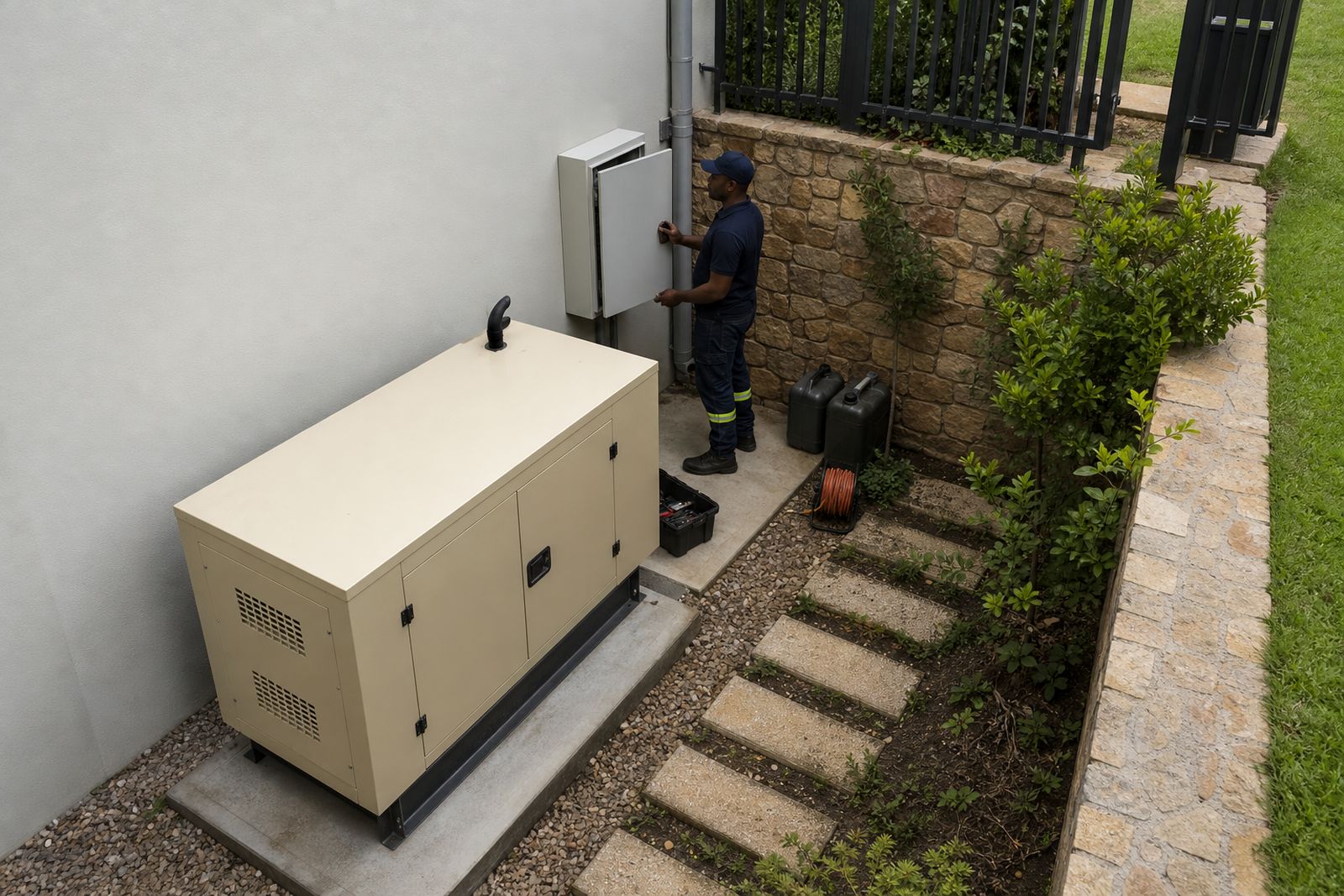
Sizing guide for estate silent 15 kVA
Map what must stay live during power cuts at a house, gatehouse, small office, or body corporate site. Begin with lighting, refrigeration, alarms, electric fencing, routers, and gate motors, then add larger items such as pressure pumps one by one. Motor starting current matters, especially where a borehole pump or aircon compressor shares the same backup board. In Johannesburg and Pretoria winter mornings, that first start can be heavier than the daytime running load suggests.
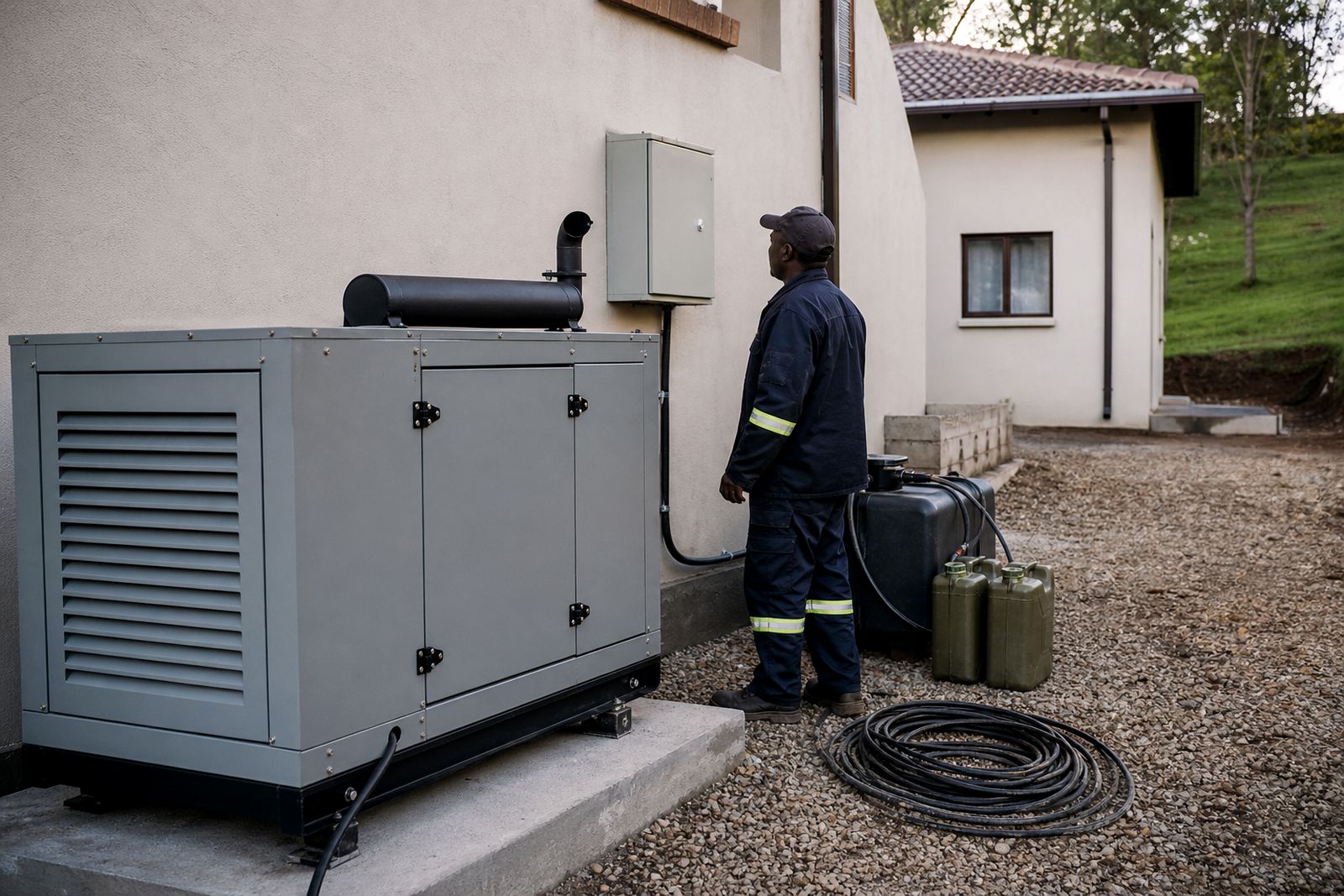
This model suits quieter residential and estate environments where canopy sound levels and exhaust direction affect neighbours and common areas. Check diesel storage, ventilation, and the earthing arrangement before finalising the load figure, because a tidy kVA number does not fix a poor installation. If the generator feeds through a changeover or ATS, confirm the switching gear matches the intended essential circuits and not the full property supply.
Record the first test run with load readings, frequency, and voltage visible, then keep that reference with the site file or distribution board records. A photo of the panel during commissioning helps when someone later adds a pool pump, extra freezer, or security equipment. Short notes on which breakers were on during the trial are more useful than a broad description of the property.
Estate circuits that fit 15 kVA
An estate silent 15 kVA is usually sized around core continuity loads rather than whole-house convenience. Security systems, perimeter lighting, CCTV, fibre, intercoms, gate motors, and selected plug circuits often belong on the backed-up side first. Larger geysers, ovens, underfloor heating, and multiple air conditioners normally need to stay off unless the measured demand leaves clear headroom.
- List alarms, gates, lights, routers first
- Check pump starting load, not only running
- Confirm ATS or manual changeover rating
- Note test hours after each outage cycle
Read the matching site route and the related runtime note so the load figure, placement, and expected operating hours line up. If the property has unusual demand such as a lift, large pump set, or mixed residential and office use, use our contact form with the circuit list and changeover details attached.
Signs the load is too high
Stop and review the sizing if lights dip when a pump starts, if breakers trip during transfer, or if the unit would need to carry cooking and water heating with everything else. Estate installations also need another look where boundary walls trap exhaust or the canopy position pushes noise toward neighbouring homes. It is better to split the backed-up circuits properly than to force one 15 kVA set to carry every convenience load on site.
Sizing discussions can continue at Clearwater, Cresta, Pavilion, Tyger Valley, Baywest, Mimosa, and Riverside when the handover notes identify estate silent 15 kVA, the property type, and the main loads measured. Include whether the site already has an ATS, a manual changeover, or no transfer equipment yet, because that affects the next step in the recommendation.
What our Backup Genset customers say
Verified Google reviews
Also worth a look
Tell us about your backup power
Send a note through our contact form with the circuits you need to keep running, the kind of site, your fuel preference, how the changeover works today and your area, and we will come back with practical genset options and a quote.
Open the contact form