

Mobile Tow 10 kVA sizing
Start with the circuits that must stay live on a mobile tow 10 kVA set, then total their running load and startup demand. Include fuel planning and the first commissioning check so the unit is sized for the duty, not just the nameplate.
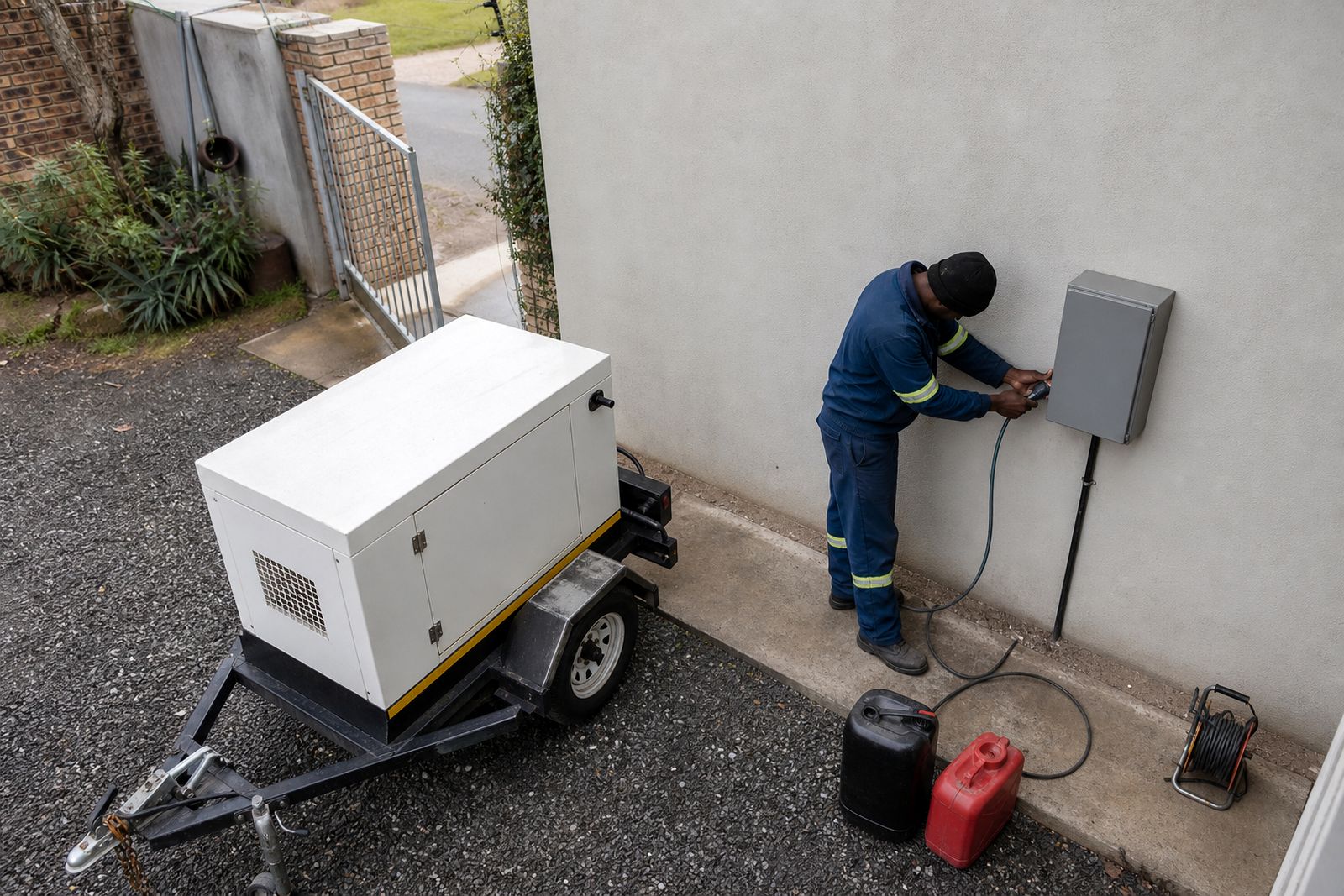
Sizing guide for mobile tow 10 kVA
For mobile tow 10 kVA sizing, begin with the essentials that cannot drop during an outage, such as security lights, gate motors, fridges, tills, routers, or a small site office DB. Motor loads need separate attention because a borehole pump, pressure pump, or compressor can pull far more on start than on steady running. On Gauteng and Highveld sites, a cold early start can expose weak battery condition and poor load order very quickly.
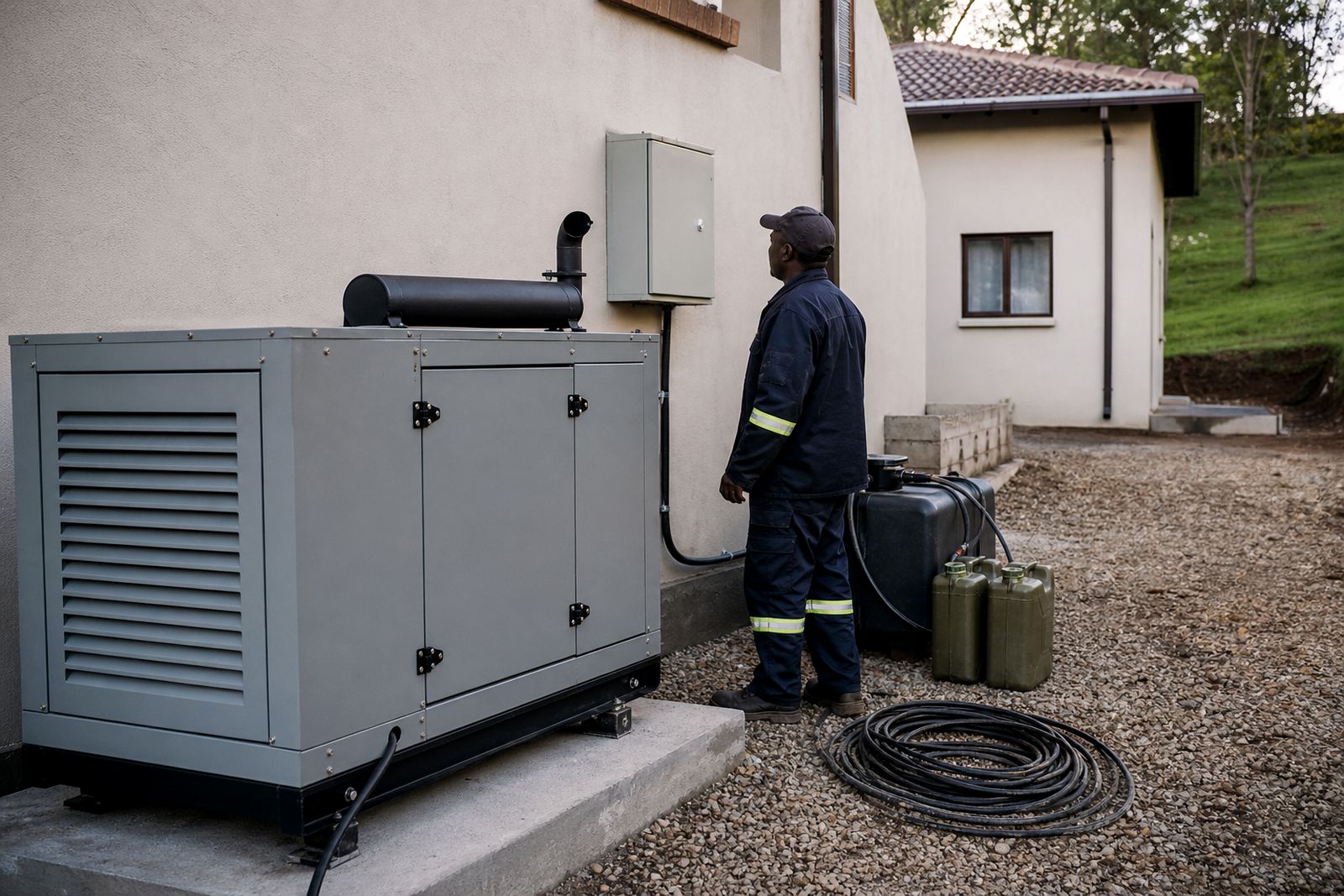
This size works best when the actual duty matches the trailer unit, noise expectation, and fuel storage on site. A residential complex, road crew, or small farm may each need different placement, cable runs, and earthing checks even if the kVA figure looks similar. Before loading the set, confirm neutral-earth arrangement, day-to-day refuelling access, and whether the location has estate rules or municipal noise limits.
Record the first live test with panel readings visible, including voltage, frequency, hour meter, and connected load. That reference helps later when a shift change, tenant complaint, or trip event needs comparison with the original setup. Keep the load sheet with the machine file so the next inspection is based on measured conditions rather than memory.
10 kVA load order checks
The right sequence matters on a 10 kVA mobile unit because available headroom disappears quickly once motors and heaters are added together. Put lighting, security, telecoms, and refrigeration ahead of workshop tools or irrigation pumps unless the pump is the main reason for hiring the set. During power cuts periods, size against the circuits you will carry through the full outage window, not just the first hour.
- List must-run circuits before sizing
- Check fuel access for each outage
- Test changeover under site conditions
- Log hours and peak load readings
For a mobile tow 10 kVA, use the matching site route alongside the sizing notes so access, cable run and changeover position are checked together. Add the runtime note when you compare light overnight loads with daytime pump or tool use, especially during power cuts blocks common across South Africa. Use our contact form if the tow unit must supply high inrush equipment or a longer duty cycle than the standard backup pattern.
Signs the 10 kVA is small
Pause the plan if lights dip badly when a pump starts, if breakers nuisance-trip during normal use, or if the expected fuel window does not cover the outage pattern at your site. Those are common signs that the startup load or runtime assumption is too tight for this frame size. It is better to revise the machine selection before dispatch than to force a tow unit into a duty beyond its sensible operating range.
If a handover is needed between branches or sales points, note the genset model, intended load, cable length, and whether the site uses manual changeover or ATS. Include the first site checked and any restriction such as basement access, estate rules, or farm pump startup. That keeps the sizing discussion tied to the same mobile tow 10 kVA duty rather than restarting from the beginning.
What our Backup Genset customers say
Verified Google reviews
Also worth a look
Tell us about your backup power
Send a note through our contact form with the circuits you need to keep running, the kind of site, your fuel preference, how the changeover works today and your area, and we will come back with practical genset options and a quote.
Open the contact form