

Retail Continuity 25 kVA sizing
Start with the circuits that keep trading possible, then compare their running and starting demand to a 25 kVA set. Include fuel storage and the first test start in the same plan so the shop can switch over cleanly during power cuts.
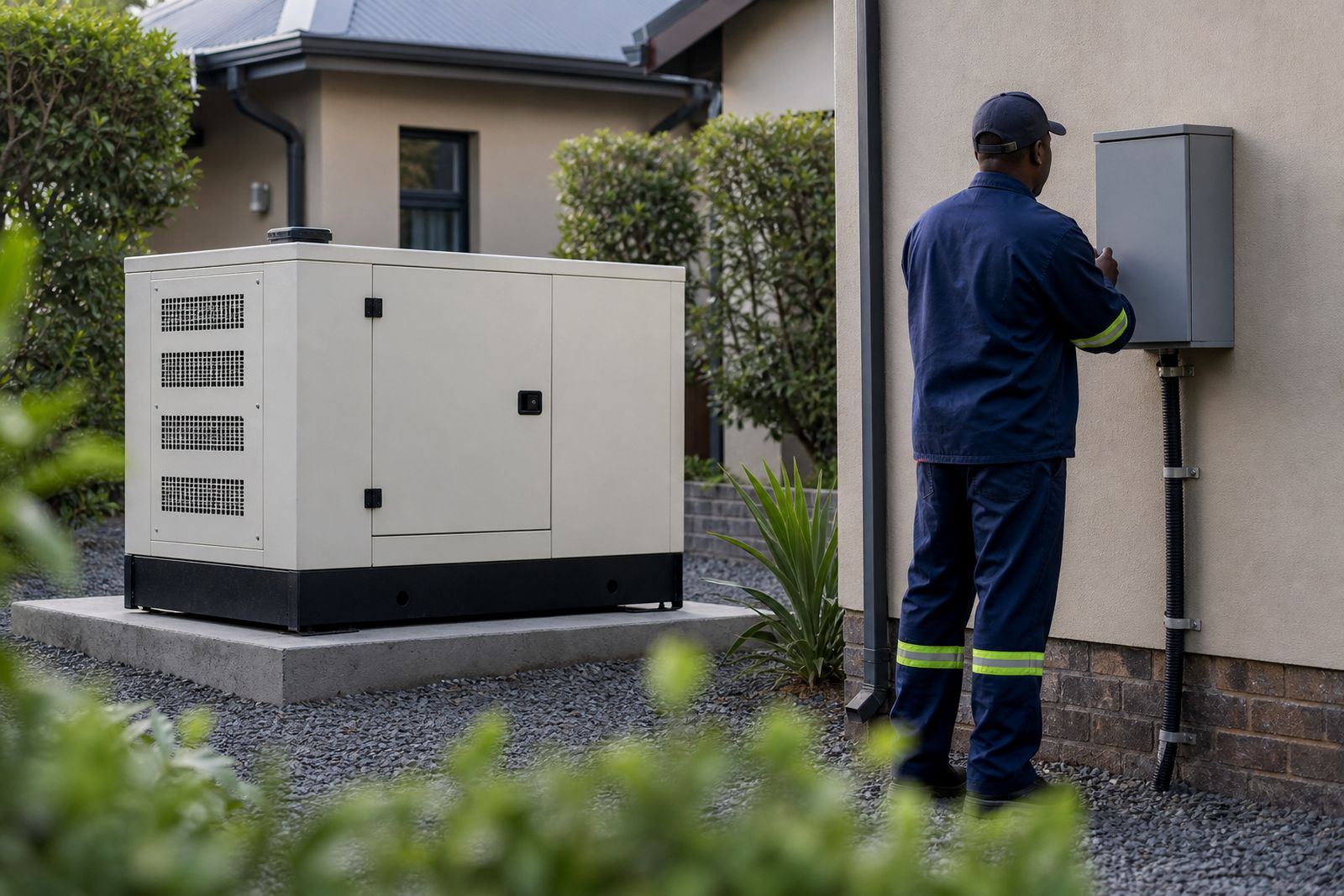
Sizing guide for retail continuity 25 kVA
For retail continuity 25 kVA sizing, begin with point of sale, security, essential lighting, fridges and the network cabinet. Refrigeration and small aircon units can draw higher current on startup, so note both running load and inrush before adding them together. In many South African retail sites, the correct result comes from trimming non-essential plugs rather than pushing every circuit onto one generator.
Noise level, fuel arrangement and earthing all matter before the first cable is laid. A pavement-facing shop in a busy centre needs a quieter canopy and clear exhaust direction, while a yard or service lane may allow a different placement. Check the earth-neutral bonding method against the changeover setup and mark every fuel shut-off clearly for staff and technicians.
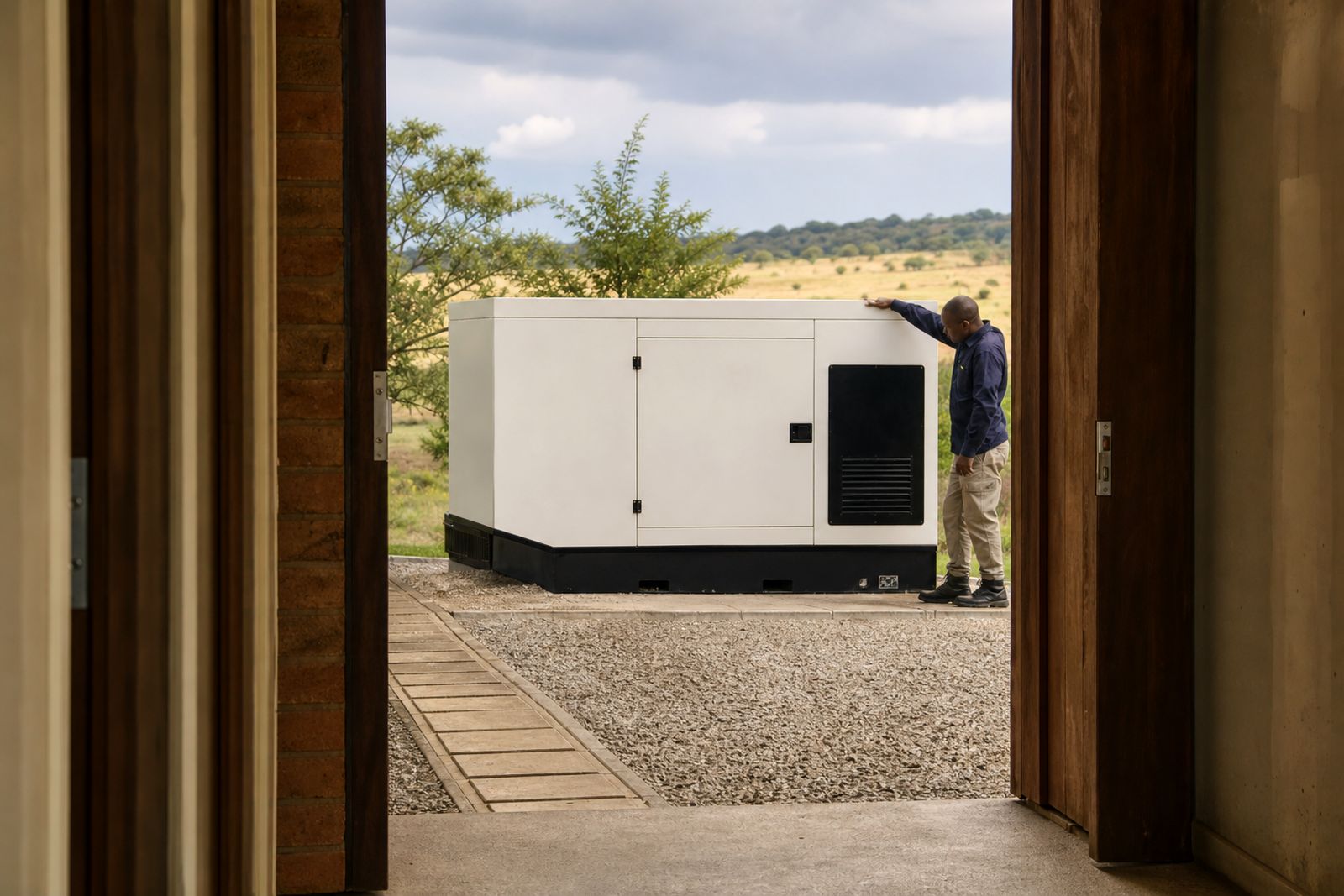
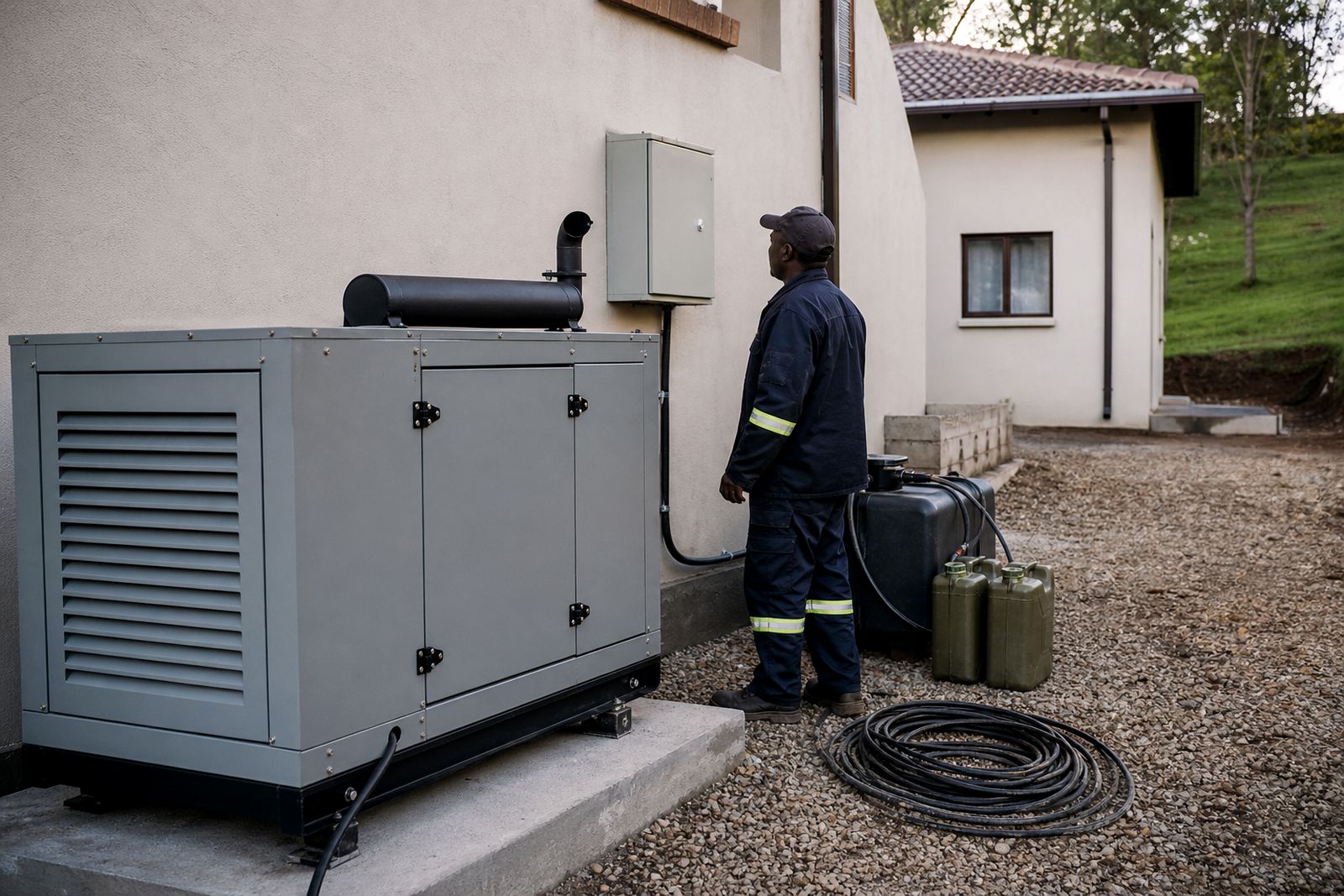
Record the commissioning start with panel readings, hour meter and load percentage visible. Keep that image with the site paperwork so the next service can compare voltage, frequency and operating load against day one. If a store has multiple fridges or freezers, note which units were energised first during the test.
Retail load order for 25 kVA
Retail demand rises and falls through the trading day, so the sizing exercise must follow the real opening routine. Lights, tills and routers usually come on first, with refrigeration stabilised before adding extras like coffee stations or display equipment. Where a pharmacy counter, bakery section or small deli is involved, those dedicated circuits should be listed separately.
- Tills, routers, lights listed first
- Startup current checked for refrigeration
- Changeover sequence tested with staff
- Daily running hours noted on site
For a cleaner handover, keep the sizing guide with the matching site route and runtime note. Retail shops often add point of sale tills, small undercounter fridges, alarm panels, and exterior signage over time, so note what must start first and what can wait. Use our contact form when the measured load sits above the usual retail backup range or includes motors with a heavy starting pull.
Signs the load exceeds 25 kVA
Pause the sizing if refrigeration startup drops voltage sharply, if the exhaust route conflicts with neighbouring tenants, or if the expected runtime misses the shedding block you need to cover. Those are common indicators that another genset option or a reduced essential load list is needed. It is also worth reassessing when staff want kettles, microwave ovens and non-essential air conditioning on the backup board.
Shopping-centre stores at Clearwater, Cresta, Pavilion, Tyger Valley, Baywest, Mimosa and Riverside often share the same sizing questions around refrigeration, POS equipment and landlord restrictions. A handover note should mention the retail continuity 25 kVA set, the circuits counted as essential and any issue found during the first load test. That keeps the discussion tied to the actual shop layout rather than starting from scratch.
What our Backup Genset customers say
Verified Google reviews
Also worth a look
Tell us about your backup power
Send a note through our contact form with the circuits you need to keep running, the kind of site, your fuel preference, how the changeover works today and your area, and we will come back with practical genset options and a quote.
Open the contact form