

School Campus 35 kVA sizing
Start with essential campus circuits, diesel planning, and commissioning checks.
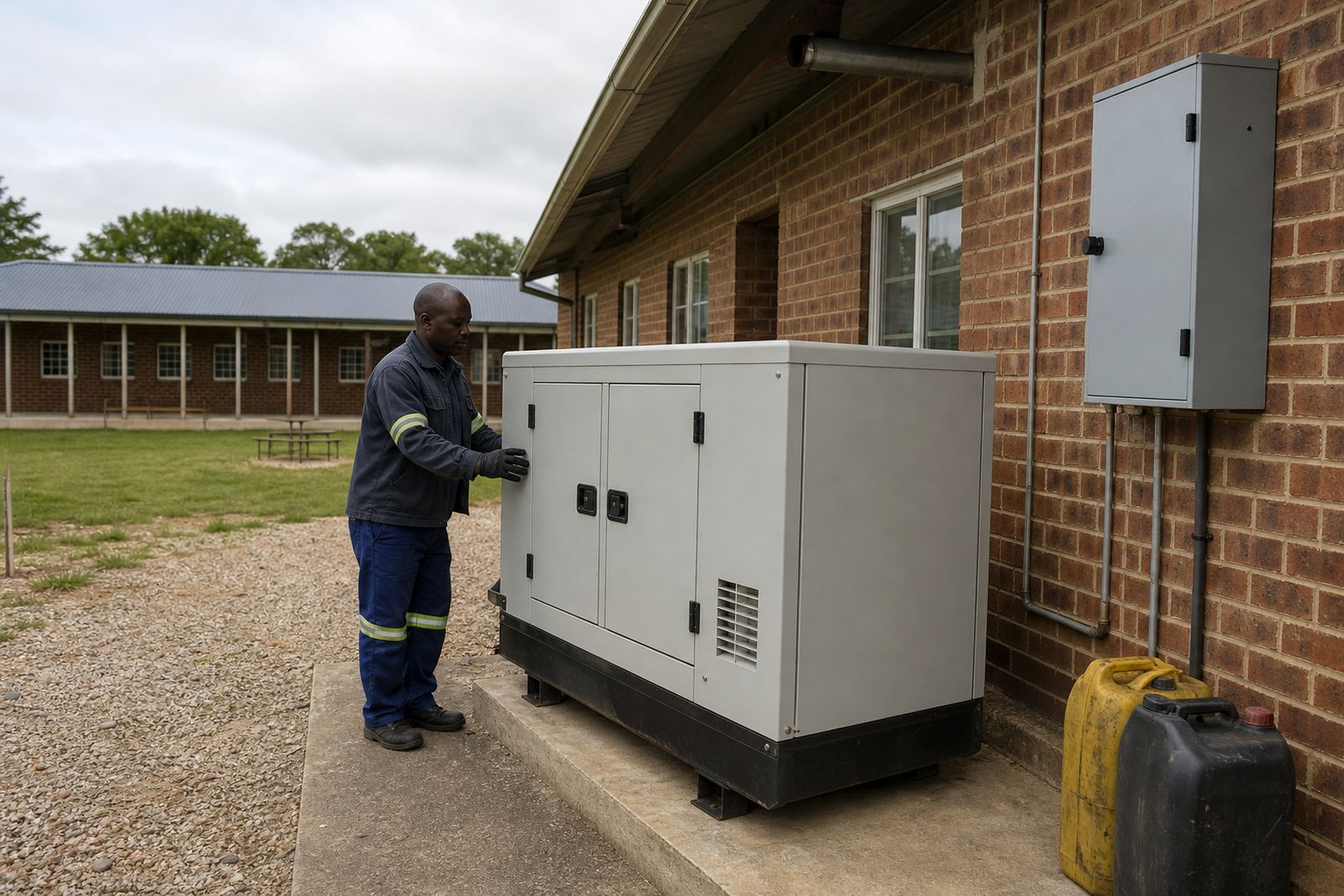
Sizing guide for school campus 35 kVA
A 35 kVA set for a school campus is usually sized around teaching blocks, admin offices, security, and selected hostel or kitchen loads rather than every circuit on site. Begin by separating emergency lighting, access control, server rack supply, and the borehole or pressure pump from non-essential items such as electric geysers and full kitchen cooking banks. Motor starting current matters on campuses, so gate motors, pumps, and refrigeration units should be checked for starting demand before the final load total is accepted.
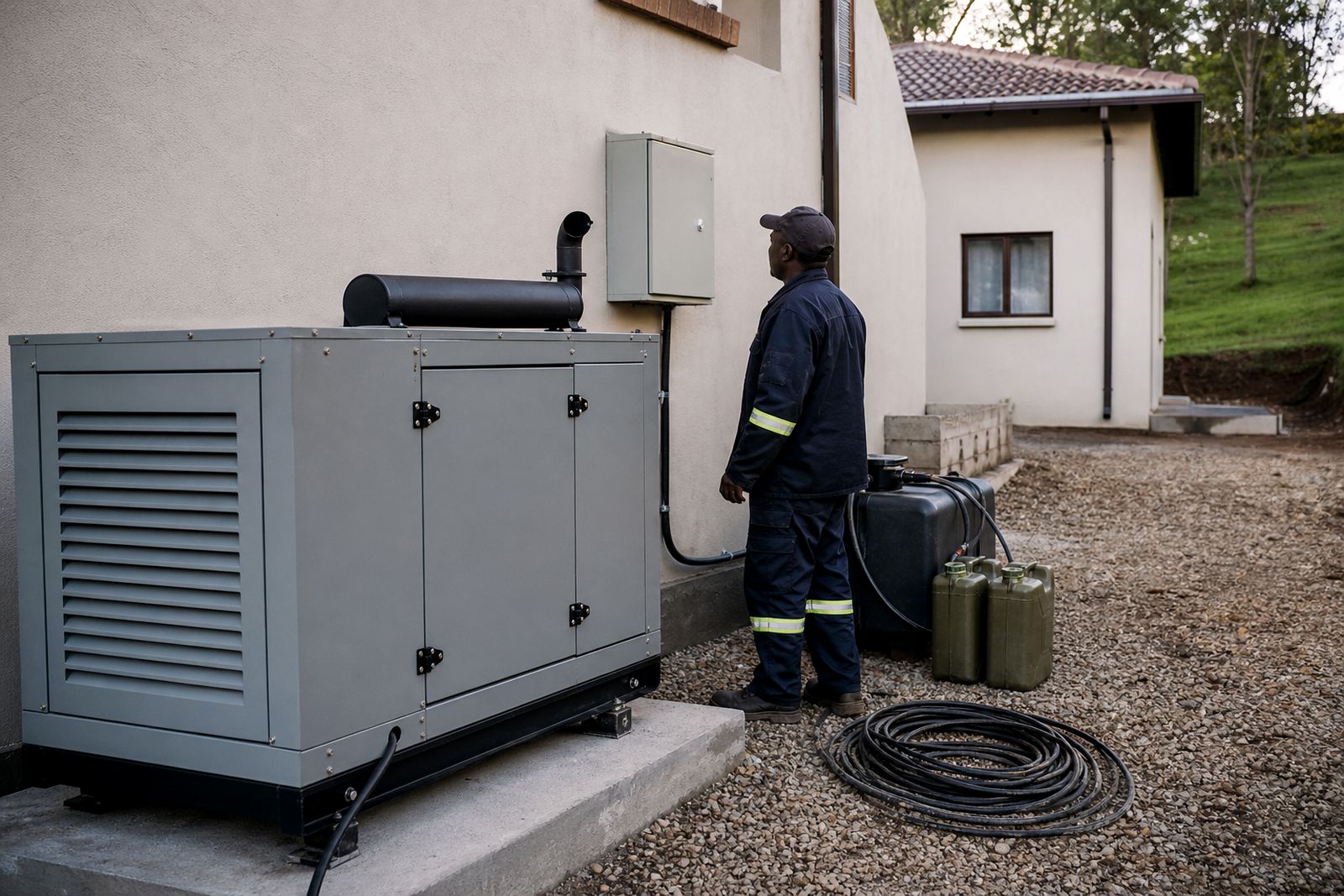
Noise limits and fuel storage need to suit the campus layout, not just the generator rating. A unit near classrooms, exam venues, or residence windows may need a quieter canopy position and a discharge route that keeps exhaust away from walkways and assembly points. Before handover, confirm the earth connection, changeover arrangement, and safe access to the day tank for refuelling during power cuts periods.
Record the first test run with hour meter, voltage, and frequency visible so the facilities team has a clear baseline. Keep that image with the load list, service log, and ATS settings in the site file or maintenance office. When nuisance trips or overload complaints come up later, those commissioning details help the school compare current behaviour with the original setup.
Campus circuits that shape 35 kVA
School demand changes by time of day and by term activity, so the generator should be matched to the loads that must stay live during outages. Classroom lighting and network equipment often come first, while workshop tools, sports floodlights, and large kitchen elements may need to stay off generator supply. Boarding facilities can shift the picture again because evening cooking, hot water demand, and perimeter lighting all affect the running load.
- Emergency lighting listed by building
- Pump and gate motors checked
- ATS sequence tested with staff
- Runtime log kept at panel
For a campus changeover plan, read this sizing guide alongside the matching site route and the relevant runtime note. Lecture blocks, admin offices, server racks, security lighting, and smaller pump loads should be separated before the 35 kVA unit is signed off. Use our contact form if your school load includes kitchen equipment, larger air conditioning banks, or a borehole pump that changes the starting demand.
Signs the 35 kVA is tight
Review the selection if voltage dips when pumps start, if kitchen equipment trips the set, or if required runtime does not match the available diesel storage. A campus that adds prefabs, extra security lighting, or more IT rooms can outgrow an earlier sizing estimate without changing the generator location. In those cases, it helps to move to a different route instead of trying to carry every new load on the same backup plan.
Where a school project is being discussed across different centres, the handover works better when the campus name, genset size, and tested load groups are written down clearly. Notes that mention hostels, borehole pumps, kitchen circuits, and the existing changeover point make it easier to continue the sizing discussion without repeating each building load from the start.
What our Backup Genset customers say
Verified Google reviews
Also worth a look
Tell us about your backup power
Send a note through our contact form with the circuits you need to keep running, the kind of site, your fuel preference, how the changeover works today and your area, and we will come back with practical genset options and a quote.
Open the contact form