

Battery Bank Interface
Float charger interface for winter Highveld mornings.
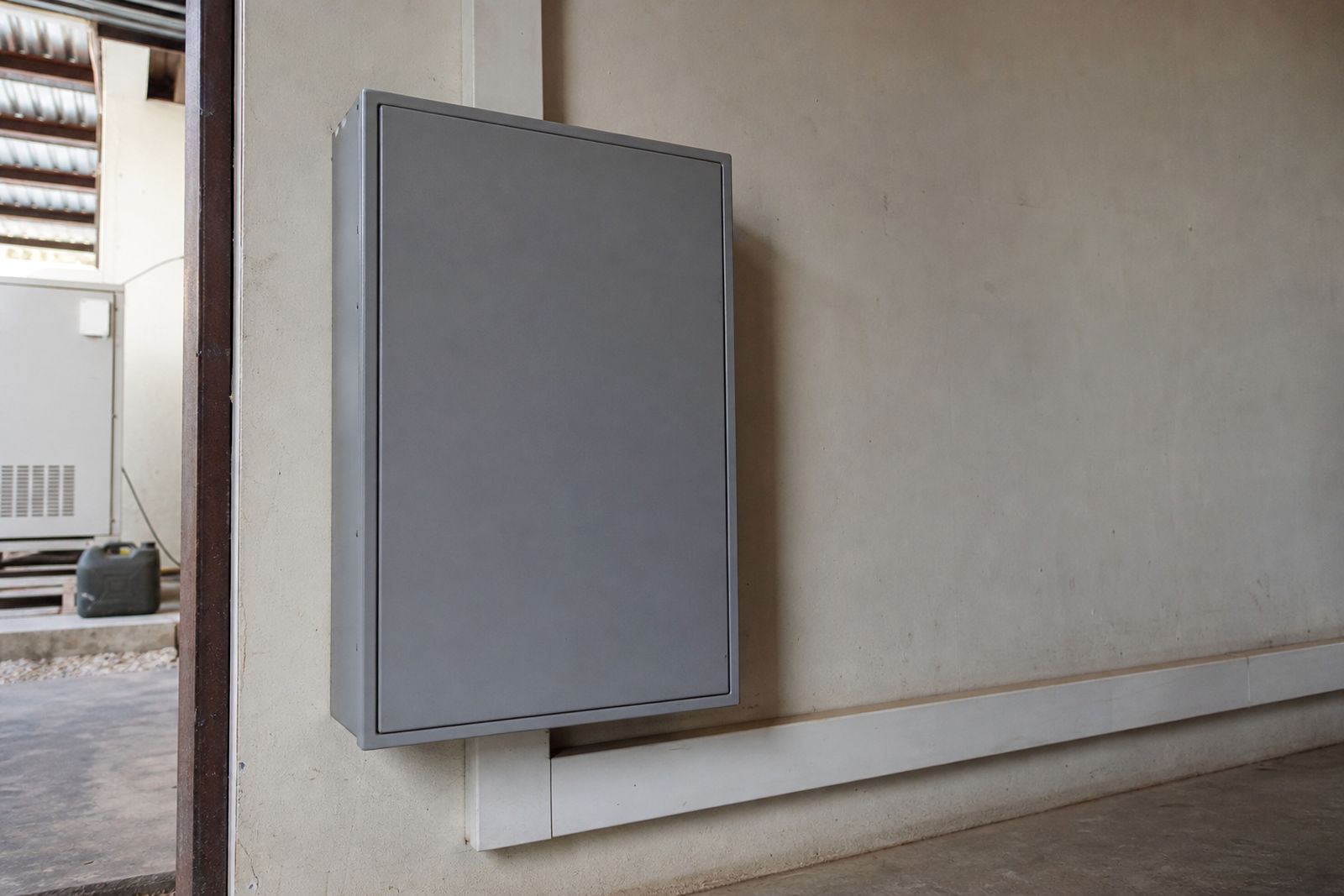
DC charger and battery links
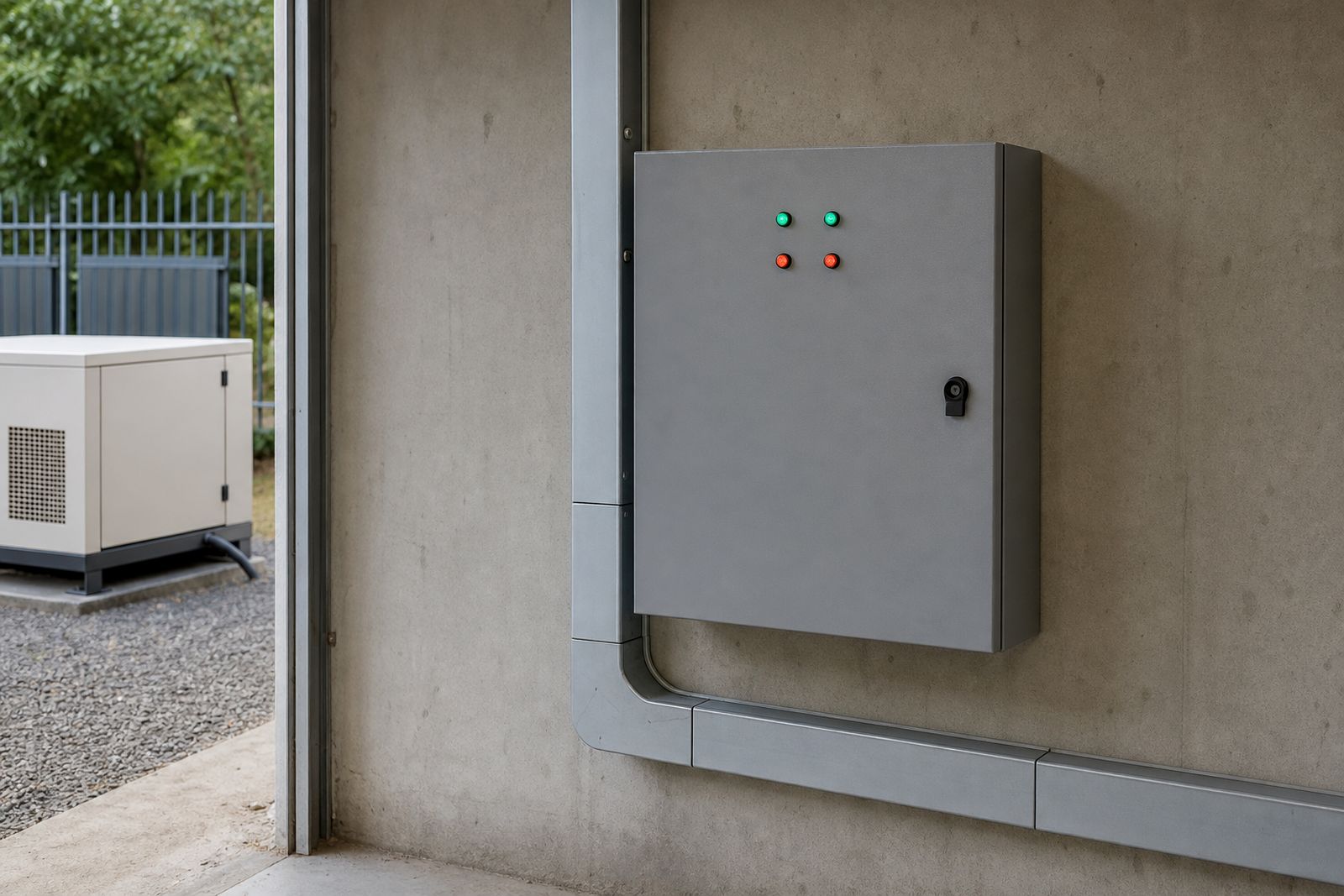
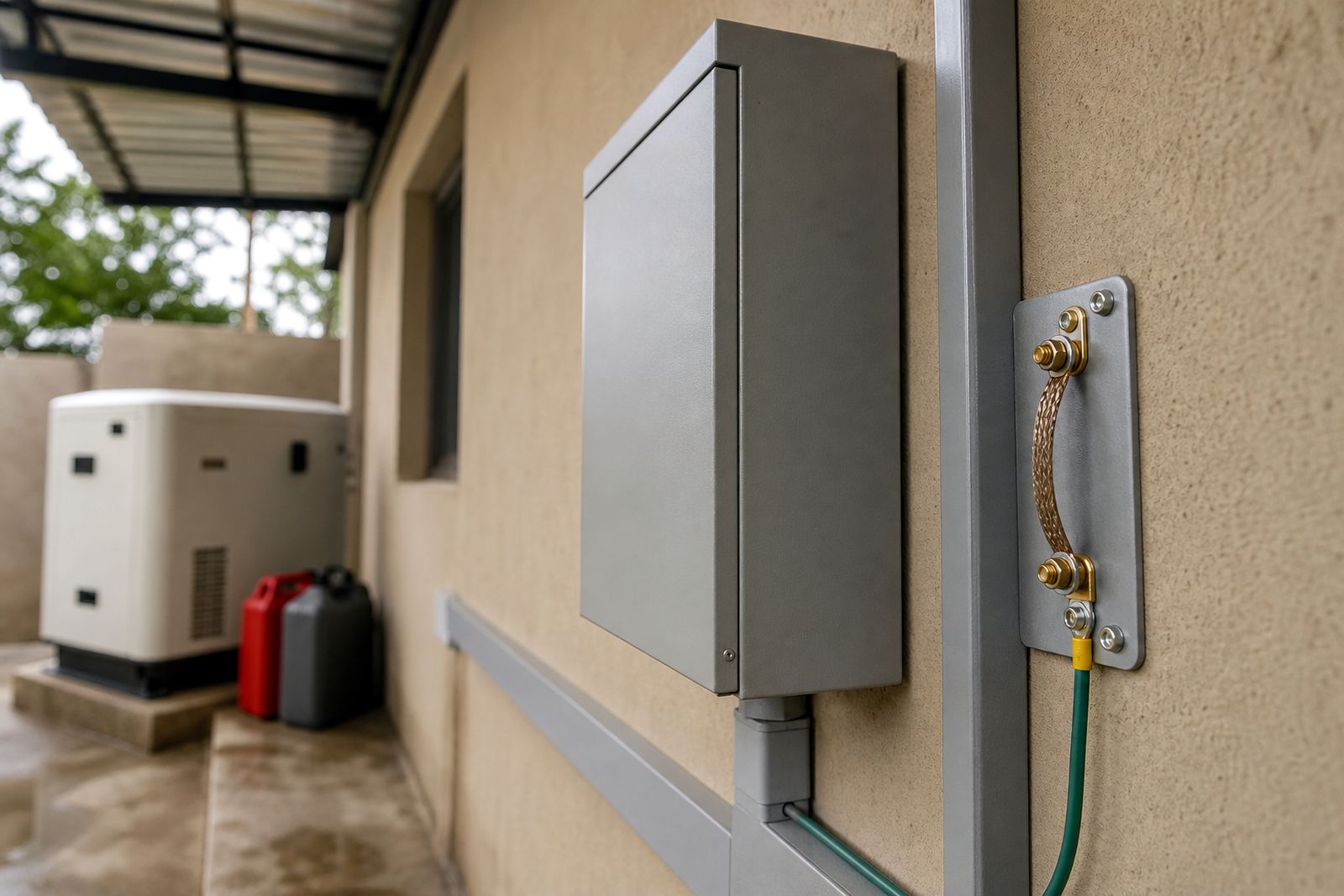
A battery bank interface ties the charger, battery isolator and generator control wiring into one clear point. On standby sets in South Africa, that usually means tidy DC terminations, marked polarity, and enough space to test voltage without stripping half the panel. Winter mornings on the Highveld make weak charging settings show up quickly.
Use the battery bank interface when the control panel must monitor bank voltage, charger status and start readiness from one place. Our Gensets can be matched to the correct site route, especially where an existing bank, ATS or manual changeover is still in service. Send the panel name, site town and current switching arrangement through our contact form.
For sites around Germiston and Johannesburg, we normally see battery interfaces mounted close to the control section with short, protected DC runs. That helps during inspections because charger output, fuse protection and battery disconnect points can be checked without tracing cables across the enclosure. Clear legend plates matter when staff change over between day and night shifts.
Commission notes
- Check charger voltage against battery type
- Mark positive, negative and isolator positions
- Record float and boost settings
- Verify start signal with mains off
Battery interfaces are easier to service when the drawing matches the panel as built. Include cable sizes, fuse ratings and charger setpoints on the door packet so a technician can compare readings on site. One missing DC label can waste more time than a failed lamp.
Cold rooms often need dependable cranking after long standby periods, so charger health and battery temperature matter. Cell sites usually want alarm feedback for charger fail and low battery. Residential estates tend to focus on secure panel access and simple operator checks after power cuts events.
Service travel
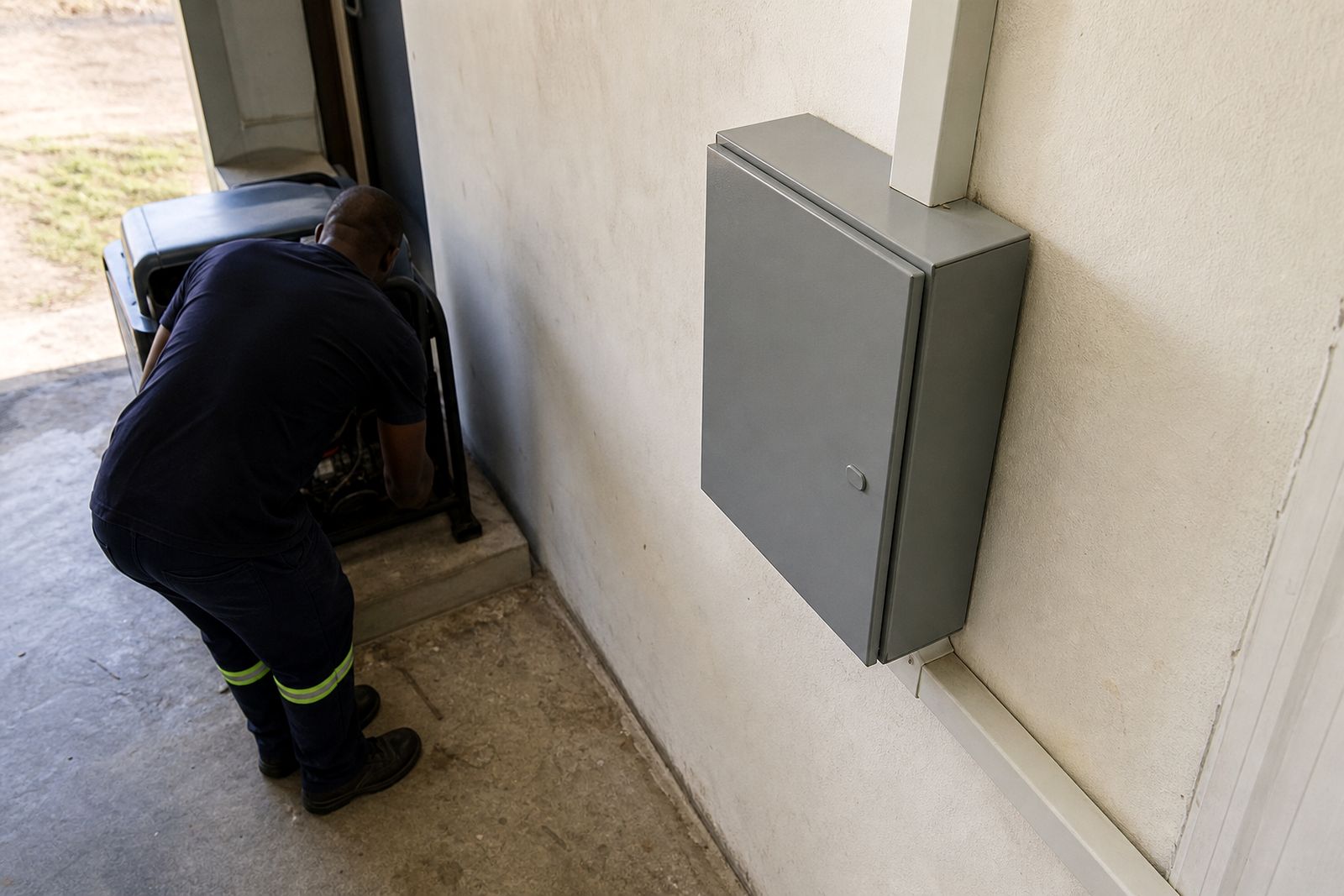
A float check before Highveld winter is worth doing on every standby unit with a battery bank. Low overnight temperatures can expose marginal batteries, loose lugs and charger drift even when the genset started well in summer. Where service travel is planned, include a meter check on the battery side and a live start test from the controller.
Browse Runtime for habits that sit beside this kit. Browse Resources for printable cards.
If inspections pick up a fault, note the charger model, DC voltage and any alarm indication before parts are changed. Battery banks, fuses and interface modules should be checked in order, because a simple blown protection device can look like a larger panel problem. Photos of terminal numbers also help when comparing the installed wiring to the commission notes.
Checks before winter starts
Inspect terminal tightness, charger ventilation and battery age records before the cold sets in. Confirm that isolators are labelled and that the panel lock is working where public access is possible. A battery bank interface only assists the next shift if the bank can be identified, isolated and tested without guesswork.
What our Backup Genset customers say
Verified Google reviews
Also worth a look
Tell us about your backup power
Send a note through our contact form with the circuits you need to keep running, the kind of site, your fuel preference, how the changeover works today and your area, and we will come back with practical genset options and a quote.
Open the contact form