

Exhaust routing kit
Estate-safe exhaust routing with clearance cards.
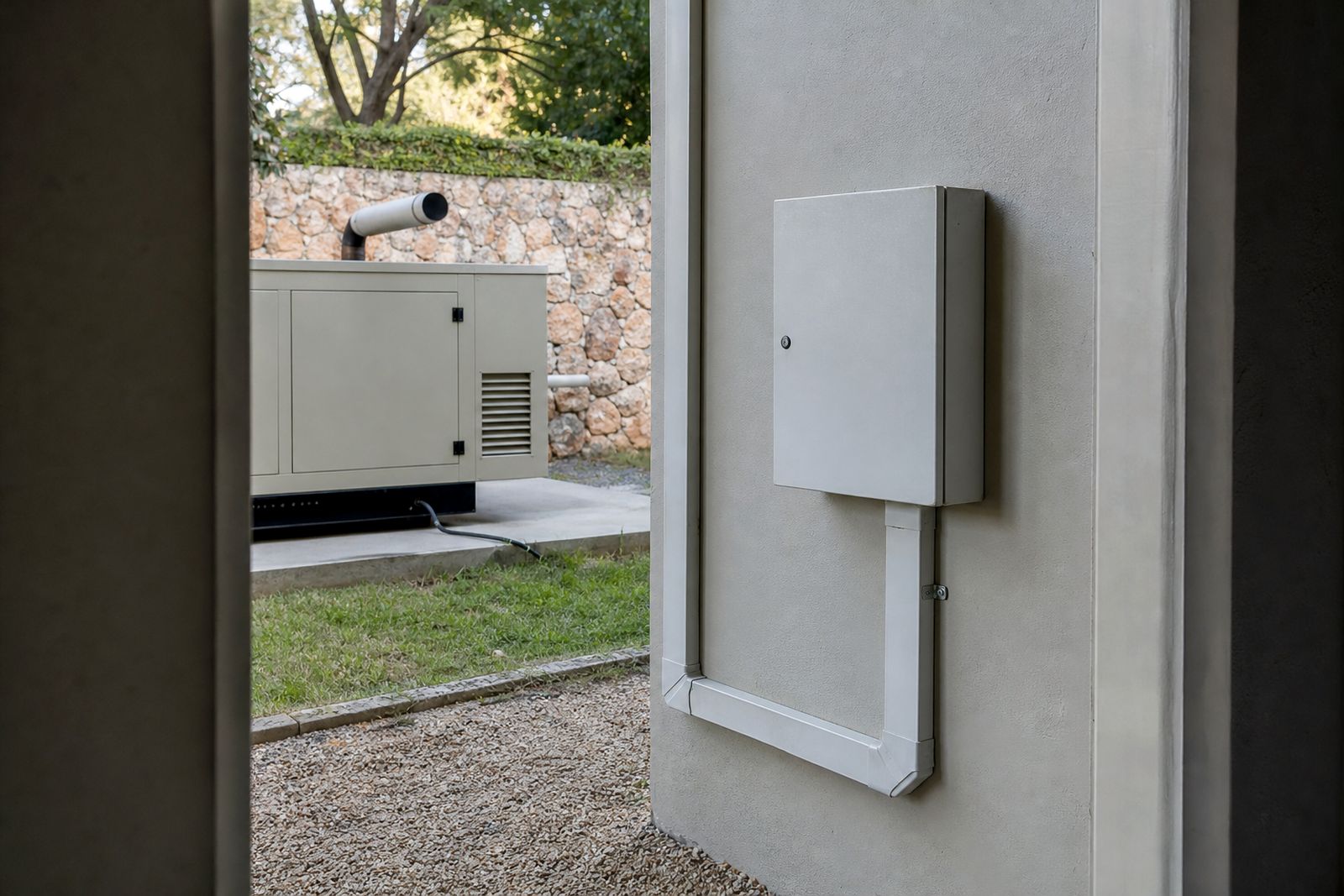
Exhaust routing above the canopy
An exhaust routing kit directs engine gases away from doors, walkways and boundary walls where a standard outlet can cause trouble. On South African estate and commercial sites, the kit usually includes pipe sections, clamps, brackets and a rain cap matched to the genset canopy height. Clearance around eaves, windows and neighbouring units must be checked before final tightening.
Match the exhaust routing kit with the right Gensets and the site route you selected for the installation. Use our contact form to note the model, city, and whether the set runs with ATS, manual changeover or remote start testing. That helps when checking outlet direction, stack height and space around walls or palisade lines.
Head office jobs often need extra attention where exhausts pass near parking bays, guardhouses or narrow service passages. Stainless hardware and proper support spacing matter because vibration loosens light brackets over time. A short horizontal run can also leave soot marks on plaster if the discharge point sits too low.
Commission notes
- Check wall and window clearance first
- Use heat-rated clamps and brackets
- Confirm rain cap swings freely
- Record final outlet height on handover
Estate rules often focus on where the canopy sits, but the exhaust route causes just as many snags during sign-off. Mark hot surfaces, note the discharge direction, and keep the clearance card with the commissioning file. If the stack passes near public access, shielding and warning labels should not be left for later.
Estate installs care about canopy and exhaust kit clearance. Telecom hubs care about remote start test habits. Cold rooms care about load manager steps. Match the panel to the route you already chose.
Service travel
Coastal air can attack plain steel fittings, so material choice matters in Durban and similar humid areas. Highveld winter starts bring longer warm-up periods, which can increase visible vapour around the outlet during testing. Sites with cold rooms or telecom equipment also need exhaust gases kept clear of fresh-air intakes and service doors.
Browse Runtime for habits that sit beside this kit. Browse Resources for printable cards.
After installation, inspect for leaks at every joint, then recheck bracket tension after the first run cycle. Sooting around a flange usually points to poor sealing or misalignment rather than a problem with the engine itself. Photos of the completed route help when service teams return for later maintenance.
Clearances that fail inspections
Do not leave the outlet facing a neighbour's wall at close range. Do not ignore canopy door swing when adding vertical pipework and supports. Do not route hot sections where technicians must lean past them to reach breakers, filters or battery isolators.
What our Backup Genset customers say
Verified Google reviews
Also worth a look
Tell us about your backup power
Send a note through our contact form with the circuits you need to keep running, the kind of site, your fuel preference, how the changeover works today and your area, and we will come back with practical genset options and a quote.
Open the contact form