

Fuel day tank
Day tank with labelled valves and litre marks.
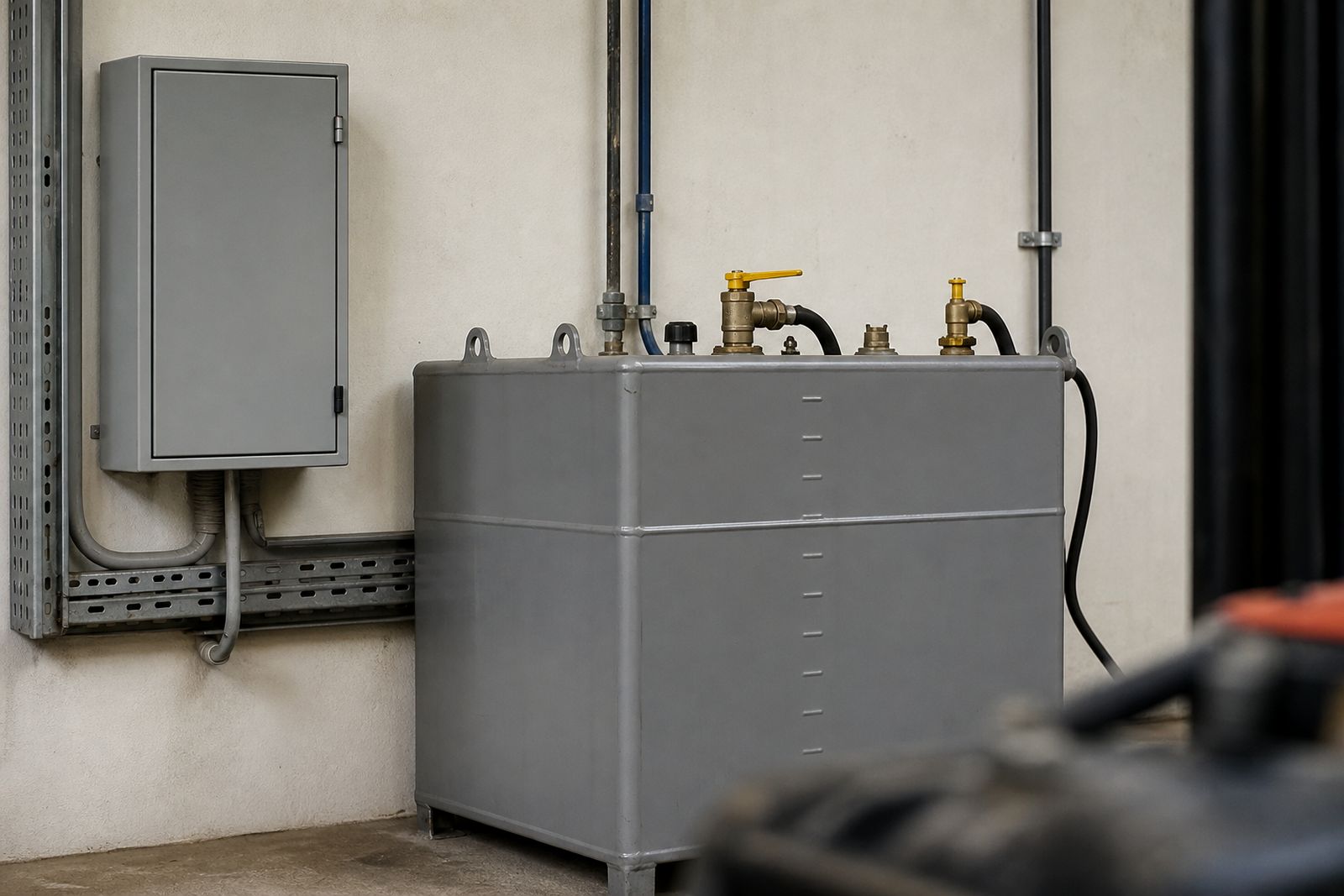
Fuel feed tank by the genset
A fuel day tank stores the diesel that the engine uses between bulk tank top-ups. Clear litre markings, tagged inlet and return valves, and a readable level gauge help operators check stock at a glance. On South African sites with shift changes and after-hours running, that simple visibility prevents wrong-valve mistakes.
Use the tank layout with our Gensets pages and the right site route for your installation. If you contact us through our contact form, note the tank size, your city, and whether the set runs with ATS or manual changeover. That gives the fuel arrangement proper context for backup planning.
In Germiston, fuel hardware is usually specified around access, refilling method, and room around the baseframe. A day tank that cannot be read or isolated easily becomes a nuisance during servicing. It is better to keep the pipework straightforward and the valve names visible from standing height.
Commission notes
- Leave space to read litre marks
- Tag supply, return, vent, and drain
- Record tank capacity in handover notes
- Check level alarm and refill routine
Day tanks need plain markings that still make sense under torchlight. Put the normal running level, low level, and shut valve positions where the operator stands. If bunding or pipe guards hide the gauge, note that before sign-off rather than after a night callout.
Commercial estates often need neat pipe runs and protected fill points. Farm and lodge sites usually care more about dust, long refill intervals, and simple daily checks. Telecom and security sites tend to want visible level indication that can be read quickly during patrols.
Service travel
For South African backup power, runtime planning is tied directly to usable diesel on site. A day tank should match the genset consumption rate, the refill schedule, and the actual conditions, whether that is Highveld winter mornings or coastal humidity. Litre marks that line up with delivery records make it easier to track fuel use after repeated outages.
Browse Runtime for habits that sit beside this kit. Browse Resources for printable cards.
If inspection picks up a leak point, unreadable gauge, or missing label, photograph that exact item and note the tank position. Small faults on fuel systems should be isolated and corrected before they confuse the next operator. Replacing a sight gauge or valve tag is often more sensible than disturbing the whole assembly.
Checks before handover
Confirm that the vent is clear, the drain is identified, and the isolation valves are labelled correctly. Check that the litre scale can be read without opening guards or leaning over hot equipment. Fuel tank details matter most when different shifts share the same generator area.
What our Backup Genset customers say
Verified Google reviews
Also worth a look

Tell us about your backup power
Send a note through our contact form with the circuits you need to keep running, the kind of site, your fuel preference, how the changeover works today and your area, and we will come back with practical genset options and a quote.
Open the contact form