

Farm borehole
See how a farm borehole setup keeps water moving with backup power for pumps, washdown points, tanks and workshop tools.
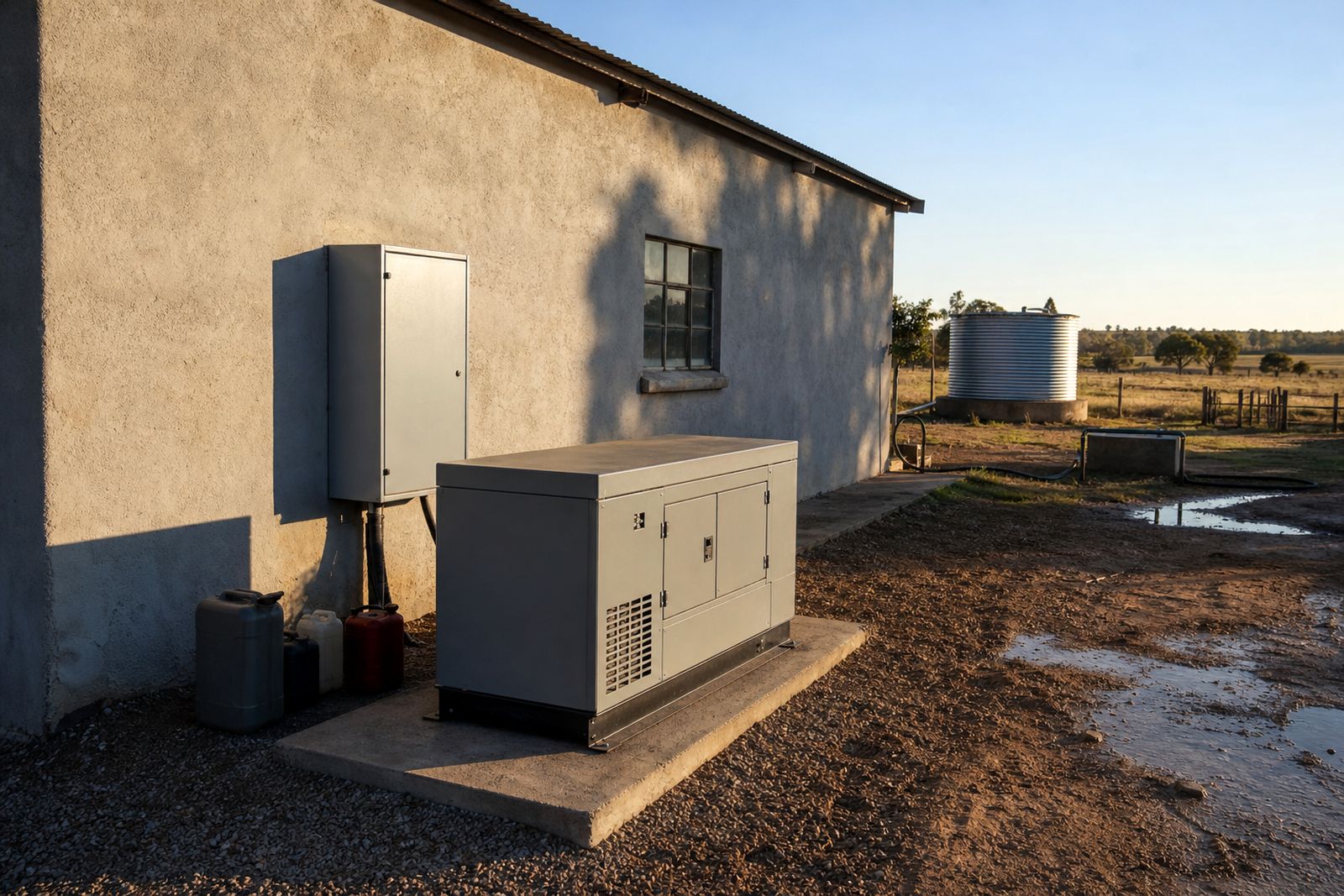
Borehole pumping on farm power
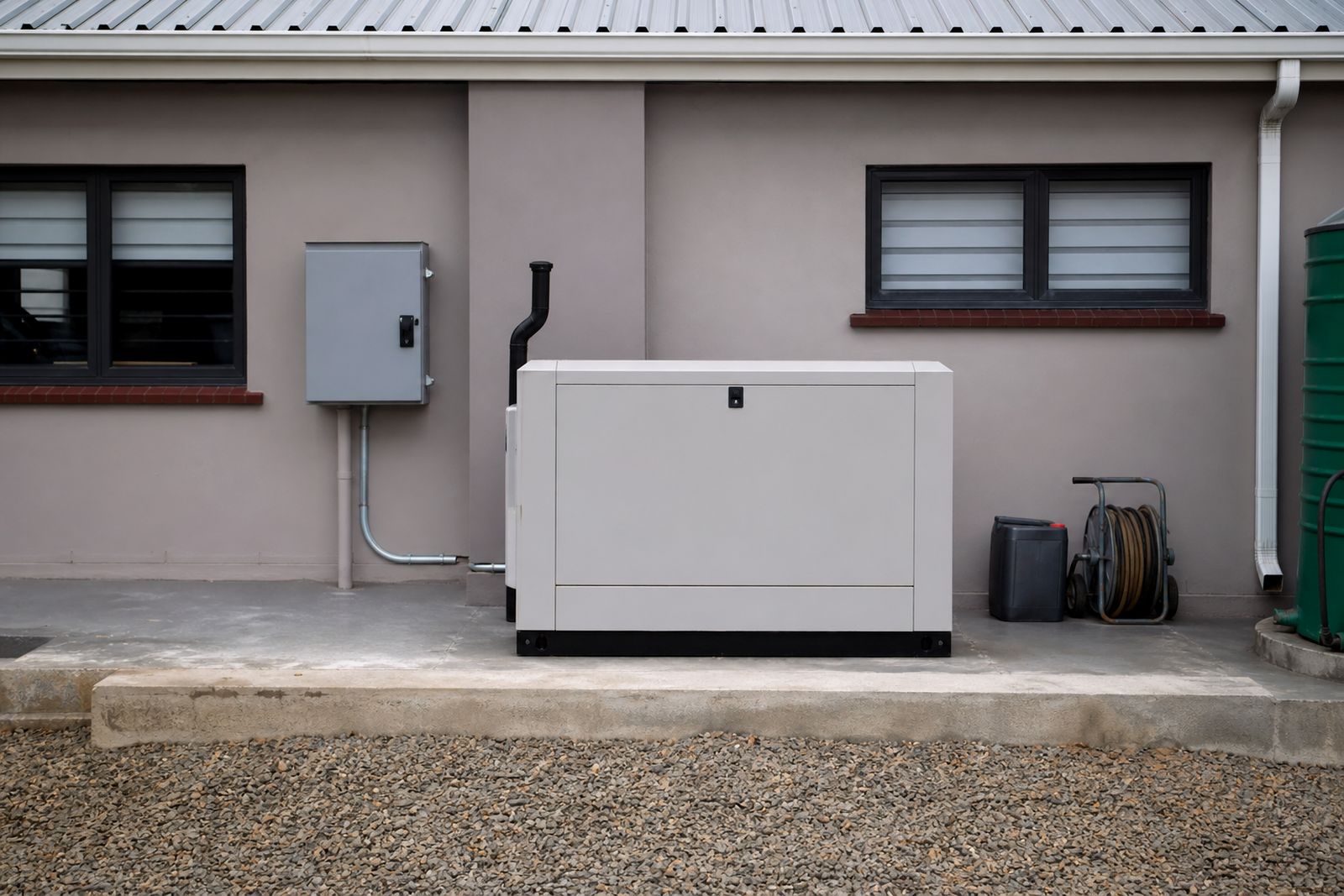
A farm borehole setup usually has one job that cannot slip: keep water moving for stock, tanks, washdown points, or lands close to the pump line. The primary genset is a farm-duty 30 kVA unit, matched around borehole motor start-up, cold room demand, and a few workshop circuits that matter during an outage. The useful check is not only running load, but what happens when the pump kicks in after standing idle overnight.
On many South African farms, the borehole is not sitting next to the main buildings, so cable route, pad level, and weather cover matter as much as kVA. Dust from lands, chaff near sheds, and summer thunderstorms all affect where the set can stand and how often filters need attention. If the same supply also feeds a cold room or feed prep area, those loads should be named before anyone assumes the pump is the only draw.
Runtime planning on a borehole site starts with water demand, not only the load-shedding stage. Some farms need short pumping windows to refill tanks after each outage, while others must carry longer stretches for irrigation changeovers or livestock supply. FarmDuty 30 kVA should be judged against the borehole motor plate, pump starting method, and whatever else stays live when the workshop opens.
Checks before the pump starts
- Record borehole pump kW and starter type
- Match a farm-duty 30 kVA unit to the noise and fuel use you can live with on site
- List tank, cold room, and workshop essentials
- Keep a Runtime note near the changeover
- Photograph panel labels and pump motor plate
Send the farm borehole enquiry through our contact form if the site needs to be checked against pump duty and switching method. Where ATS or manual changeover gear forms part of the job, the right starting point is the Gensets and Panels range, not a rough estimate from pump size alone. Mention whether the borehole line also carries a cold room, pressure pump, or workshop compressor.
A quick sketch of the yard helps more than a long description when the borehole is far from the main DB. Include the pump house, storage tanks, workshop, and any point where the supply splits. A photo of the existing board and changeover area is often enough to show whether cable runs and placement are realistic.
Common failures at the borehole
Trouble starts when the borehole motor is treated like an ordinary plug load. A pump that starts hard can drag the whole system if cold rooms, pressure sets, or tools come on at the same moment. Filters also block faster on dusty farm roads, and neglected pad drainage turns into a problem after heavy rain.
Placement goes wrong when the genset is tucked too close to a wall, under light roofing, or where seed, feed, and loose dust collect. Farm sites also need thought about distance from the pump house, refuelling access, and who will read the panel in poor light before first milking or irrigation rounds. Noise matters less than at an estate, but it still matters near staff houses and the homestead.
Load order needs to be written down when one generator supports water, cooling, and workshop tasks on the same farm line. Start with the borehole supply, then bring in the circuits that protect produce, livestock, or essential repair work. If everyone switches on whatever they need at once, the weak point usually shows itself during motor start.
What to hand to the next shift
Leave one sheet at the board with the farm name, generator model, borehole circuit, fuel level, running hours, and the switching sequence. Add the pump motor details, the tank level target, and any loads that must stay off until water is up. That note is what keeps an early-morning restart from turning into guesswork.
If a fault occurred during Stage 4, note it. Patterns matter more than single examples. Browse related Projects for jobs that mirror this setup.
If the farm has separate duties such as irrigation, packhouse cooling, and workshop welding, treat them as separate power questions rather than one blurred requirement. A borehole setup works best when the water system is defined properly first. After that, other loads can be added with their own limits and order.
What our Backup Genset customers say
Verified Google reviews
Tell us about your backup power
Send a note through our contact form with the circuits you need to keep running, the kind of site, your fuel preference, how the changeover works today and your area, and we will come back with practical genset options and a quote.
Open the contact form