

Home & estate
Keep lights, security, and garage doors steady when the grid drops.
Power points that matter at home
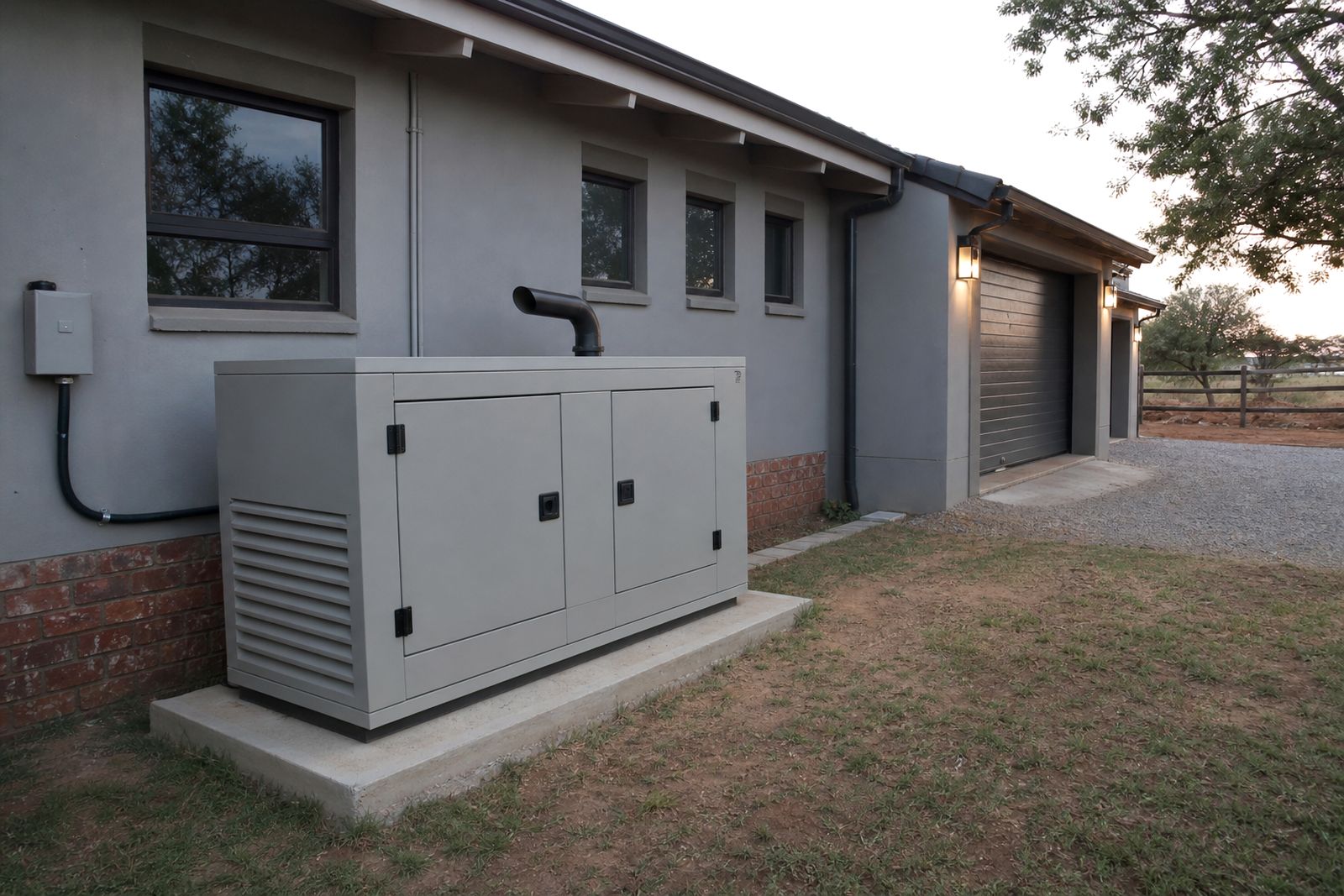
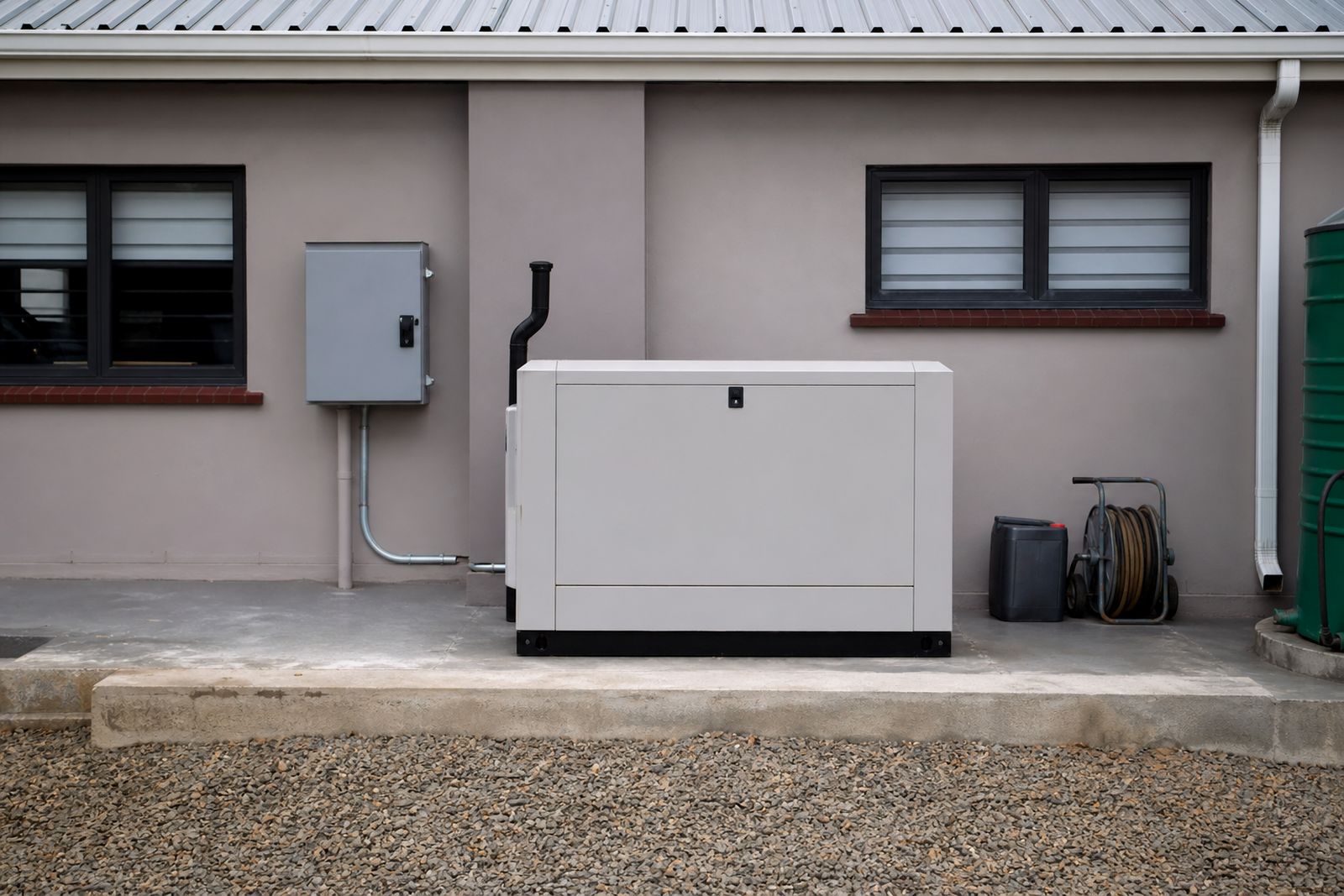
A home or estate backup setup usually starts with the essentials that cannot drop. The HomeStandby 8 kVA suits lighting, perimeter security, gate motors, alarm systems, WiFi, and selected plug circuits. Most households do better when the backed-up side is kept tight rather than trying to carry every appliance in the house.
Residential settings in South Africa bring their own constraints around boundary walls, neighbours, paving, rain splash, and available space beside the DB. In estates, body corporate rules may affect placement, working hours, and how visible the set may be from the street. Coastal homes need extra attention to corrosion and salt air, while inland suburbs often deal with dust and dry winter conditions.
Power cuts patterns change what a household needs from a generator. If outages are short, owners often prioritise lighting, security and garage access over heavy kitchen loads. Where Stage 4 or Stage 6 is common, fuel planning and sensible circuit separation become more important so the HomeStandby 8 kVA is not forced into unstable starts.
Checks before choosing the position
- List gate, alarm, lights, WiFi first
- Match home standby 8 kVA to the noise and fuel you can live with for your site
- Test the changeover with the people at home
- Keep a short Runtime note near the DB
- Photograph isolator, earth point, and meter reading
For a home or estate setup, use our contact form and note whether the generator must carry gate motors, alarm, exterior lighting, fridges, or a borehole pump. Add links to Gensets and Panels if you need a changeover, ATS, or a dedicated backup board. Mention any inverter or battery system on site so the handover point is clear.
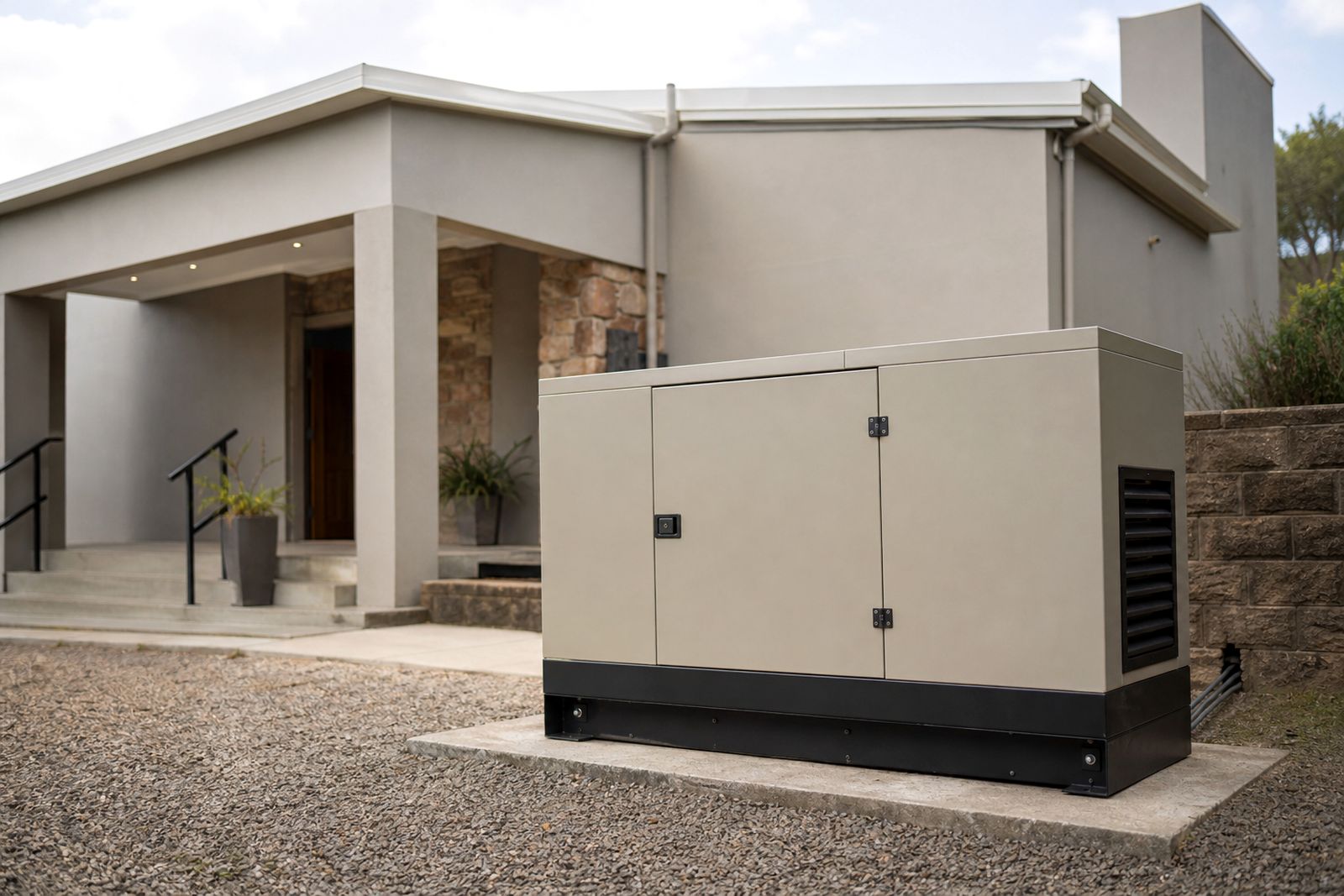
A clear photo of the main DB and the proposed generator area helps narrow down what will fit on site. Driveway width, wall height, and where the exhaust will face all matter on suburban properties. If there is an existing inverter or solar installation, include that in the notes so the circuits are understood properly.
Common snags on estate installs
Problems usually start when too many household loads are grouped together on the backed-up side. Pool pumps, ovens, geysers, and large air conditioning units can overload a domestic set even when the lights seem fine at first. Another frequent issue is poor ventilation near walls, planter boxes, or enclosed side passages where heat and exhaust have nowhere to go.
Neighbour impact matters more in estates than on larger plots. Noise level, refuelling access, and service clearance should be considered before the slab or brackets are fixed in place. A compact position that looks neat can still be wrong if the canopy door cannot open fully or if the exhaust points straight at a patio.
Household operation also suffers when automatic gates, electric fencing, and indoor circuits are not clearly separated. During an outage, the priority is usually access and security first, then selected convenience loads. Marking those circuits properly reduces confusion when someone else has to operate the system at night or during a weekend outage.
What to note for handover
Keep one page near the installation with the backed-up circuits, fuel type, changeover method, and the last service entry. Add the running hours, where the isolator sits, and any loads that must stay off when the generator is carrying the house. That record is useful for family members, estate maintenance staff, and any electrician called out later.
If a fault occurred during Stage 4, note it. Patterns matter more than single anecdotes. Browse related Projects for jobs that mirror this route.
If the property has a cottage, borehole, or separate workshop, treat that as a different power requirement instead of adding everything onto one domestic package. A focused brief for the house usually produces a cleaner result than trying to feed every building from the same small standby unit.
What our Backup Genset customers say
Verified Google reviews
Tell us about your backup power
Send a note through our contact form with the circuits you need to keep running, the kind of site, your fuel preference, how the changeover works today and your area, and we will come back with practical genset options and a quote.
Open the contact form