

Guest kitchen backup
Kitchen and cold line cover for guest nights.
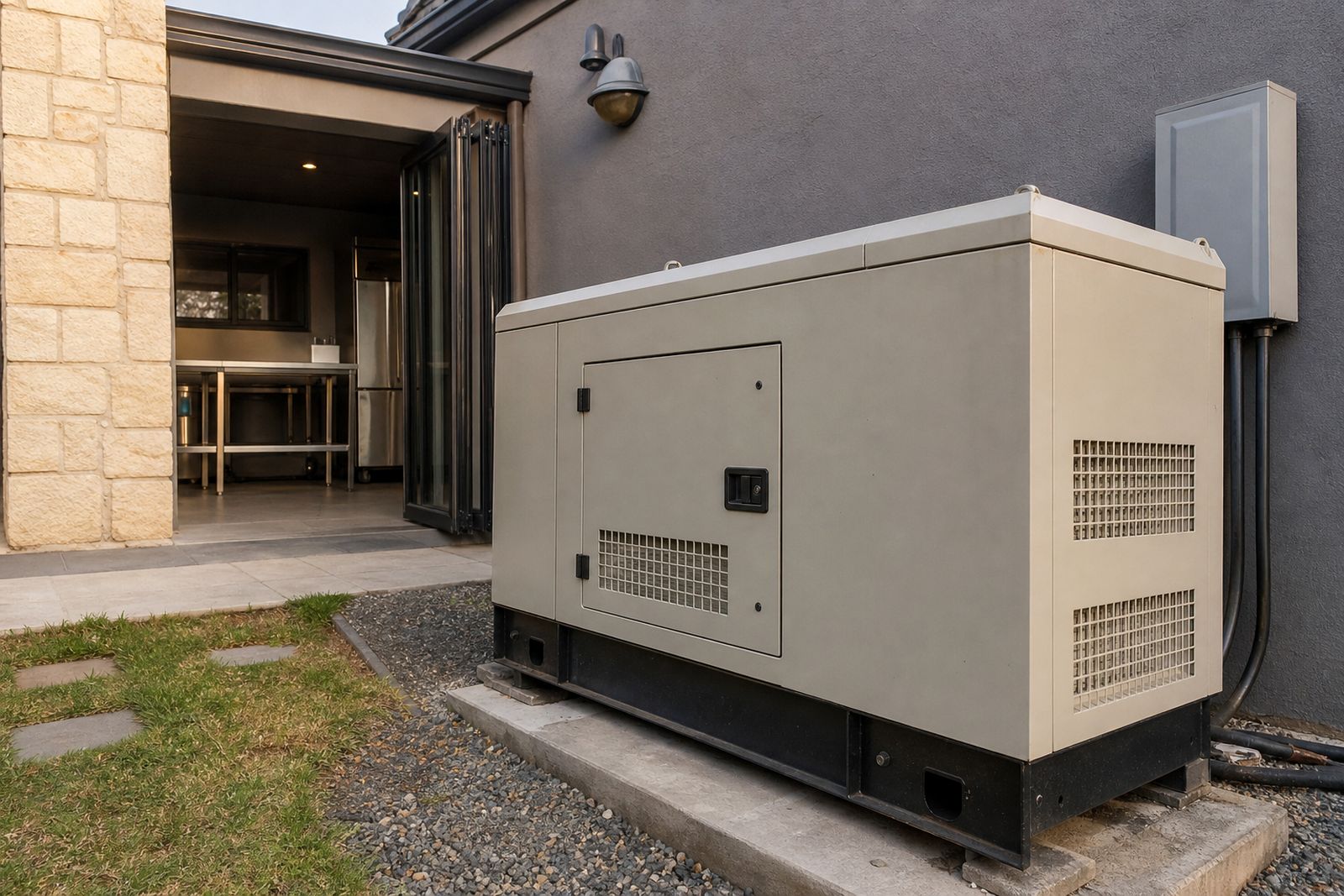
Kitchen backup for guest service
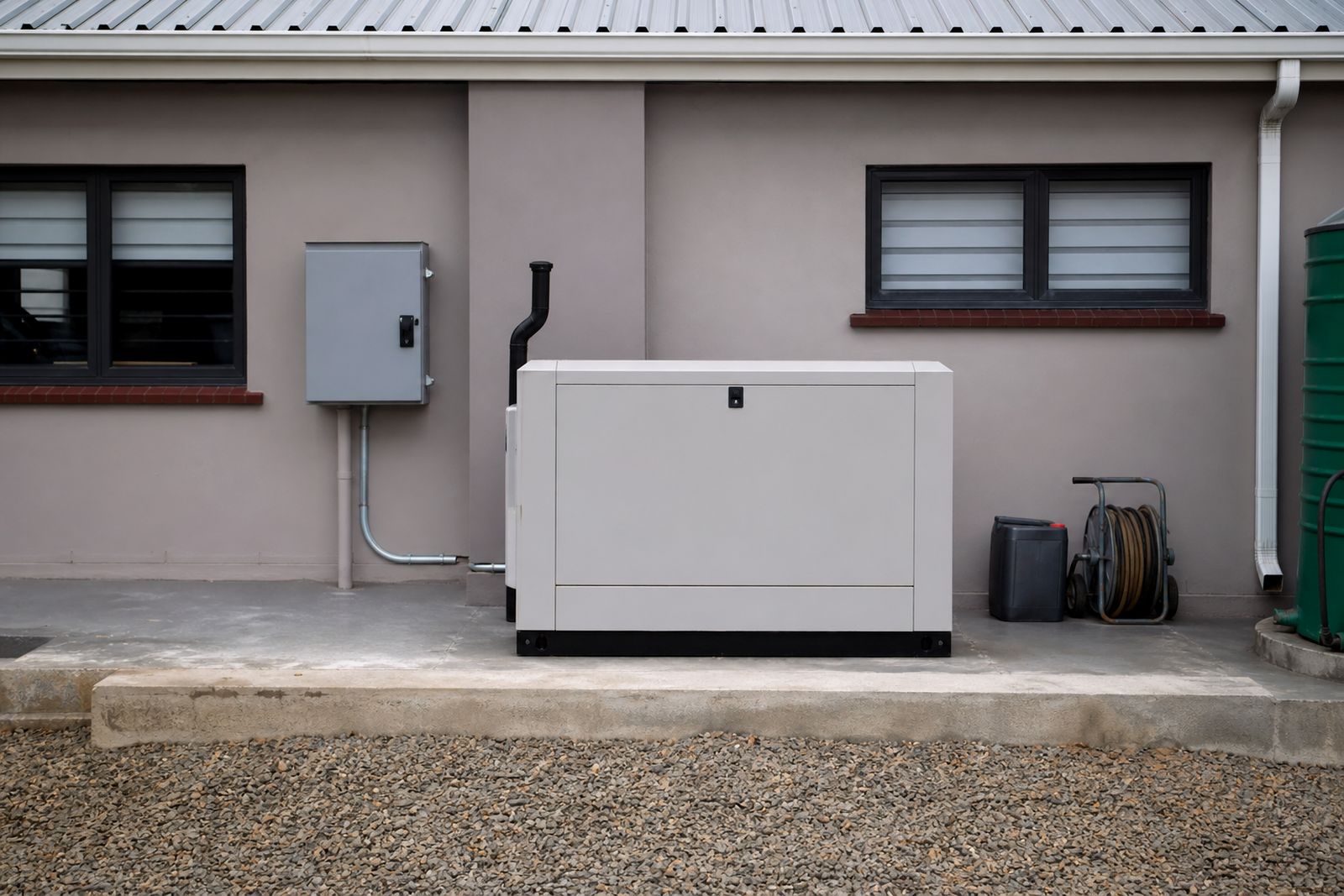
A hospitality kitchen cannot lose the cold room, extraction, or the line when supper service is building. The primary genset is sized for retail continuity at 25 kVA, aimed at keeping prep areas, refrigeration and essential lighting live for guest nights. Priority usually goes to fridges, freezers, POS, pass lights and selected plugs rather than every cooking load.
Kitchen sites in South Africa vary sharply by heat, grease, salt air and delivery access. Coastal venues need extra attention on corrosion around terminals and canopy hardware, while inland kitchens often fight dust around intake points and service yards. Noise also matters more where bedrooms, patios or neighbouring units sit close to the generator position.
Power cuts planning for hospitality kitchens starts with what must stay cold and what can pause for an hour. Deep fryers, ovens and large hot-line equipment can push demand up fast, so the handover list should separate refrigeration and lights from heavy cooking appliances. The primary genset needs a realistic kitchen schedule, not a nameplate total from every appliance in the building.
Kitchen circuits to keep alive
- List fridges, freezers and cold room feeds first
- Match the main genset to the noise and fuel you can live with here
- Test changeover before breakfast and dinner service
- Keep the pinned Runtime note by the DB
- Photograph breaker labels, isolator and first running hours
For this kind of kitchen, include the pass, cold room, extraction, and point of sale loads when using our contact form. Add links to Gensets and Panels if you need changeover gear, a day tank, or better load control for refrigeration starts. Mention which appliance bank tripped first during the last outage so the backup setup matches service hours.
A simple sketch of the kitchen DB, cold room position and proposed generator bay helps more than a long equipment list. Include any existing panel photos, especially where extraction, refrigeration and guest-area lighting share circuits. Access matters on sites with narrow service passages, refuse yards or basement plant space.
Typical kitchen power mistakes
Trouble usually starts when refrigeration is grouped with too many non-essential plugs, or when compressor starts are ignored during sizing. Exhaust routing also matters on hospitality sites because odour, heat and noise can affect staff entrances, bin yards and nearby guest rooms. Filter checks should be tighter where grease, flour dust or windy service alleys surround the machine.
Hotels, lodges and guest venues often need the canopy placed away from dining areas and bedroom windows. Even a quieter set still needs sensible clearance from walls, louvre vents and delivery access routes. Kitchen sites in busy centres such as Clearwater, Cresta, Pavilion and Tyger Valley also benefit from a loading plan that does not clash with mall rules or after-hours access.
Another failure point is trying to run every element of the kitchen at once after a blackout. Cold storage, prep lighting, POS and selected extraction should come on in a staged order, with heavy heating loads added only if the set and panel arrangement allow it. Write that sequence down where duty managers and night staff can see it.
Kitchen handover details that matter
Keep one page at the site with the kitchen name, generator model, last fuel fill, running hours and the exact circuits backed up. Add notes for cold rooms, ice machines and any equipment that must not restart together. If you pinned a runtime note, record which Runtime page the team should use.
If a fault occurred during Stage 4, keep a note of it. Patterns matter more than single incidents. Browse related Projects for jobs that match this route.
Where a venue has separate duties such as kitchen, laundry and accommodation, each load should be reviewed on its own merits. Forcing one backup plan across every part of the property often leaves the kitchen short at the busiest time. A clear brief for food service loads gives a better basis for selecting the right arrangement.
What our Backup Genset customers say
Verified Google reviews
Tell us about your backup power
Send a note through our contact form with the circuits you need to keep running, the kind of site, your fuel preference, how the changeover works today and your area, and we will come back with practical genset options and a quote.
Open the contact form