

Remote mining camp power
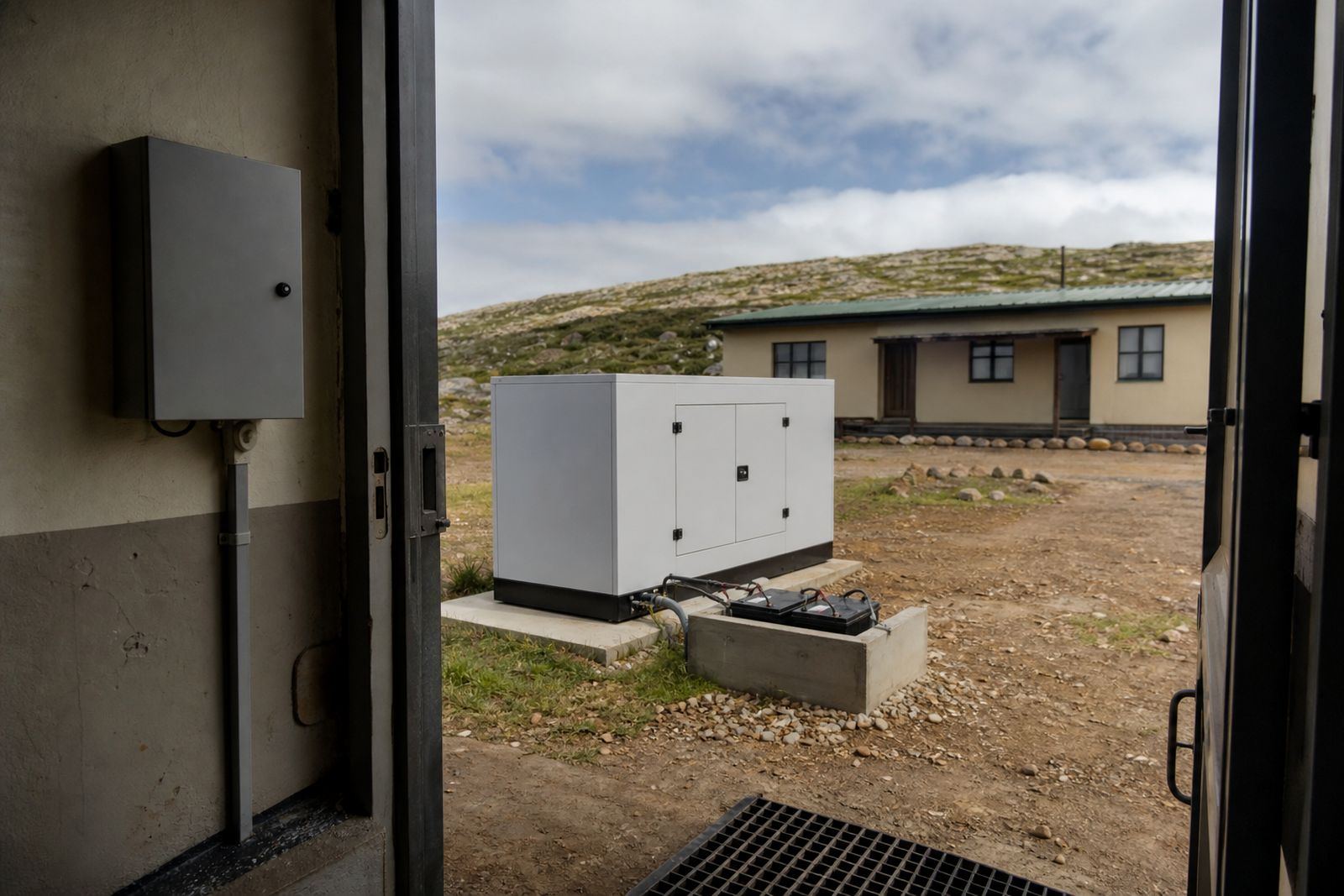
Remote camp power with trailer access and dual battery.
Power for remote mining camps
A mining camp runs more than sleeping units and a kettle line. The trailer genset is usually matched to accommodation blocks, kitchen load, ablutions, security lighting and a small office, with trailer access kept in mind for rough haul roads and repositioning around the camp. Dual battery backup matters here because first start often happens before sunrise, after a cold night and with no room for a missed shift change.
Camp conditions change the generator brief long before kVA is discussed. Red dust on opencast routes, windblown fines around the canopy, and long cable runs to containers all affect placement, filter checks and how the set is protected from tampering. In the Bushveld, heat pushes cooling hard through the afternoon, while Highveld winter mornings can expose weak batteries and sluggish cranking.
Runtime planning at a mining camp starts with what cannot drop out at handover. Kitchen freezers, borehole or booster pumps, perimeter lights, routers, radios and the clinic fridge, if there is one, should be listed ahead of laundry heaters and workshop tools. MineCamp Trailer 60 kVA must be loaded with that order in mind so camp life stays workable through scheduled cuts and longer utility failures.
Camp checks before first placement
- Confirm access width for trailer delivery
- Match the trailer genset to the noise and fuel you can live with at this mine camp
- List kitchen, pump and lighting priorities
- Pin the latest Runtime note inside the site file
- Record first start hours and fuel level
For a mining camp enquiry, use our contact form and note the camp name, crew size, and where the trailer will stand. Add links to Gensets and Panels if the setup needs ATS, a day tank, or a load manager for kitchen, ablutions, and sleeping quarters. Mention any unit that tripped before, plus which load caused the first voltage dip.
A simple camp sketch helps more than a long description. Mark the kitchen, sleeping quarters, ablutions, pump point, guard post and the intended generator standing area, then add rough cable distances if you have them. A clear photo of the existing DB and any changeover point is useful where the camp has been expanded in stages.
Common trouble on mine camp sites
Problems usually start when camp load grows quietly after the generator size was chosen. Extra container units, hot water demand, added floodlights and workshop grinders can push a set that was originally meant for accommodation and essentials only. Dust is another regular issue, so intake filters, door seals and radiator cleanliness need closer attention than they would on a sheltered urban site.
Noise and exhaust direction matter in camps where people sleep close to the set. Place the trailer so fumes do not drift across accommodation doors, mess tents or clinic openings, and keep service access free even after pallets, drums or fencing are moved nearby. On sloped ground, stabilising the trailer properly also helps with safe refuelling and routine inspection.
Shift routines can also trip a camp installation. If the pump bank, kitchen equipment and exterior lighting all come on together at dusk, the generator sees a very different step load from the rest of the day. Write that sequence down at the canopy so day and night crews use the same order.
Notes that help the next shift
Keep one camp sheet with the site name, genset model, running hours, last fuel fill, next service point and the order of priority loads. Add the parked position, earth point, key holder and the runtime note used for this camp. That sheet should stay with the power file so a new supervisor can follow it without guessing.
If a fault occurred during stage 4, note it. Patterns matter more than single incidents. Browse related projects for jobs that mirror this route.
Where a camp has separate accommodation, workshop and pumping duties, split the requirement clearly instead of forcing one trailer set to cover every future addition. A tighter brief makes it easier to match the right equipment to living areas versus harsher service loads. That is especially useful when camp layouts change as mining activity moves.
What our Backup Genset customers say
Verified Google reviews
Tell us about your backup power
Send a note through our contact form with the circuits you need to keep running, the kind of site, your fuel preference, how the changeover works today and your area, and we will come back with practical genset options and a quote.
Open the contact form