

Workshop power sizing
Compressors, welders, and lights sized without guesswork.
Workshop loads that bite back
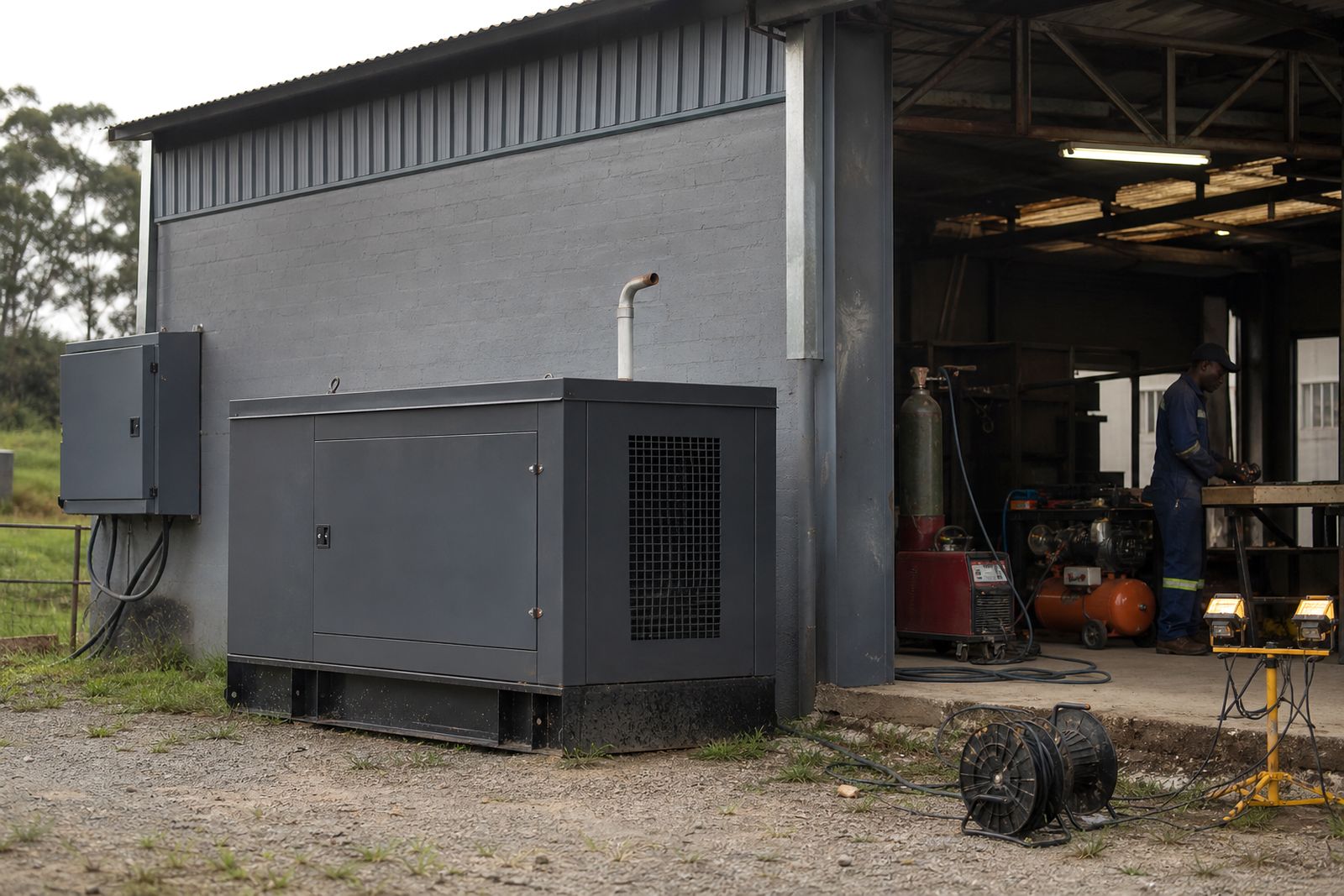
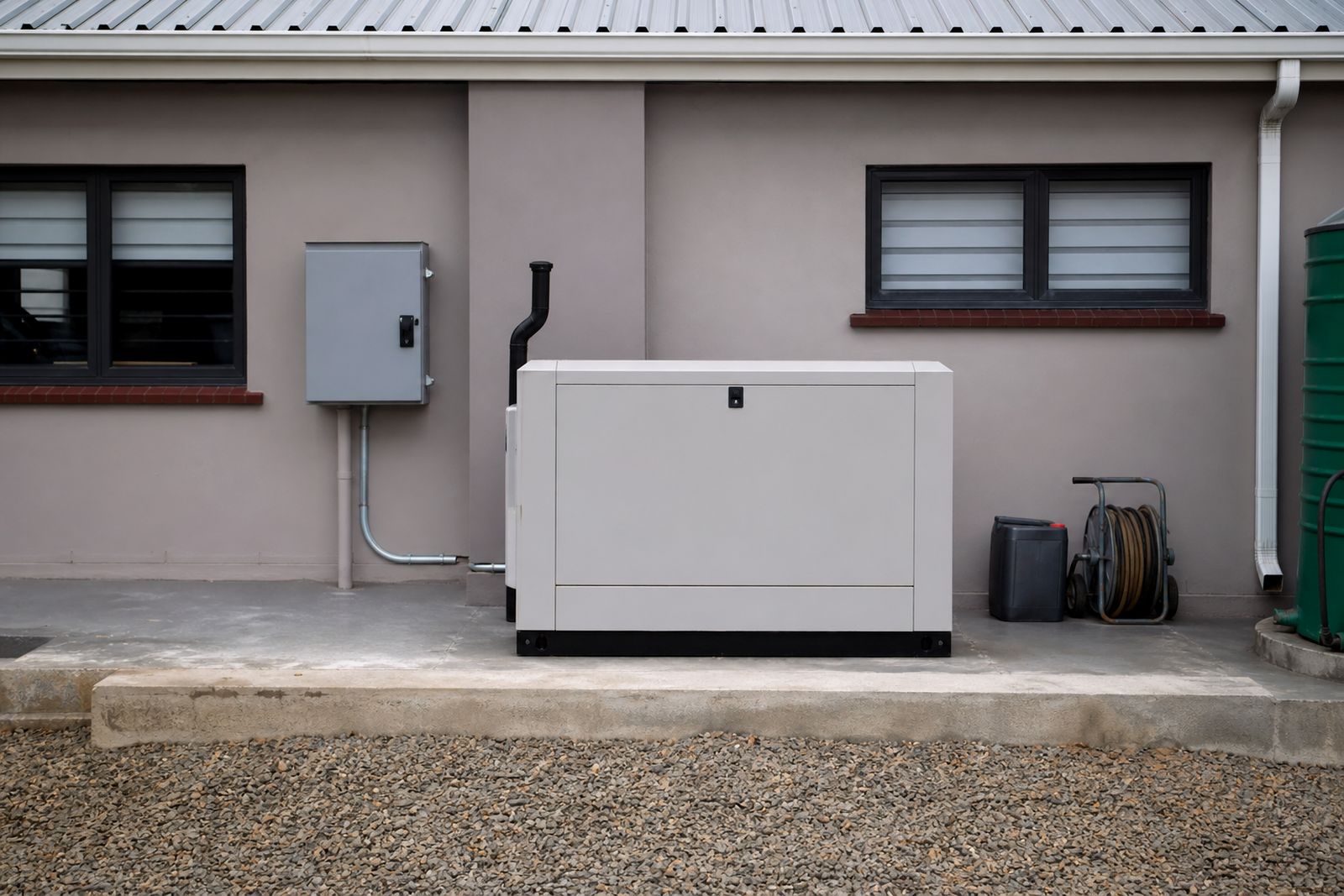
A workshop bay draws power in uneven bursts, not in neat office-style demand. The usual mix is compressors, welding sets, task lighting and a roller door, so the starting surge matters as much as the running load. Industrial Bay 50 kVA suits bays where the heaviest tools are planned onto the supply instead of all kicking in together.
Conditions around a South African workshop change how the generator must be set out. Inland dust blocks filters faster, while coastal air pushes harder on terminals and exposed steelwork. Bays in mixed-use areas also need the canopy position checked against nearby units, parking lanes and exhaust discharge.
Power cuts do not hit a fabrication or repair bay gently. During Stage 2 you may only need lights, the office point and one compressor, but Stage 4 or 6 often means keeping welding and air supply going for the full outage slot. That is where a realistic runtime note and proper load order matter for workshop power sizing.
Checks before the first start
- List welders, compressors, and lighting separately
- Match workshop power sizing to the noise and fuel you can live with in the workshop
- Test changeover with the bay team present
- Keep the latest Runtime note by the panel
- Record gauges during first loaded run
Include the workshop bay name when you use our contact form. Add DB photos, the compressor or welder ratings, and whether you need gear from Gensets or Panels for changeover, ATS, or a day tank. If a previous unit tripped on motor starts or dimmed task lights, note what was running at the time.
A simple sketch of the bay helps more than a long description. Mark the DB, the compressor position, cable route, and where the canopy can sit without blocking deliveries or vehicle movement. A clear photo of the existing board also helps when the workshop has been expanded in stages.
Common workshop power snags
Trouble usually starts when the bay is sized on running figures only. Air compressors can hit hard at start-up, welders can be used in pairs without warning, and portable grinders often get added with no allowance made. Filter checks also need to be tighter where grinding dust, paint overspray or metal filings are part of the day.
Placement also matters more in a workshop than many expect. Hot exhaust cannot be aimed into a loading lane, under a low awning or toward a parts store with open doors. Where neighbouring units share a yard, the noise discussion should happen before the slab or mounting position is fixed.
Many bays lose output because every circuit comes on in one hit after changeover. Better practice is to bring up lights first, then air, then the heavier fabrication equipment once the set is carrying cleanly. Put that sequence near the panel so the night shift follows the same order.
Shift handover notes for the bay
Keep one page in the bay with the site name, generator model, last service hours, fuel status and the order of priority circuits. Add the isolator location, compressor load, and whether welding should wait until the set is stable. That page is useful when a different foreman or artisan is on duty during power cuts.
If a fault occurred during Stage 4, keep it in mind. Patterns matter more than single anecdotes. Browse related Projects for jobs that mirror this route.
If the workshop yard also feeds offices, cold storage or wash bays, split the brief instead of treating the whole property as one lump load. A repair bay has different surge behaviour from admin plugs and lighting. Separate notes make the generator choice and runtime planning far more usable on site.
What our Backup Genset customers say
Verified Google reviews
Tell us about your backup power
Send a note through our contact form with the circuits you need to keep running, the kind of site, your fuel preference, how the changeover works today and your area, and we will come back with practical genset options and a quote.
Open the contact form