

Battery float care
Cold Highveld mornings punish weak batteries.
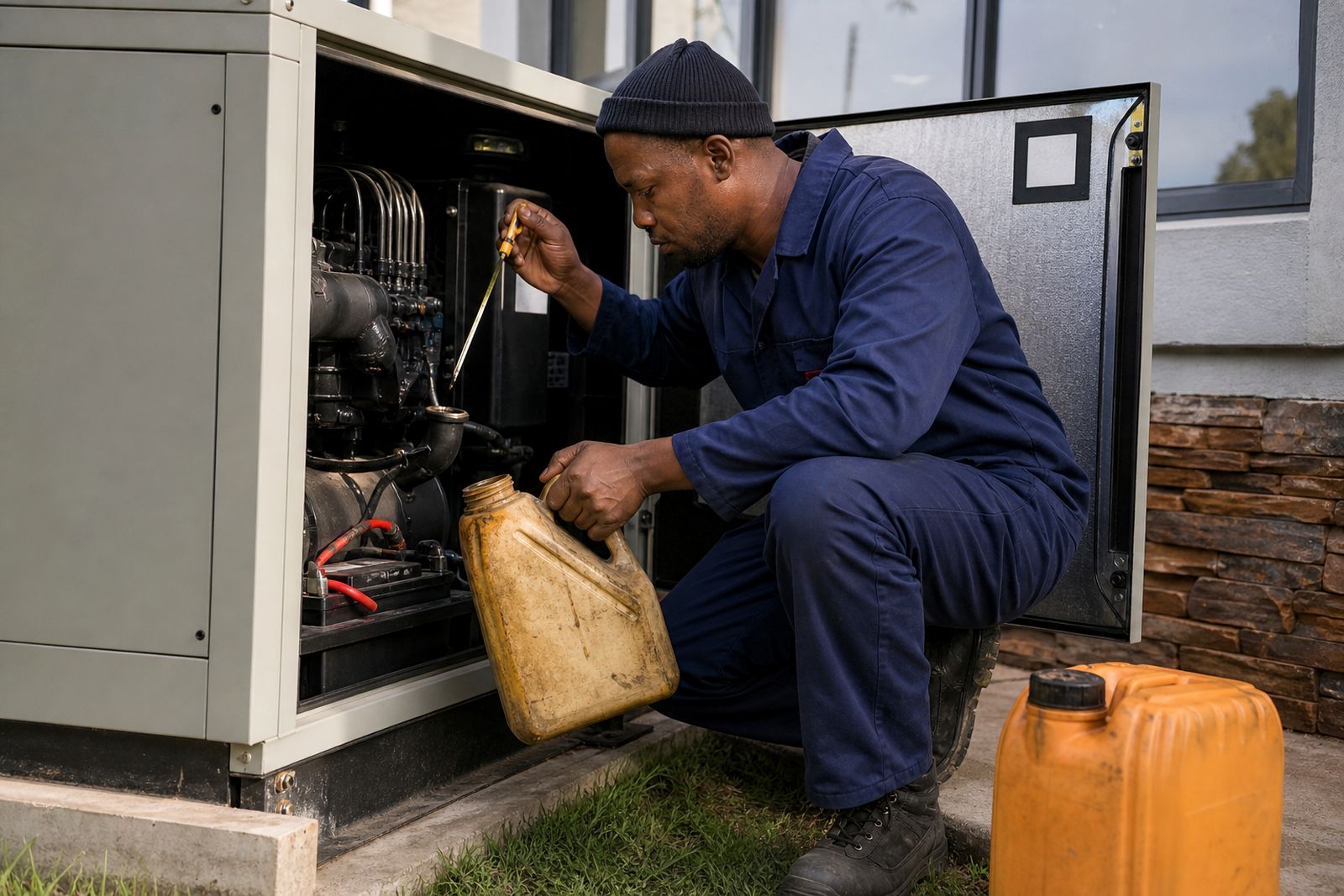
Cold-start battery risk
Winter battery care matters for teams running standby sets on the Highveld and inland sites. A float charger matters most before the first cold spell, when battery voltage drops overnight and a diesel starter has less cranking speed at dawn. Set the charger correctly, then verify the bank can still recover after a routine test start.
Start with the battery itself before touching charger settings. Check terminal clamps for white sulphate, inspect the case for swelling, and read the charger display against the battery type fitted to the set. Where the site keeps a log sheet, note float voltage, mains present, and any low battery alarm seen during power cuts.
A manual may list charging values, but the site team still needs a simple check before winter mornings arrive. That suits plant rooms in Germiston where the set must start first time after a cold night.
Winter faults often begin at the charger, not at the engine. Low incoming supply to the charger, a failed fuse, or the wrong battery programme can leave a 24 V bank looking acceptable until the starter draws hard current. On open industrial sites, dust around vents and loose DC links also show up when August mornings turn sharp and dry.
Use this note together with a genset guide and a site guide when checking winter readiness across several locations. If the charger arrangement on your set differs from the usual panel layout, use our contact form and include the city, battery voltage, and charger make. A clear photo of the charger face helps when the labels are faded.
Conditions change the battery routine across South Africa. Durban humidity encourages corrosion on terminals and charger screws, while inland dust settles inside older control panels. On the Highveld, cold dawn temperatures make float voltage accuracy more important because weak banks drop away fast after repeated Stage 4 starts.
Winter charger checks
- Verify charger mains supply is present
- Read float voltage against battery rating
- Inspect terminals for corrosion and looseness
- Confirm battery type matches charger setting
- Test start after overnight float charge
Sites in Germiston, Clearwater, and Cresta often see the same issue before winter: charger lamps show healthy, yet the bank falls away under cranking load. Record the morning voltage before start, then compare it with the reading immediately after the engine fires. One photo of the display tells the story better than a long description.
If the site keeps spare fuses or battery lugs, check that they are dry, labelled, and stored near the charger circuit documentation. Damaged DC leads should not travel loose in toolboxes under Panels. Keep a small brush and terminal grease with the battery kit so corrosion can be dealt with during inspections.
Morning-start readiness
The float charger before winter is written for the person standing in front of the set before sunrise, not for a filing cabinet. Open Runtime when you need a short field check that matches South African backup conditions. On battery care, the key point is simple: confirm the charger is maintaining the bank long before the next outage asks for a full crank.
When shifts change, hand over the battery condition with the same care as fuel level and running hours. Note any charger alarm, weak crank, or recent battery replacement on the site sheet. Trailer units and remote compounds need the charger plug, breaker, and extension route checked as well, because one disconnected feed can flatten a bank over a weekend.
What our Backup Genset customers say
Verified Google reviews
Also worth a look
Tell us about your backup power
Send a note through our contact form with the circuits you need to keep running, the kind of site, your fuel preference, how the changeover works today and your area, and we will come back with practical genset options and a quote.
Open the contact form