

Canopy dust control
August winds clog filters faster than coastal mist.
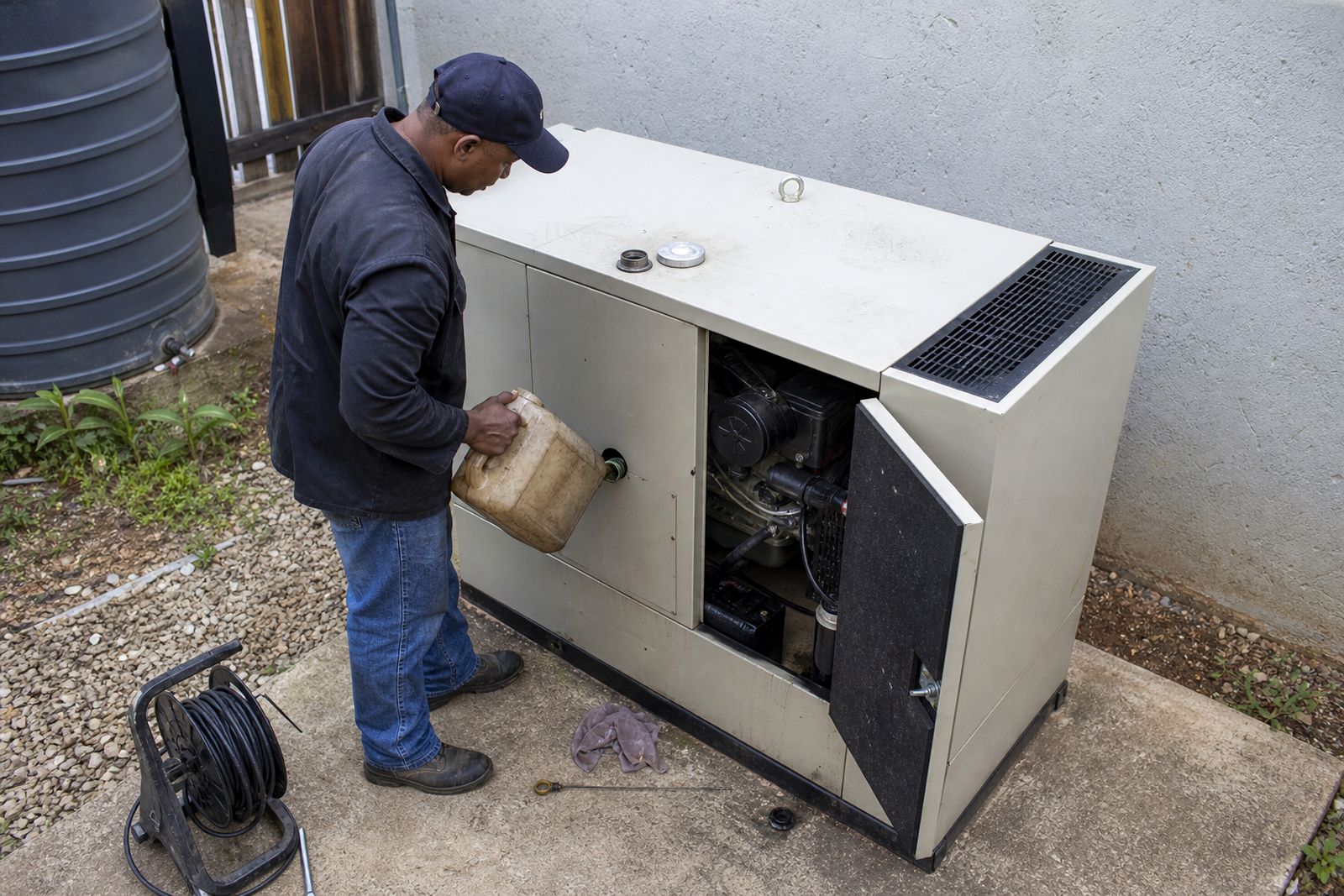
August dust inside canopies
This note is for sites running standby power across Gauteng and the inland provinces. On the Highveld, dry winter wind pulls fine dust into the canopy and loads the intake element far quicker than many weekly routines allow. A filter that looks acceptable on Monday can be restricting airflow by the next test run.
Use the service sheet to note restriction warnings, filter condition, and the date the element was last changed. Photograph the air cleaner housing after inspection, especially if dust has tracked past the seal or collected in the clean side. During power cuts periods, add the engine hours and any black smoke on pick-up so the next crew can judge whether airflow was tight.
Dust care affects runtime as much as tank size. A manual often stays in the document pouch, while a short site note gets read at the canopy door before start-up. That suits warehouse yards, schools, and office parks around Johannesburg, Midrand, and the East Rand.
Highveld sites often see the worst filter loading from late winter into the first dry spring winds. Open plots, distribution yards, and roadside compounds throw up talc-fine dust that packs into pleats and lifts restriction across a short run cycle. If the canopy intake faces a traffic lane, the problem usually shows earlier than on sheltered installations.
Match this note with the genset route and the site route when you log a dusty installation. Use our contact form with the town, engine model, and current hours if the unit works in unusually exposed ground conditions. That helps tie the runtime note to the right machine and setting.
Durban and the coast deal more with moisture film and salt residue, but the inland plateau has a different pattern. In Johannesburg, Pretoria, and the Vaal, winter air stays dry and loose surface dust moves quickly through louvers and pre-cleaner areas. Battery health still matters in cold mornings, yet blocked intake media can be the hidden reason a set feels flat under load.
Canopy intake checks
- Inspect intake element for grey dust packing
- Check housing seal for dust bypass
- Clean canopy louvers and intake grille
- Note restriction alarm or reduced power
- Verify replacement filter matches engine model
Sites in Germiston, Clearwater, and Cresta often compare dust build-up well because conditions can differ sharply between paved malls and open service yards. When the element looks suspect, include a clear phone photo of the dirty side and the air box lip. That gives a better record than a vague note about poor breathing.
If a spare filter kit is stored on site, inspect the carton before the windy season starts. Crushed boxes, damaged pleats, or a hardened housing seal can turn a quick change into another shutdown. Keep the spare with service items near Panels only if the area stays dry and free of loose grit.
Dusty site shift handover
These runtime notes are meant to be used beside the machine, not buried in long technical paperwork. Read more under Runtime if your standby set works through recurring power cuts, roadside dust, or yard traffic. The useful detail is the pattern of the site, not a generic maintenance slogan.
At handover, tell the next shift whether the filter was inspected, blown out, or replaced, and record the hours. Night teams should also note if nearby sweeping, building work, or truck movement increased airborne dust during the run. On trailer units, check that the canopy doors latch properly, because poor sealing pulls in dirt where it should not.
What our Backup Genset customers say
Verified Google reviews
Tell us about your backup power
Send a note through our contact form with the circuits you need to keep running, the kind of site, your fuel preference, how the changeover works today and your area, and we will come back with practical genset options and a quote.
Open the contact form