Changeover drill
One quiet drill beats a panic WhatsApp at 05:40.
What the drill must prove
Fulufhelo Msimang writes this runtime note for crews who keep packs honest through South African weeks. A changeover drill with the whole team is a habit worth pinning above the panel.
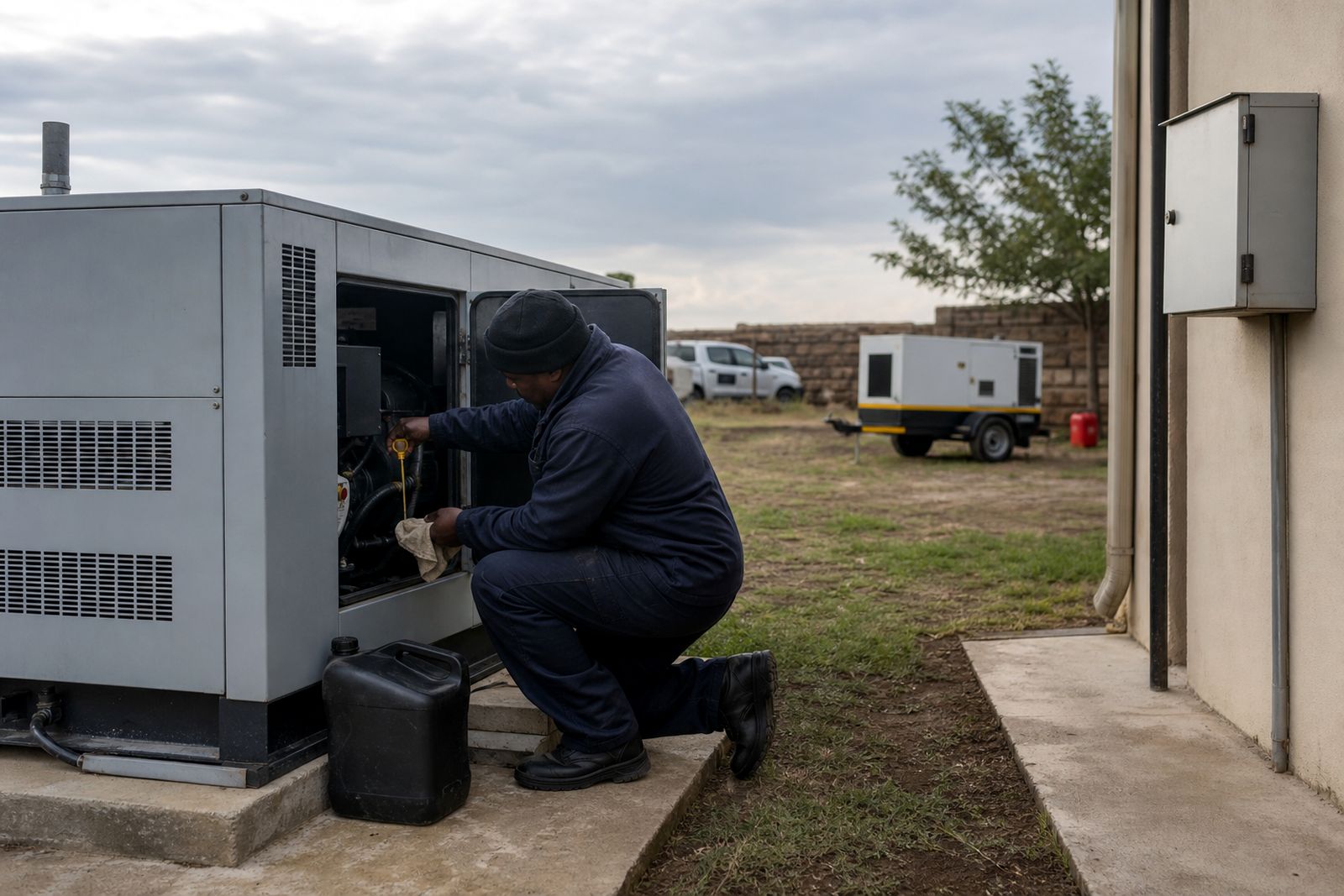
Set the drill up like a genuine outage. Put one person at the main board, one at the generator controller, and one on the phone or radio so transfer times and odd sounds get written down properly. Mark the switch position, note the engine hours before start, and record anything that delays the handover to backup power.
A changeover drill only works when the note lives near the board and the genset, not in an office file. Teams need the shutdown order, transfer steps, and return-to-mains sequence where the duty person can read them during power cuts or an unplanned cut. On busy Gauteng sites, a laminated sheet beside the panel gets used far more than a manual in a cupboard.
A proper drill shows where the handover will stall before a real outage does it for you. Put one person at the mains side, one at the generator panel, and one with the priority loads list, then time each step from utility loss to stable supply. Record any breaker that trips, any alarm code that appears, and any room that stays dark after transfer.
Use this runtime note together with the relevant genset route and the matching site guide. If your board layout, fuel storage, or operating pattern falls outside the normal setup, send the details through our contact form. Add the town, transfer method, and the last recorded running hours so the note fits the site.
Local conditions change how often a team should drill. In Durban, corrosion around terminals and breakers needs closer inspection during transfer checks, while Highveld dust can affect vents, filters, and panel internals by late winter. Sites with summer storm trips should also rehearse night changeovers, because rain, poor lighting, and wet access routes alter how staff move around the plant room.
Before the team starts
- Brief staff on signals and roles
- Check diesel level before transfer
- Verify mains return procedure is posted
- Test one labelled priority circuit
- Watch transfer lamp and breaker response
Run the exercise as if the site is occupied and trading. A retail unit in Cresta, a warehouse in Germiston, and a small office in Clearwater all have different restart priorities, so the team should state them aloud before the switch happens. A quick photo of the board position before and after the drill helps the next shift compare what changed.
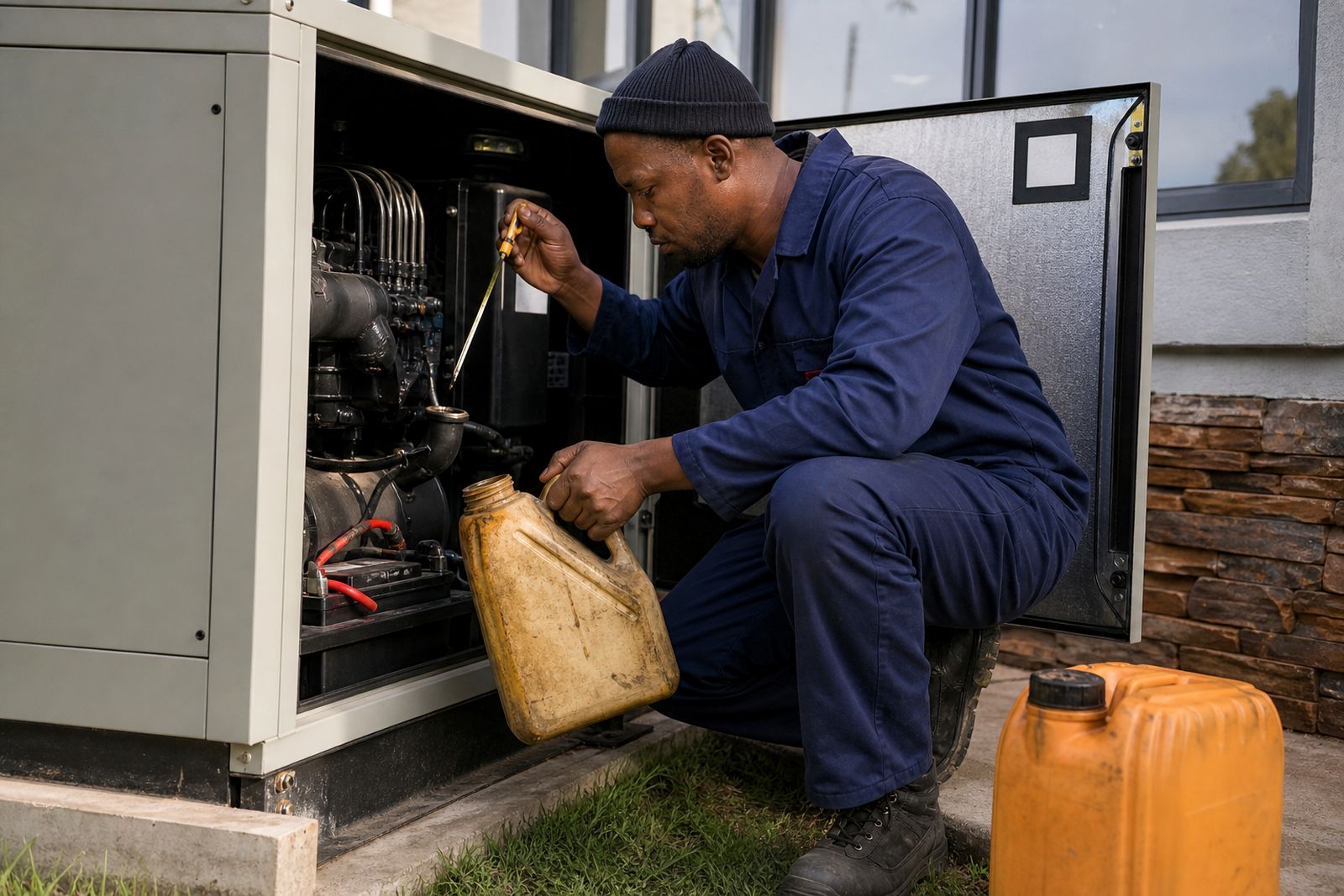
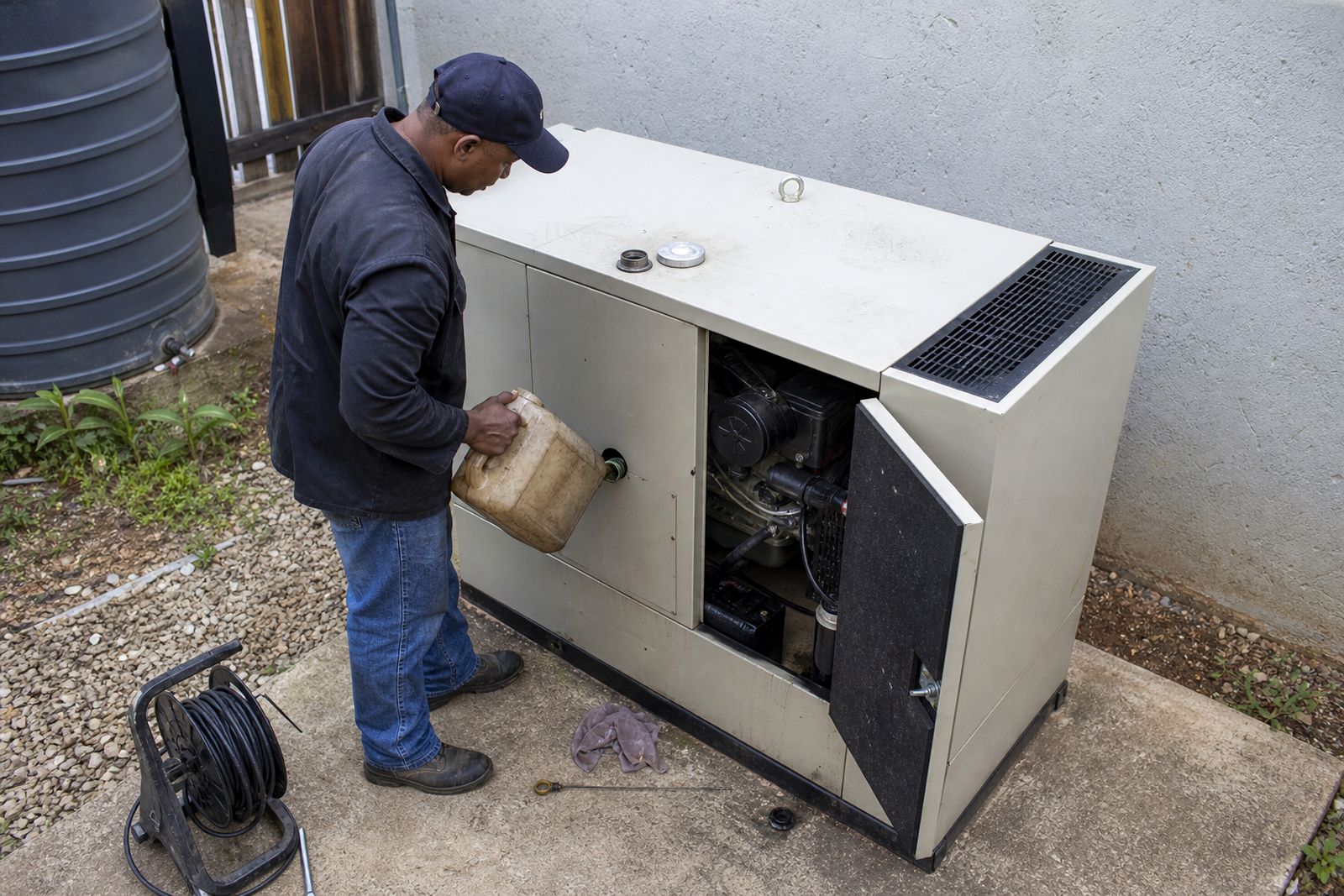
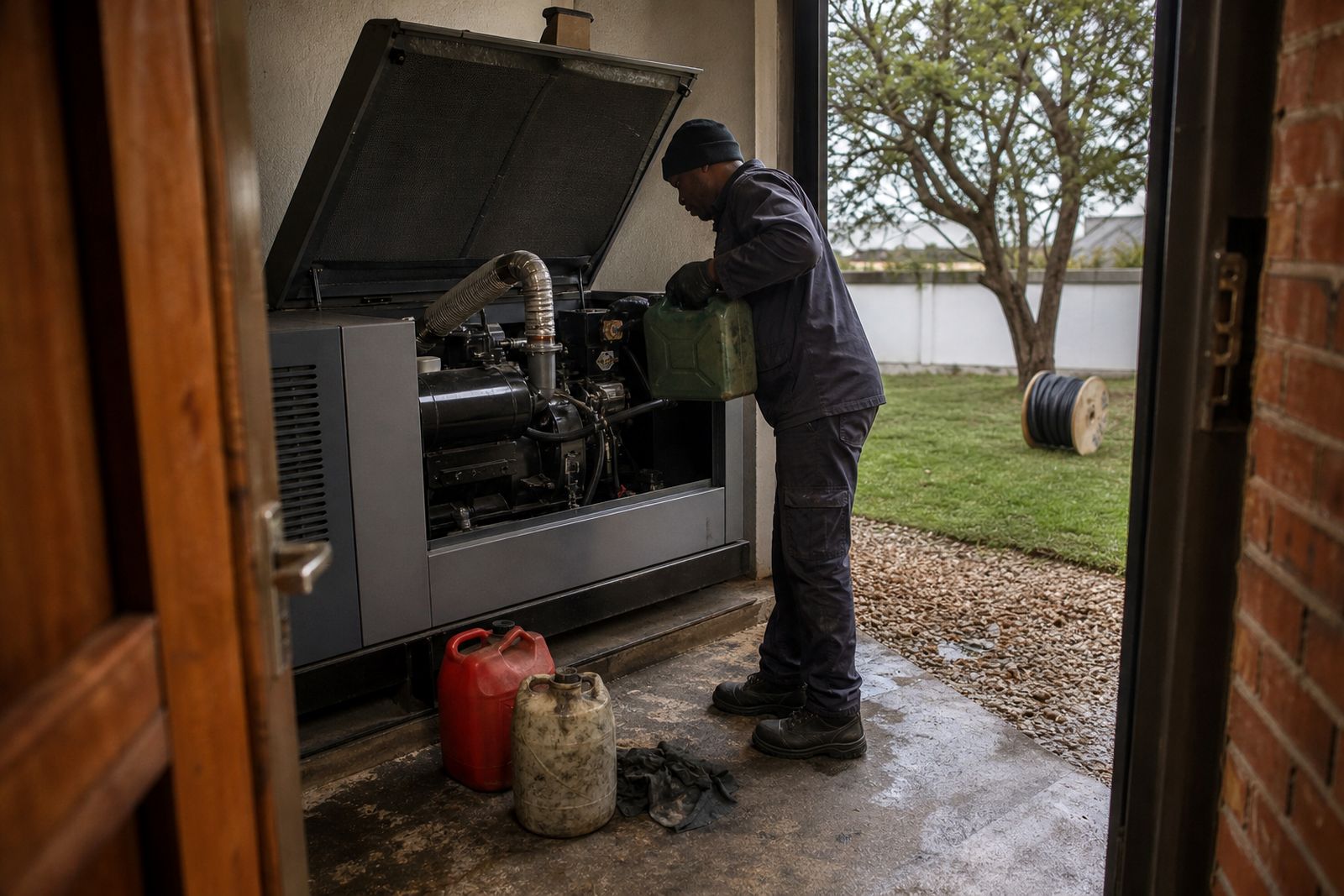
If a spare consumables box stays on site, open it during the drill and confirm nothing critical is missing. Check that torch batteries still work, fuses match the board requirement, and seals or gloves have not perished in storage. Where the generator set sits near distribution Panels, keep the drill sheet with those items instead of leaving it in the cab or workshop.
Handover points after testing
After the drill, write down transfer time, load order, and any alarms or hesitations on start-up. Keep that record with the site pack and compare it against earlier runtime notes under Runtime so trends show up before the next outage. If the exercise exposed confusion, update the wall copy rather than assuming everyone will remember the correction.
Shift handover must include the switch position, fuel reading, and any mode changes made during the exercise. Night staff should know whether the set was left in auto, whether a breaker was isolated for testing, and which loads were deliberately held back. Trailer units also need wheel chocks, coupler locks, and cable routes checked before the team signs off.
What our Backup Genset customers say
Verified Google reviews
Also worth a look
Tell us about your backup power
Send a note through our contact form with the circuits you need to keep running, the kind of site, your fuel preference, how the changeover works today and your area, and we will come back with practical genset options and a quote.
Open the contact form