

Coastal humidity care
Durban plant rooms need a different wipe cadence.
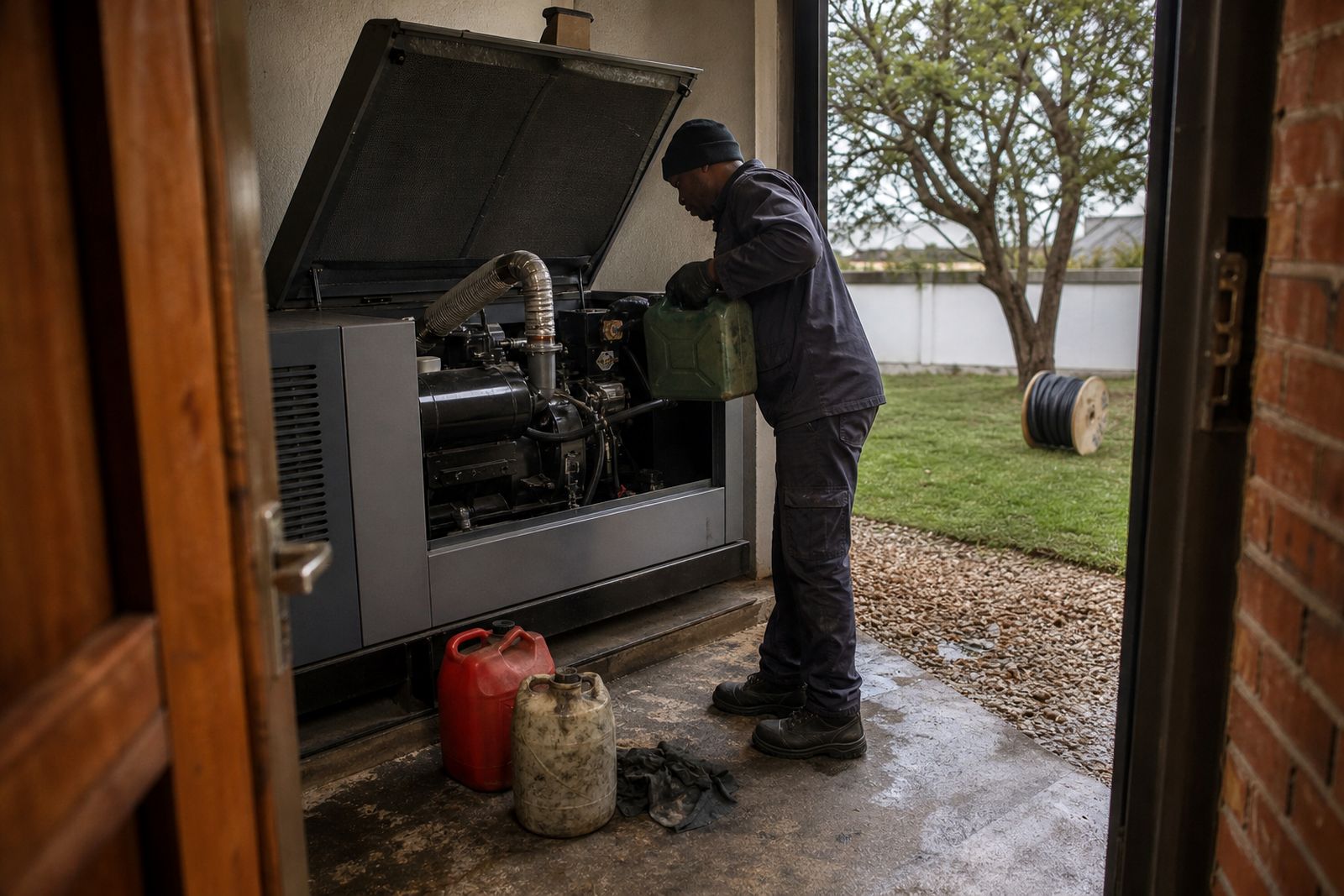
Durban moisture around panels
A regular wipe of control boards in coastal humidity is a habit worth keeping on the site roster.
Salt air leaves a fine film on board surfaces, especially in Durban rooms with poor door seals. Use dated photos, cabinet wipe records, and terminal torque checks so the next crew can see whether residue is returning to the same spots. If a trip happened during a humid week, note the alarm code and the weather, not only the run hours.
This runtime note belongs next to the changeover panel because coastal conditions shift faster than a manual in a drawer can help. Crews usually need the wipe interval, heater status, and cabinet seal checks while the plant is live. That is more useful on site than a book left in packaging.
Corrosion on low-voltage terminals often starts long before a board fails outright. First-start inspections should include cabinet gaskets, anti-condensation heaters, and any white or green deposits near ribbon plugs. A transfer test after a wet weekend can reveal sticky relays that looked fine in dry weather. Sites near the coast should also check whether louvre positions are pulling damp air straight across the controller.
Use a matching genset route and site route when your backup set works near salt air. If the installation sits outside the usual metro pattern, send the details through our contact form. Add the city, enclosure type, and latest controller reading so the note matches the conditions.
Coastal humidity and Highveld dust change the cadence. Durban plant rooms wipe boards more often. August inland winds clog filters faster. Winter needs battery float attention. We would rather you over-note a season than pretend every province behaves the same.
Coastal board room checks
- Check cabinet seals for damp tracks
- Check heater light or thermostat setting
- Check terminals for white salt residue
- Check board labels remain readable after wipes
- Check transfer after a full mains failure
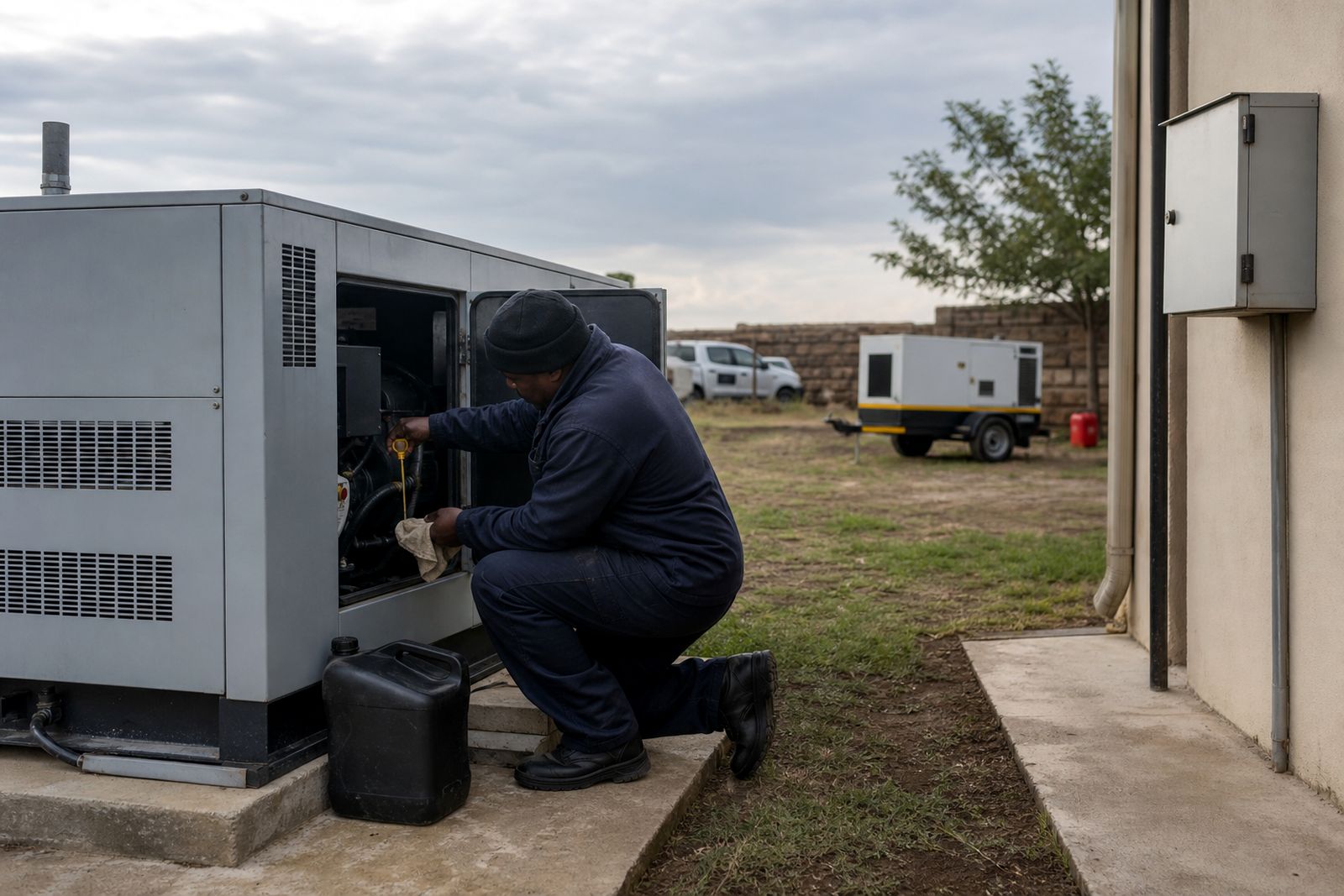
Durban and other coastal sites are easier to assess when the site crew photographs both the panel and the room. Corrosion often comes from the space around the set, not the controller alone. Show door vents, window louvers, and any wall damp marks in the same set of images.
If a spare control module or relay kit is stored on site, keep it sealed away from the plant room air and write the pack date on the bag. Open cartons absorb moisture faster than most crews expect near the coast. Service trays under Panels should carry clean cloths, contact cleaner approved for electronics, and fresh gland blanks.
Wipe cadence for sea air
These runtime notes sit outside the manual because humidity changes the maintenance rhythm from one province to another. Coastal plants may need more frequent cabinet attention than inland sets with the same controller. Read related entries under Runtime if your site moves between Durban, the South Coast, and drier inland stops.
Shift handover should record whether the panel was wiped, whether the heater was on, and whether any condensation appeared inside the door glass. Night crews must not reset alarms without writing down the code and the room condition. Trailer units standing near the coast also need plug and socket covers checked before road travel.
What our Backup Genset customers say
Verified Google reviews
Tell us about your backup power
Send a note through our contact form with the circuits you need to keep running, the kind of site, your fuel preference, how the changeover works today and your area, and we will come back with practical genset options and a quote.
Open the contact form