

Exhaust clearance check
Quiet packs still need honest clearance from plaster and plants.
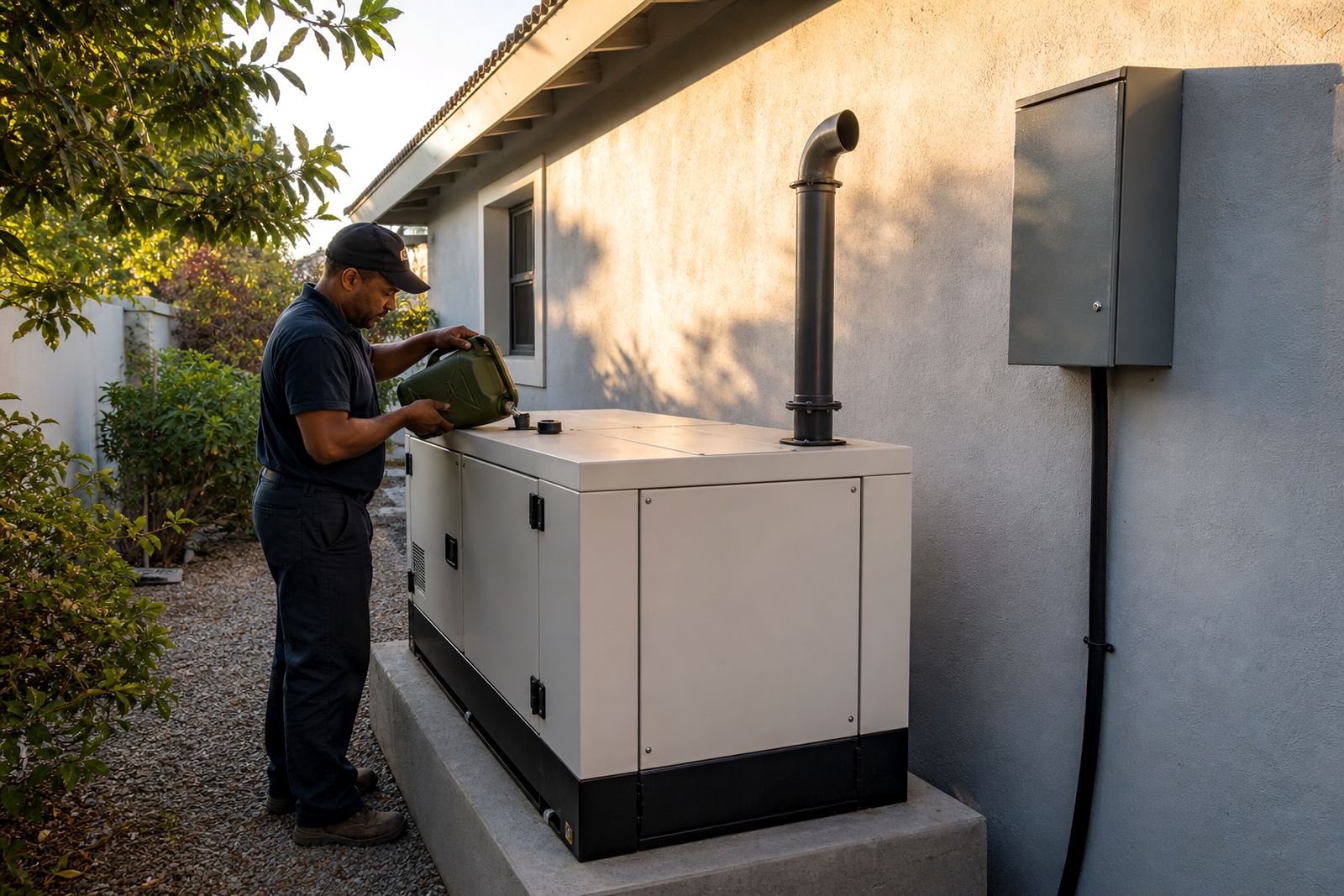
Wall clearance around the exhaust
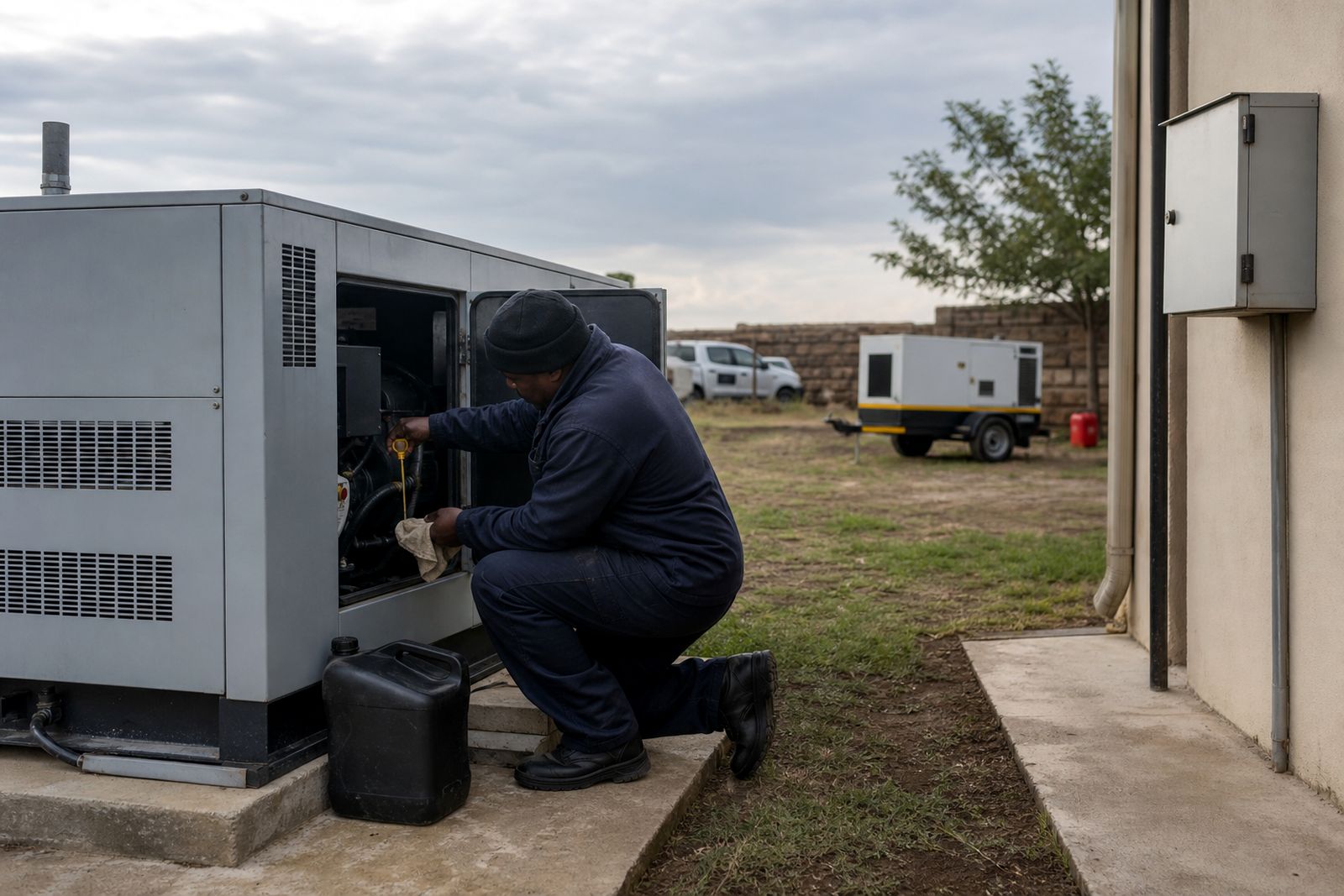
Lineo Nxumalo writes this runtime note for crews who keep packs honest through South African weeks. Checking exhaust clearance on estate walls is a habit worth keeping on the site roster.
Note what sits around the outlet side of the canopy, not only the machine itself. Snap the wall finish, note the gap to hedges or trellis, and mark any soot line that starts above the silencer line. When smoke staining appears after power cuts, the next crew needs that evidence before anyone trims plants or repaints plaster.
This runtime note belongs next to the estate file because boundary walls create their own problems. A manual explains engine limits, but it does not show the bougainvillea planted 300 mm from the discharge side. Crews need a quick reference at the board when trustees ask why a quiet pack still needs open breathing room.
Estate installs often fail at the edges, where hot exhaust meets painted boundary walls, irrigation boxes, and dense shrubs. A pack can sound acceptable yet still blow heat into one fixed corner for hours during Stage 6. Check the discharge direction, the nearest surface, and whether residents have stacked bins or garden screens into the clearance after handover.
Use this note alongside a genset guide and a site guide when a boundary wall limits placement options. If the pack sits in a narrow side yard or townhouse service lane, send the layout through our contact form. Add the suburb, wall material, and the measured gap from outlet to surface.
Regional conditions change how quickly a bad exhaust position shows up. Durban humidity leaves dark residue on damp painted walls, while Highveld winter mornings can trap fumes low in still air before the day warms. In Cape Town estates, south-easter gusts may push exhaust back toward courtyards if the outlet faces the wrong side.
Estate wall inspection points
- Measure outlet gap to nearest wall
- Check for soot on paint or plaster
- Check shrubs near the hot discharge
- Confirm outlet faces away from walkways
- Test transfer with the pack under load
Sites in Germiston, Clearwater, and Cresta should log the estate name and the wall side being affected. Include a photo taken square to the exhaust side and a wider shot showing gates, routes or planting beds. That saves time when a body corporate asks why marks keep returning to the same section of wall.
If a spare exhaust wrap, clamp, or outlet guard is stored on site, check its condition before the next outage cycle. Rubber and plated hardware do not age kindly in hot canopy compartments. Keep the small parts kit labelled near Panels if your crews move between multiple blocks.
Heat marks residents notice first
These notes are for jobs where the complaint starts at the wall, not at the alternator. Browse Runtime for other field notes that deal with neighbour impact, placement limits, and recurring outage behaviour. Match the note to the site record when the same estate keeps reporting fumes, blackening, or scorched planting.
At shift handover, note any resident changes around the pack, especially new pot plants, lattice screens, or refuse bins. Security teams often tidy service passages without knowing the discharge side runs hot. Trailer units placed for temporary cover need the same check after every repositioning inside an estate.
What our Backup Genset customers say
Verified Google reviews
Tell us about your backup power
Send a note through our contact form with the circuits you need to keep running, the kind of site, your fuel preference, how the changeover works today and your area, and we will come back with practical genset options and a quote.
Open the contact form