

Fuel card habit
Litre marks and last fill dates stop mystery runtime.
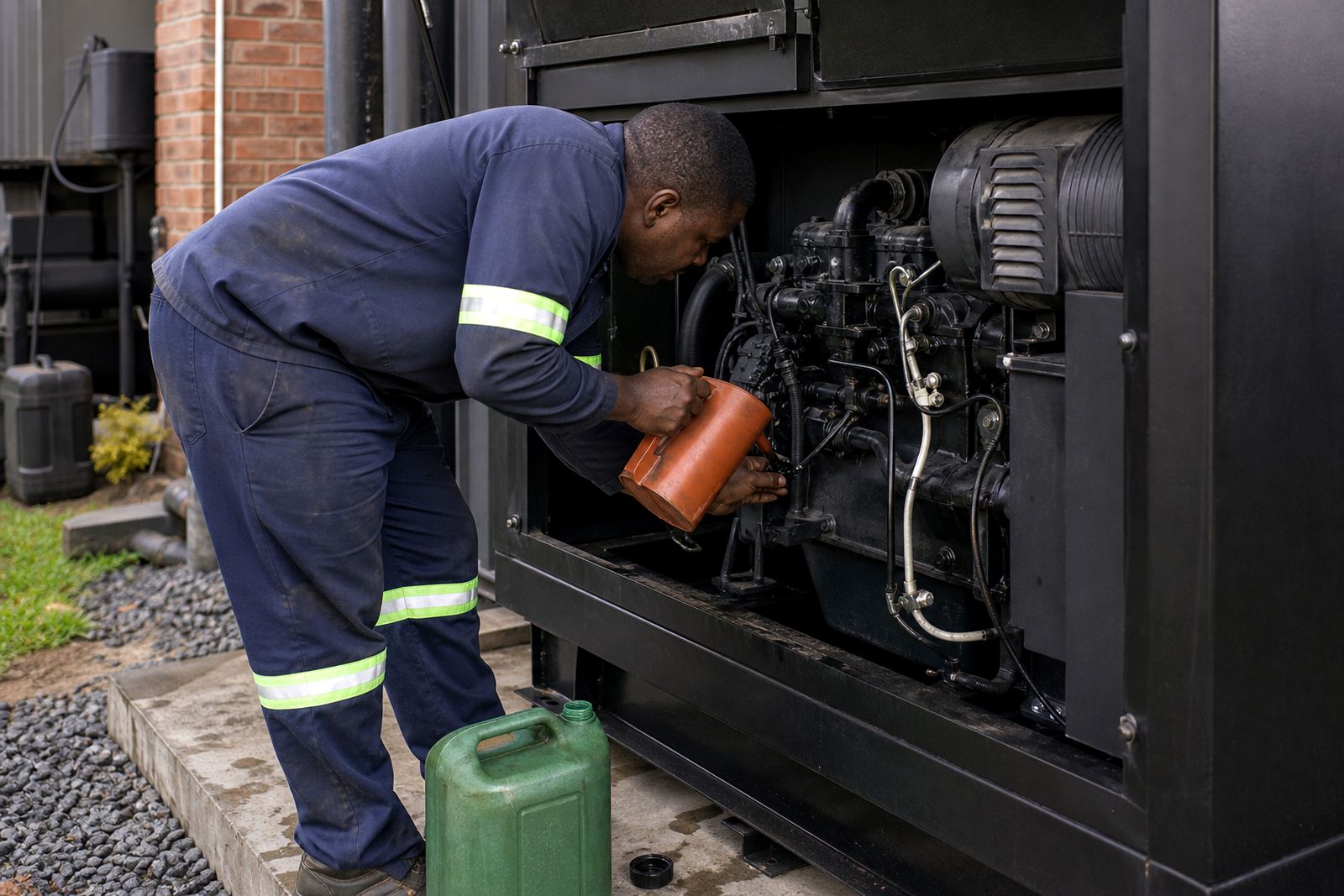
What the canopy card prevents
Fulufhelo Msimang writes this runtime note for crews who keep packs honest through South African weeks. Keeping a fuel card on the canopy is a habit worth pinning above the panel.
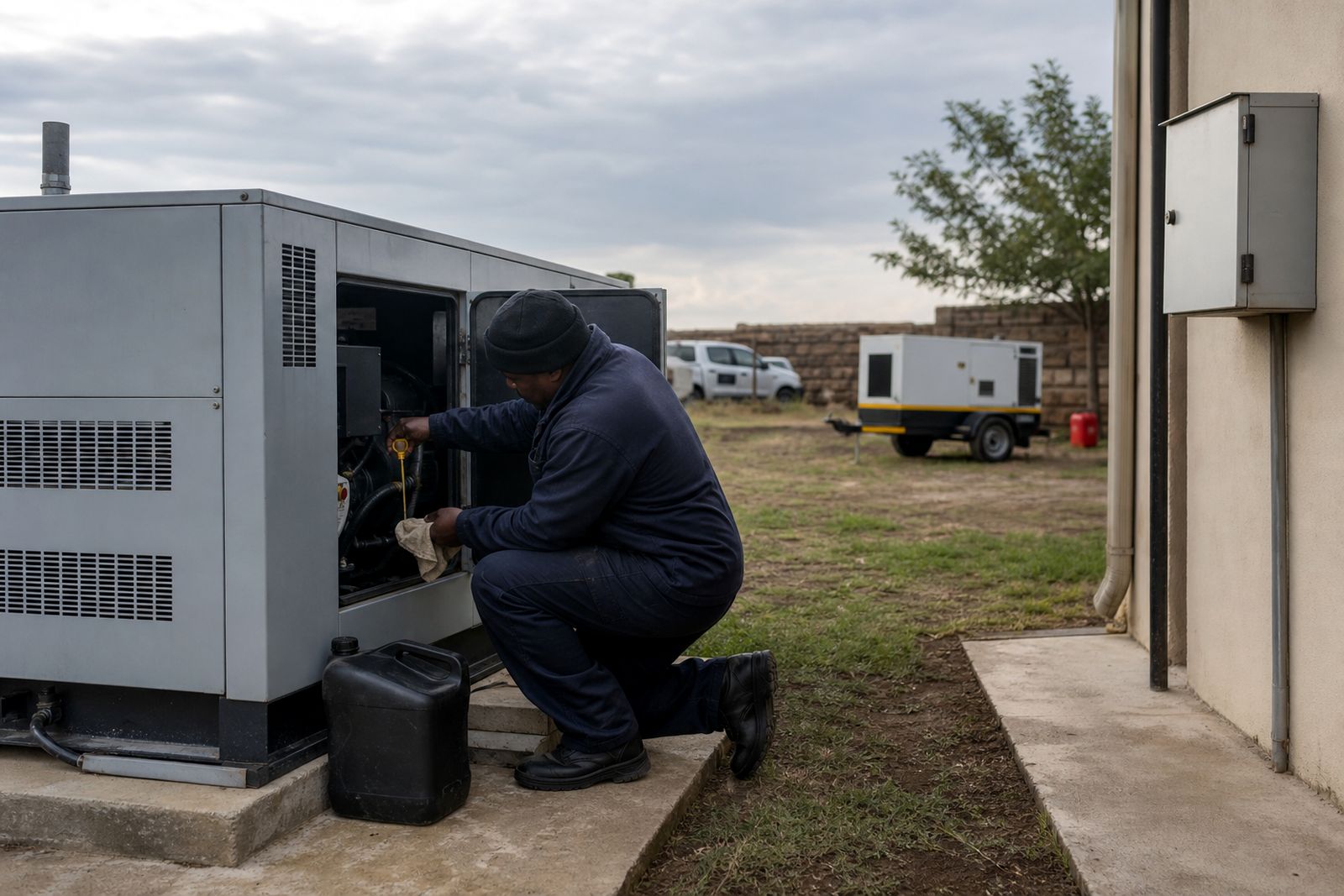
A fuel card on the canopy gives every shift one place to record litres, hours, and the date of the last top-up. Use a weatherproof sleeve and a permanent marker that can still be read after dust, diesel mist, and a Highveld thunderstorm. When the set runs through power cuts blocks, that card tells the next operator what was added and what the tank actually delivered.
This note belongs at the machine, not in an office file. The card must hang where the person checking oil, coolant, and tank level can write before walking away. On sites from Midrand yards to Durban depots, that habit stops two crews logging the same fill in different places.
Unlogged refuels create the worst runtime arguments because nobody can prove what went into the tank. A simple card settles that by tying each fill to a date, litres added, and the hour meter reading. During Stage 4 and longer municipal interruptions, those three entries matter more than memory or a phone chat.
Use this habit alongside a genset route and the right site guide for the installation. If you need the card format matched to your unit layout, send the tank size, city, and current hours through our contact form. That helps separate a small day tank routine from a base tank routine.
Weather changes how the card is kept and checked. Coastal air near Durban curls ordinary paper, so laminate or sleeve it properly. Inland dust around Gauteng and the Free State coats clipboards fast, which is why a wipe-clean surface and bold litre marks work better in winter wind.
Canopy card checks before outage
- Write the current hour meter reading
- Mark litres added after each refill
- Check the card stays dry and attached
- Match tank marks to written entries
- Verify transfer time after an actual cut
Add a photo of the card, tank level and hours reading so the next instruction starts from what is on the canopy.
Keep a spare marker and clean card sleeve with the service kit, especially where operators wear gloves and paper tears easily. If the set sits near switchgear or distribution Panels, mount the card where it can be read without leaning across hot or moving parts. The point is quick, safe logging during a refuel or inspection.
Handover notes that help
A fuel card belongs at the genset, where the person with a torch can fill it in, not on a shelf. More habits for fuel tracking, transfer checks and weekly inspections are under Runtime. The canopy card works best as part of a visible routine, not a once-off poster.
At shift change, read the last card entry before touching the fuel cap or breaker position. Night teams should add a short note if a refill happened during an outage, especially where tankers arrive after business hours. On towable units, secure the card holder well so road vibration does not shake the record loose between sites.
What our Backup Genset customers say
Verified Google reviews
Tell us about your backup power
Send a note through our contact form with the circuits you need to keep running, the kind of site, your fuel preference, how the changeover works today and your area, and we will come back with practical genset options and a quote.
Open the contact form