

Fuel quality check
Stale diesel kills injectors mid-outage.
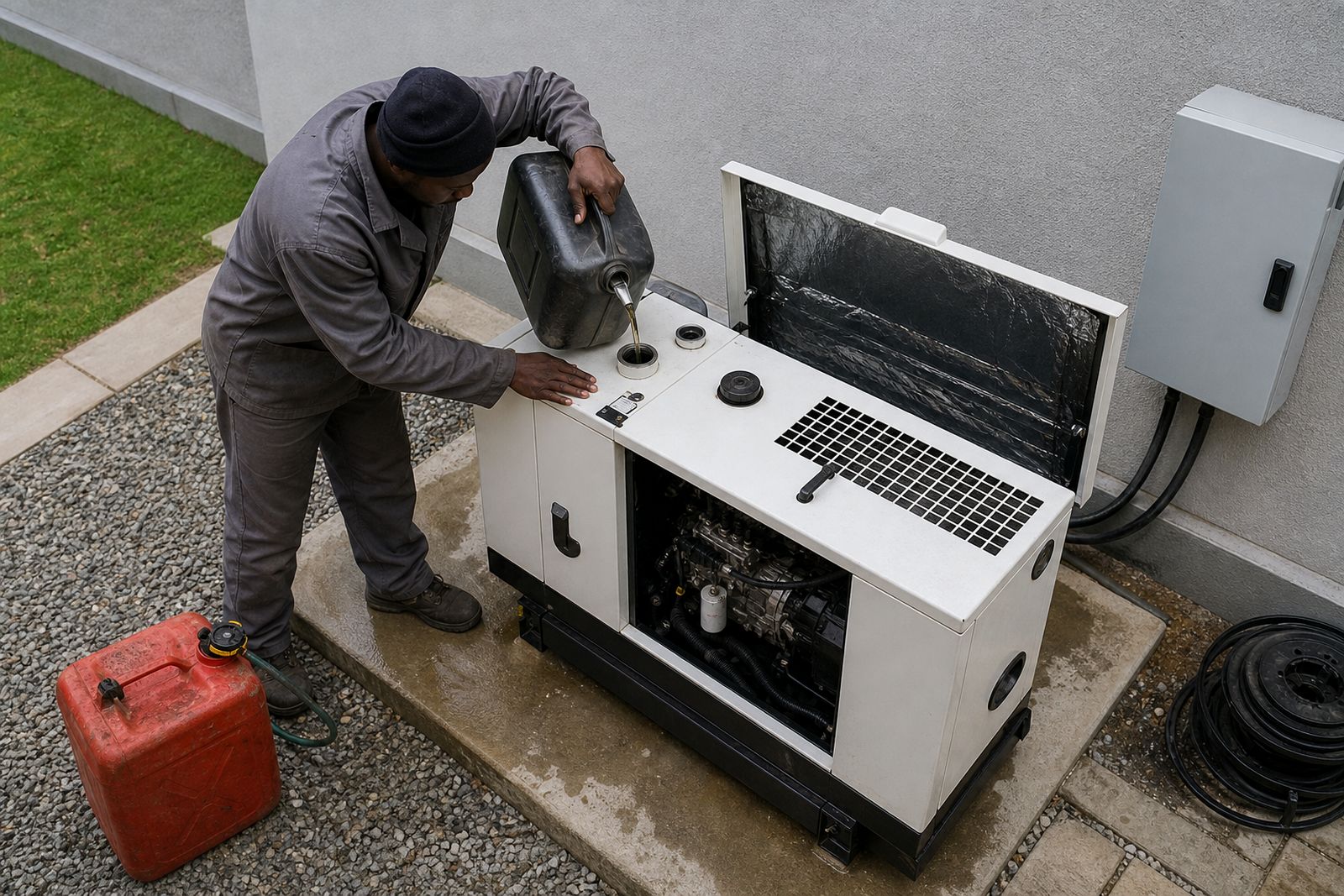
Diesel changes in storage
Checking diesel quality after long sits is a habit worth keeping on the site roster.
After a long stand, treat the tank as a sample point, not a certainty. Pull diesel from the drain or lowest point into a clear jar, then look for dark haze, water beads, or a sharp varnish smell before the next outage. Mark the sample date on the set record so the next crew can compare colour and sediment, not memory.
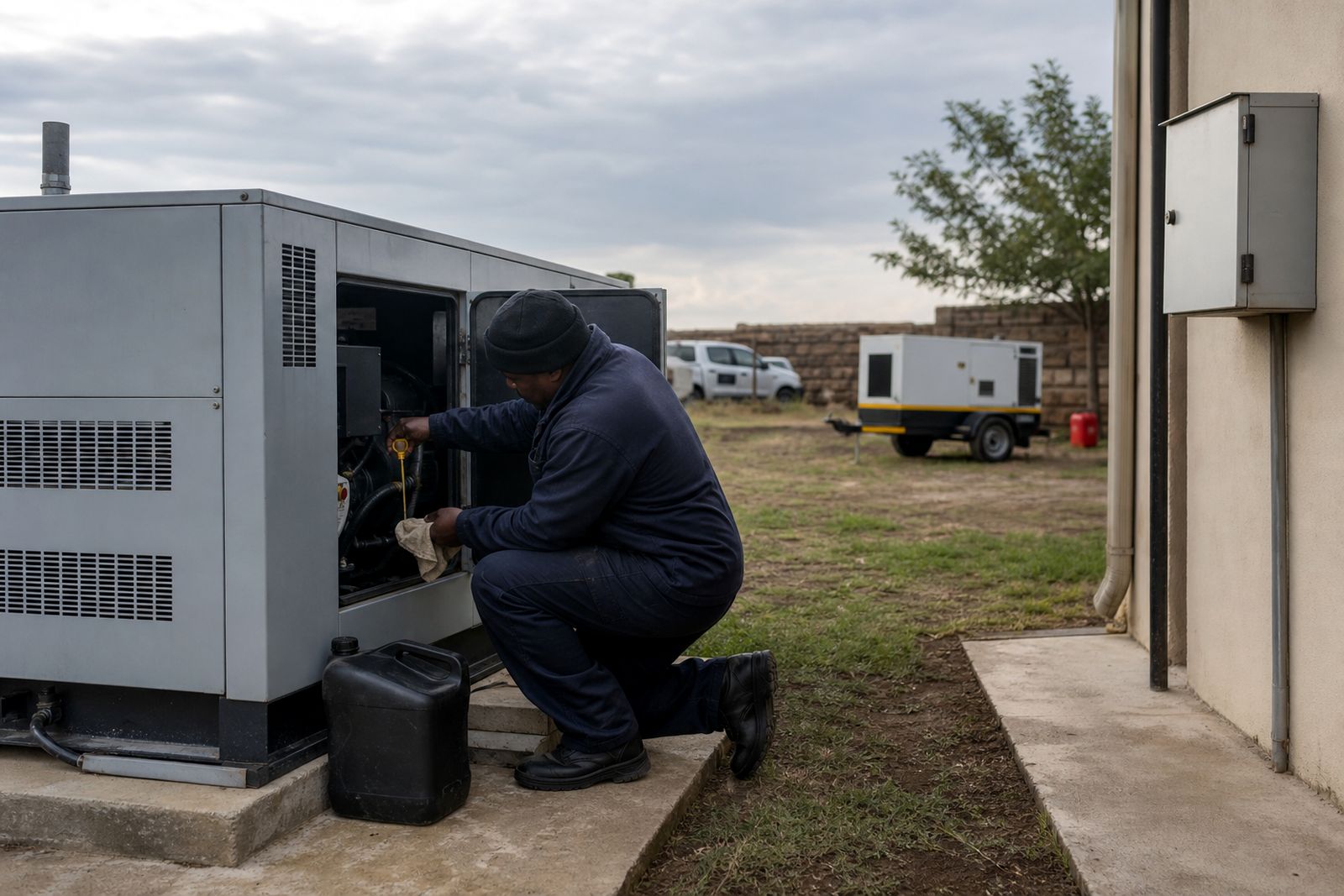
Next to the genset catalogue, this diesel note belongs where operators can grab it during inspections. A crate manual will not tell you whether stored fuel has gone dark, picked up water, or started feeding sludge into the bowl. Crews in Germiston often need that answer at the tank, not at a counter.
Stored fuel ages differently in a mall basement, a farm shed, and a coastal yard. Condensation enters half-full tanks, microbial growth starts where diesel meets water, and fine sediment moves when the set finally takes load. During loadshedding or municipal cuts, that contamination reaches filters and injectors exactly when the site needs stable backup power.
Use this note with your genset guide and your site guide when the standby unit has been parked for an extended period. If you need help matching the fuel check to the installation, use our contact form and include the city, tank size, diesel age, and current hours reading.
South African conditions push fuel in different directions. Durban and Richards Bay moisture can leave free water in tanks and day tanks, while Gauteng dust finds weak breathers and poor filler practices. In inland winter, sets that stand for weeks often show more condensation after cold nights and warm daytime swings.
On-site diesel inspection steps
- Draw a bottom sample into glass
- Check for water, haze, sediment
- Smell for sour or varnish notes
- Compare tank level with last delivery
- Run under load after filter check
Across Germiston, Clearwater, and Cresta, teams usually flag stored-fuel concerns by sharing their site record. Add a clear sample photo if diesel looks cloudy, blackened, or split into layers after standing. One image of a jar test gives more value than a long guess over chat.
If spare fuel filters are stored on site, check packaging dates and seal condition before relying on them. Rubber that has sat too long in heat can harden, and a replacement filter is no help if it leaks air on start-up. Kits kept near Panels should stay sealed and dry, away from oil and direct sun.
Before the next outage starts
Check diesel quality after long sits are written for crews who must make a decision at the tank, not at a counter. Find related checks under Runtime if you also need transfer, battery, or cooling reminders before a long standby period ends. Read them together when the machine has been idle through several weeks of light use or no use.
Record who sampled the fuel and where it was drawn from when shifts change. One operator may use the main tank drain, while another only checks the day tank, and that difference matters when contamination is uneven. On trailer units, inspect the filler cap seal as well, because road dust and rain can enter after moves between sites.
What our Backup Genset customers say
Verified Google reviews
Tell us about your backup power
Send a note through our contact form with the circuits you need to keep running, the kind of site, your fuel preference, how the changeover works today and your area, and we will come back with practical genset options and a quote.
Open the contact form