

Load-shed sizing
Stage 4 habits differ from Stage 2. Design for the week you live.
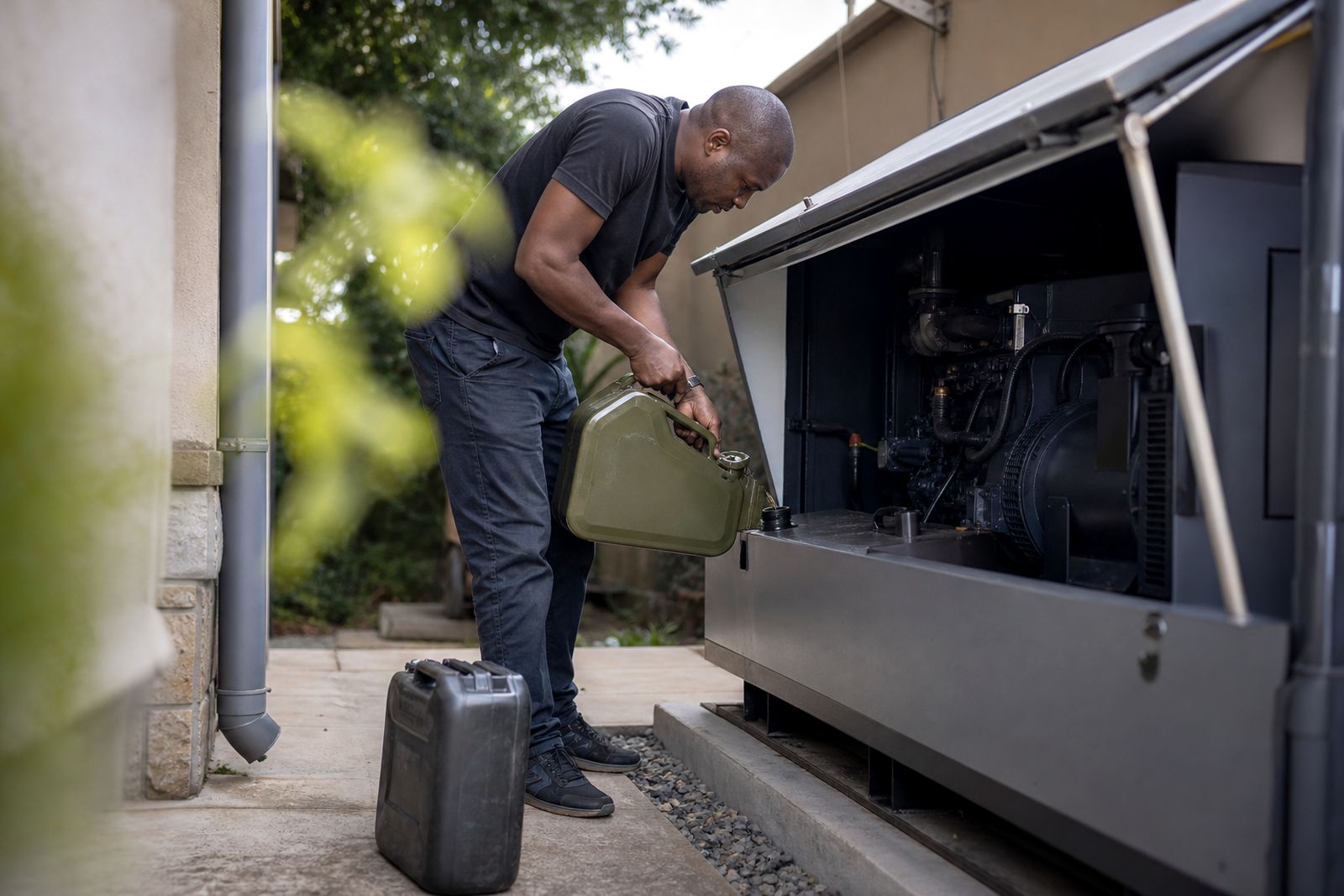
Load-shed windows versus tank maths
Rakesh Lutchman writes this runtime note for crews who keep packs honest through South African weeks. Sizing to the load-shed window you actually get is a habit worth keeping on the site roster.
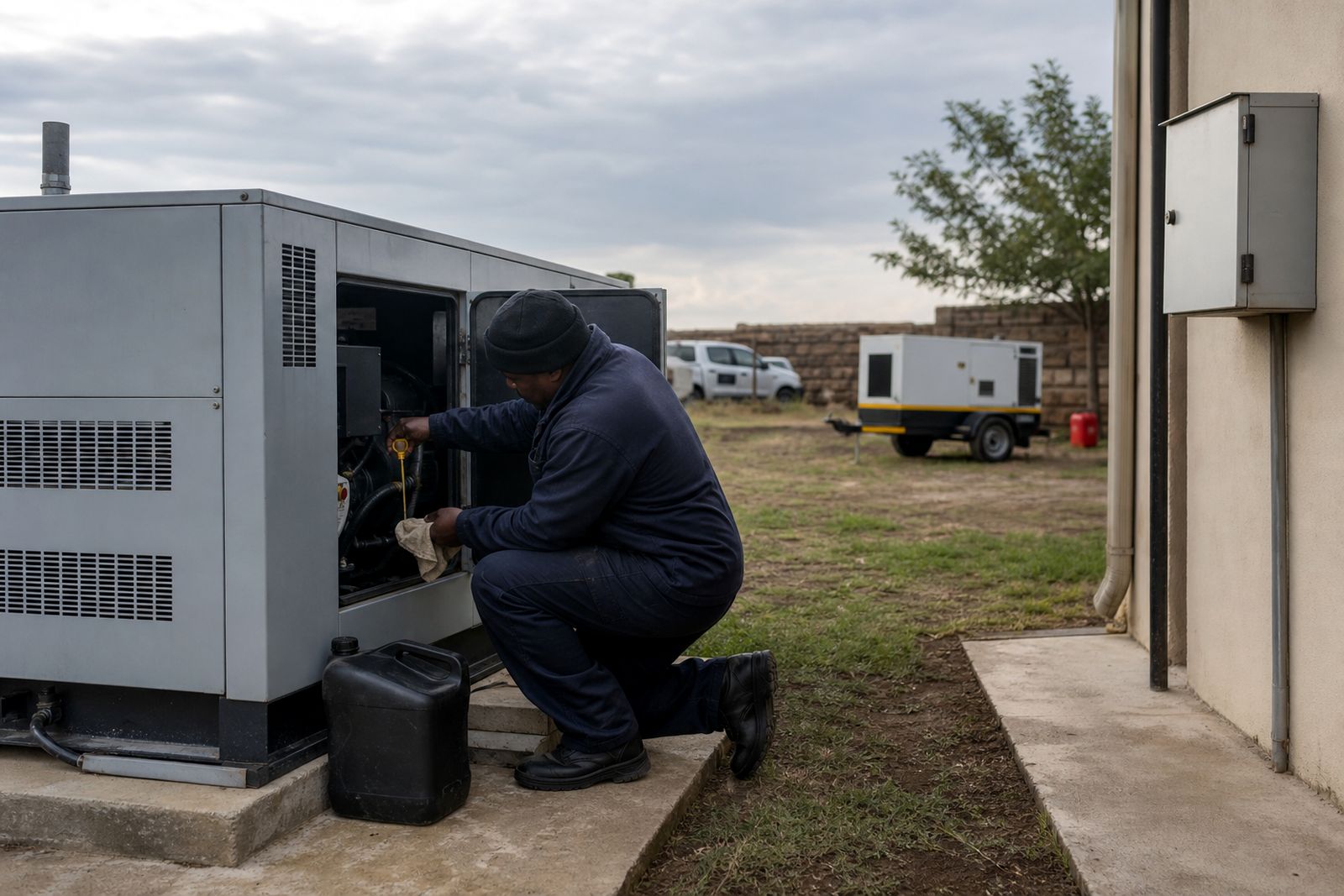
For power cuts, the useful figure is not the tank size on its own but the hours available at your normal site load. Mark the dipstick or sight gauge at the level reached after a two hour slot, then after a four hour slot, so the next operator can judge whether the set will cover the next scheduled cut. If Stage 4 starts exposing longer gaps between refuels, note that against the meter reading and the load carried.
Runtime decisions happen before the outage, not after a manual is fetched from a cupboard. A depot in Jet Park may see short evening cuts, while a small office in Pinetown may get repeated windows that empty the day tank faster than expected. Keeping the note close to the model list helps teams match alternator size, tank capacity, and likely load-shedding slots in one place.
Sizing for the outage window changes how you pick the set and how you run the board. A unit that carries 60 percent load for two hours may not be the right answer if the same site now sees four hour interruptions and a delayed fuel delivery on Friday. Check running amperage on priority circuits, watch start-up surges from pumps or refrigeration, and compare that demand with the runtime table for the specific genset.
Use this note with the right genset option and your nearest site option so the runtime discussion stays tied to an actual machine and place. If your property falls outside the usual area, use our contact form and include the suburb, expected outage length, and whether the set feeds a manual changeover or ATS. Those details matter more than a rough guess about office size.
Runtime planning shifts with province, season, and where the machine stands. A canopy set in Durban can lose efficiency if airflow is restricted by damp plant-room conditions, while a Highveld site in August may need more frequent filter checks as dust loads build. Battery performance on cold inland mornings also affects how confidently a unit will restart across repeated power cuts.
Checks before the next slot
- Read hours against last outage record
- Match fuel level to expected cut
- Inspect earth point for corrosion
- Verify priority board still matches load
- Test transfer after mains isolation
Paste in your runtime note for Germiston, Clearwater, or Cresta. That points the discussion to the outage window you are sizing for, not a generic backup request. Add one board photo or controller screen if the carry time looks shorter than the schedule suggests.
Where a spare service kit is kept on site, make sure the filter part numbers still match the current engine arrangement and not an older swapped unit. Rubber seals harden with age and can complicate a quick service between outages. If the kit is stored under Panels, keep it dry and label it with the genset model it belongs to.
Design for Stage 2 and 4
The point of these notes is to help crews size for what load-shedding schedules actually do to a site over a week of interruptions. A two hour assumption can leave too little margin once batteries, pumps, fridges, and gate motors have cycled through repeated cuts. Read more pages under Runtime when you need examples tied to operating habits rather than handbook theory.
Shift handover should state how long the set ran, what load it carried, and whether refuelling happened before or after the last outage block. That stops the night team from making bad assumptions about remaining runtime. Trailer units also need tyre, hitch, and cable checks if they are moved between branches to cover heavier power cuts areas.
What our Backup Genset customers say
Verified Google reviews
Tell us about your backup power
Send a note through our contact form with the circuits you need to keep running, the kind of site, your fuel preference, how the changeover works today and your area, and we will come back with practical genset options and a quote.
Open the contact form