

Monday oil check
A two-minute Monday check beats a seized engine on Thursday.
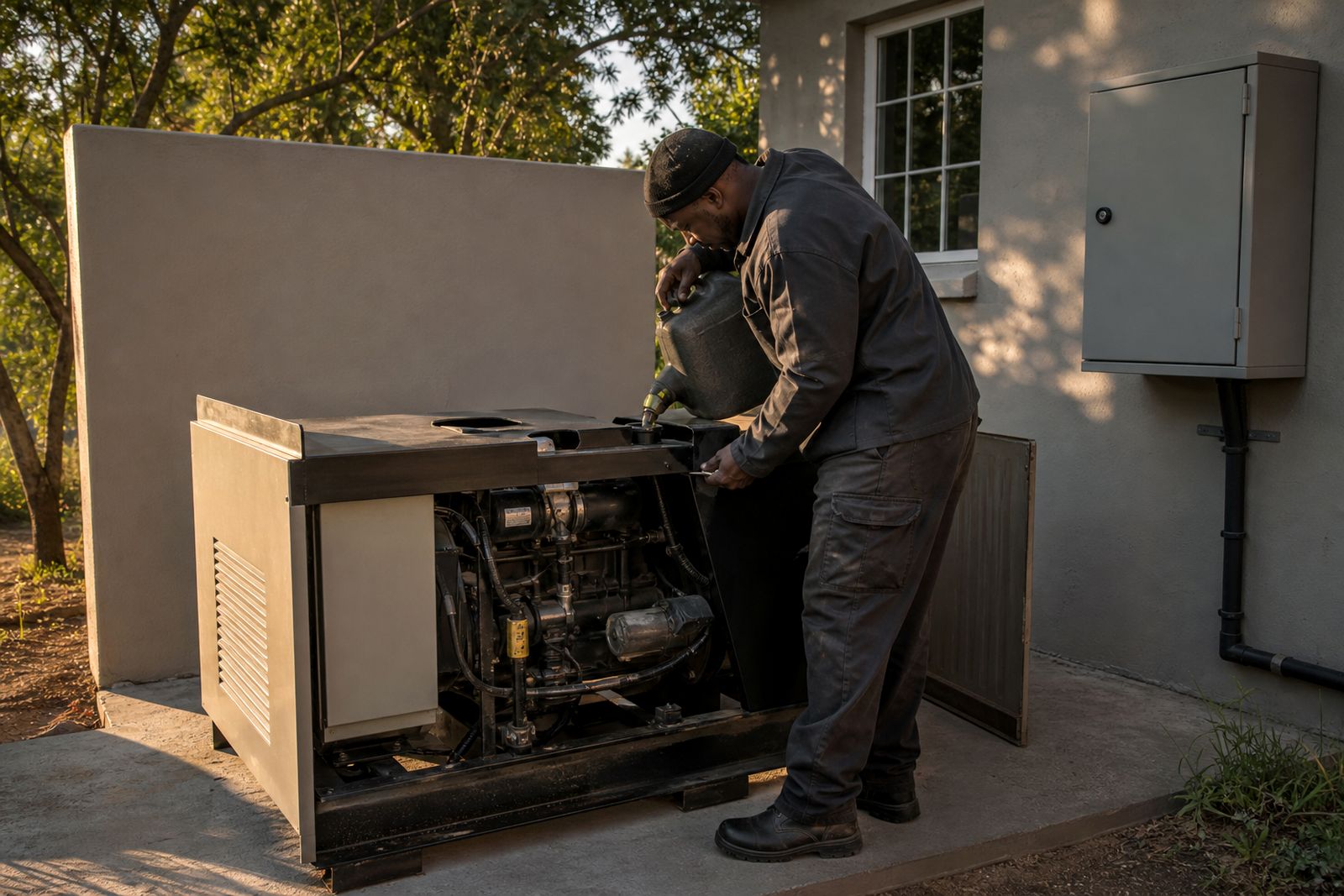
Monday oil check readings before first start
This note is for site staff who start backup sets after power cuts and weekend standby hours. A Monday oil dipstick check means checking level, colour and smell before the first transfer of the week. Two minutes at the engine can prevent a low-oil trip when the mains drops later.
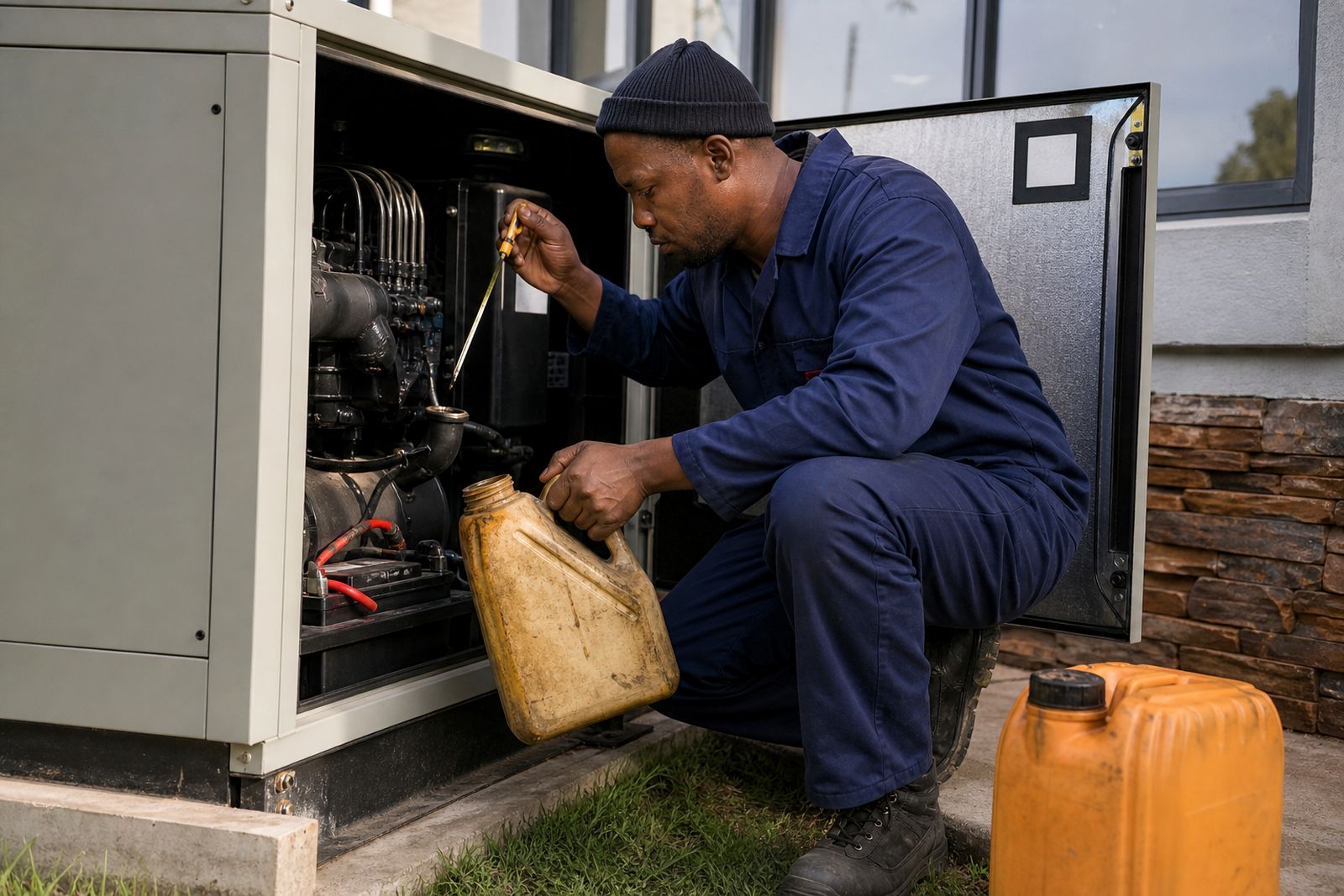
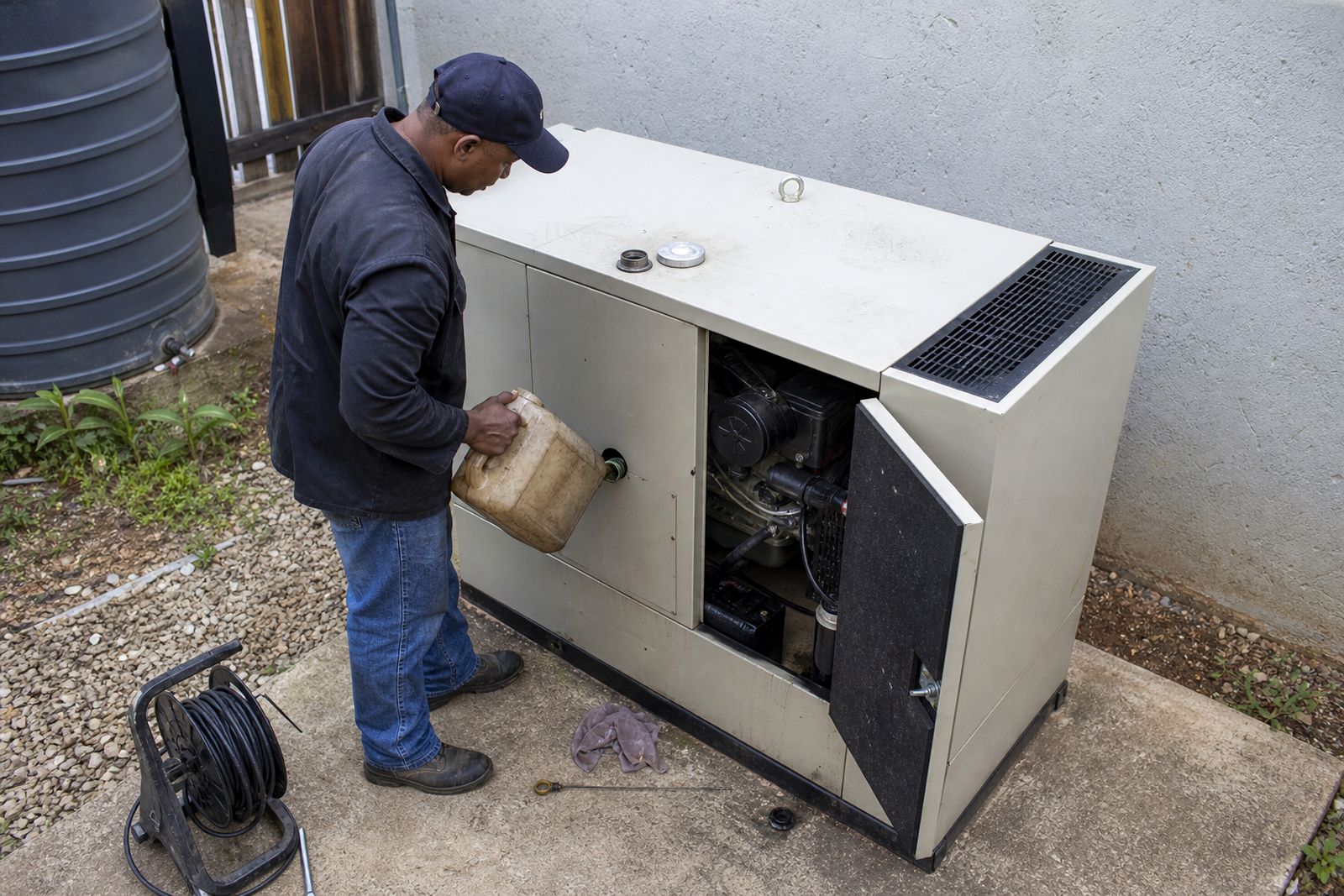
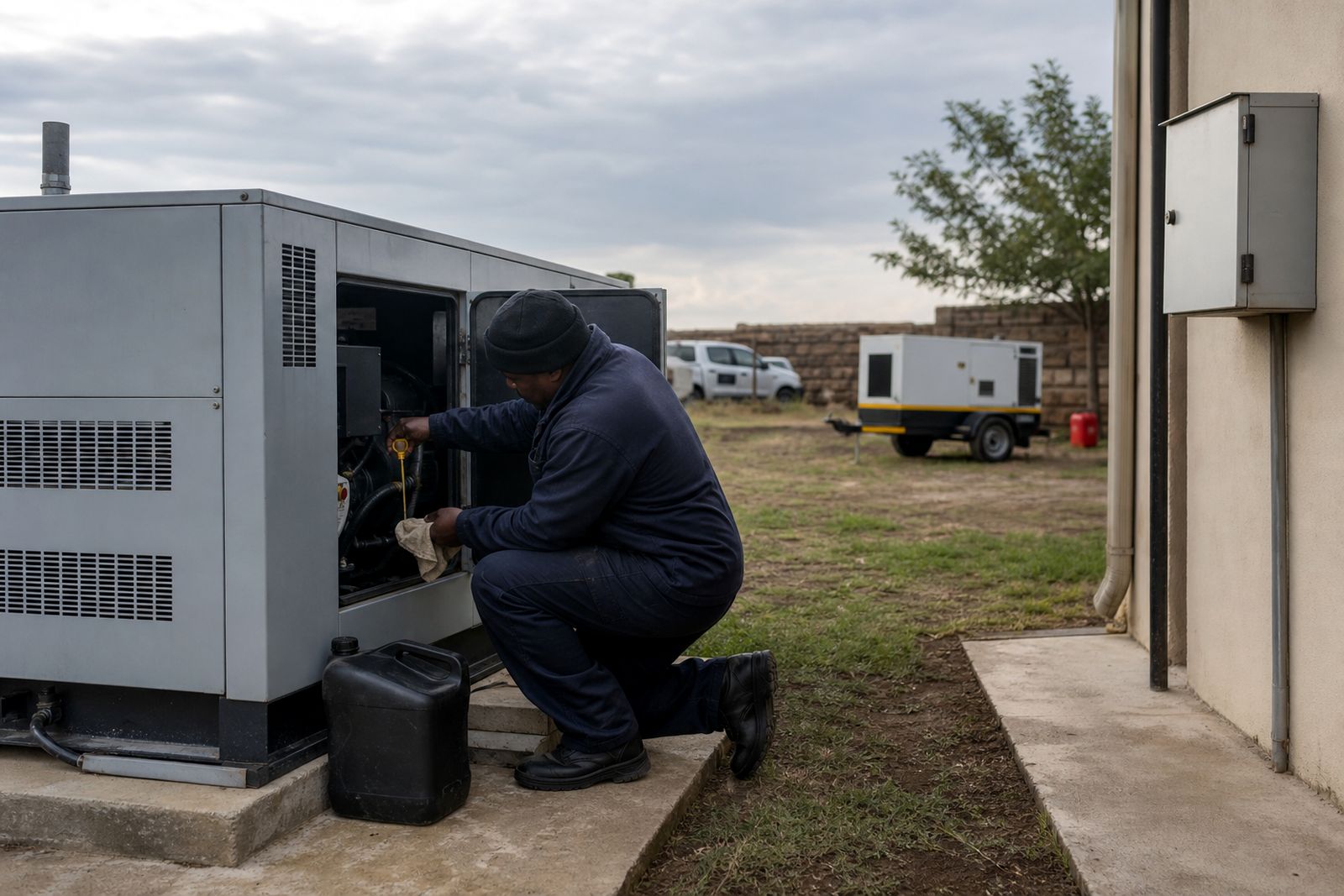
Use the same routine each time so nothing gets skipped. Pull the dipstick with a clean rag, wipe it, reinsert fully, then read the level on steady ground with the engine stopped. If the oil looks milky, gritty or unusually thin, record it next to the hours reading and do not treat that set as normal.
Operators often need the genset details and the weekly check together. A manual may stay in the document pouch, but the dipstick check belongs on the wall near the set or inside the plant room logbook. That approach suits busy backup power sites around Johannesburg and beyond.
Oil level tells you more than whether the sump is full. A rising level can point to diesel dilution after repeated short runs, while black thick oil after many outage cycles can show overdue service hours. Monday is the right time to spot leaks under the skid, foam on the stick, or a filler cap left loose after the last service.
Match this note with a genset guide and a site guide for several properties. If your set is installed outside the usual estate, warehouse or retail pattern, use our contact form and include the city, engine model, fuel type and current hours. That makes the runtime note easier to match to the correct machine.
Conditions differ sharply across South Africa. Durban humidity can leave plant rooms damp, which makes grime cling around the filler neck, while Highveld dust in late winter settles on engine tops and ends up on hands and rags. In coastal air, look harder for emulsified oil; inland, pay attention to dirt entering during top-ups.
Monday dipstick steps on site
- Park level before reading the sump
- Wipe, re-dip, then read the mark
- Check colour, smell and metal flecks
- Log hours beside the oil result
- Inspect under-engine drips before transfer test
Teams in Germiston, Clearwater and Cresta often keep a phone photo of the dipstick beside the weekly log. That works well when one person checks on Monday and another starts the set during a later outage. A clear image of the mark and oil condition is more useful than a vague note saying it looked fine.
Keep the top-up items together near the machine if your site permits it. One sealed bottle of the correct grade, a clean funnel, nitrile gloves and lint-free rags are more useful than a mixed box of leftovers under Panels. Also check that any spare oil on site matches the engine requirement and has not been opened months ago.
What the dipstick can reveal
These runtime notes go with hands-on checks. Open Runtime when you want short field guidance that fits between outage prep, transfer tests and fuel checks. For a Monday oil dipstick ritual, the point is a repeatable inspection that catches warning signs before the next power cut.
Shift changes matter here because oil top-ups and leak sightings are easy to forget by Tuesday. Write down the quantity added, the brand or grade used, and where any wet patch appeared on the engine or base frame. Towable units also need the same sump check before road movement, especially after standing over a weekend.
What our Backup Genset customers say
Verified Google reviews
Tell us about your backup power
Send a note through our contact form with the circuits you need to keep running, the kind of site, your fuel preference, how the changeover works today and your area, and we will come back with practical genset options and a quote.
Open the contact form