Control panel lock
Curious fingers reset modes you carefully set.
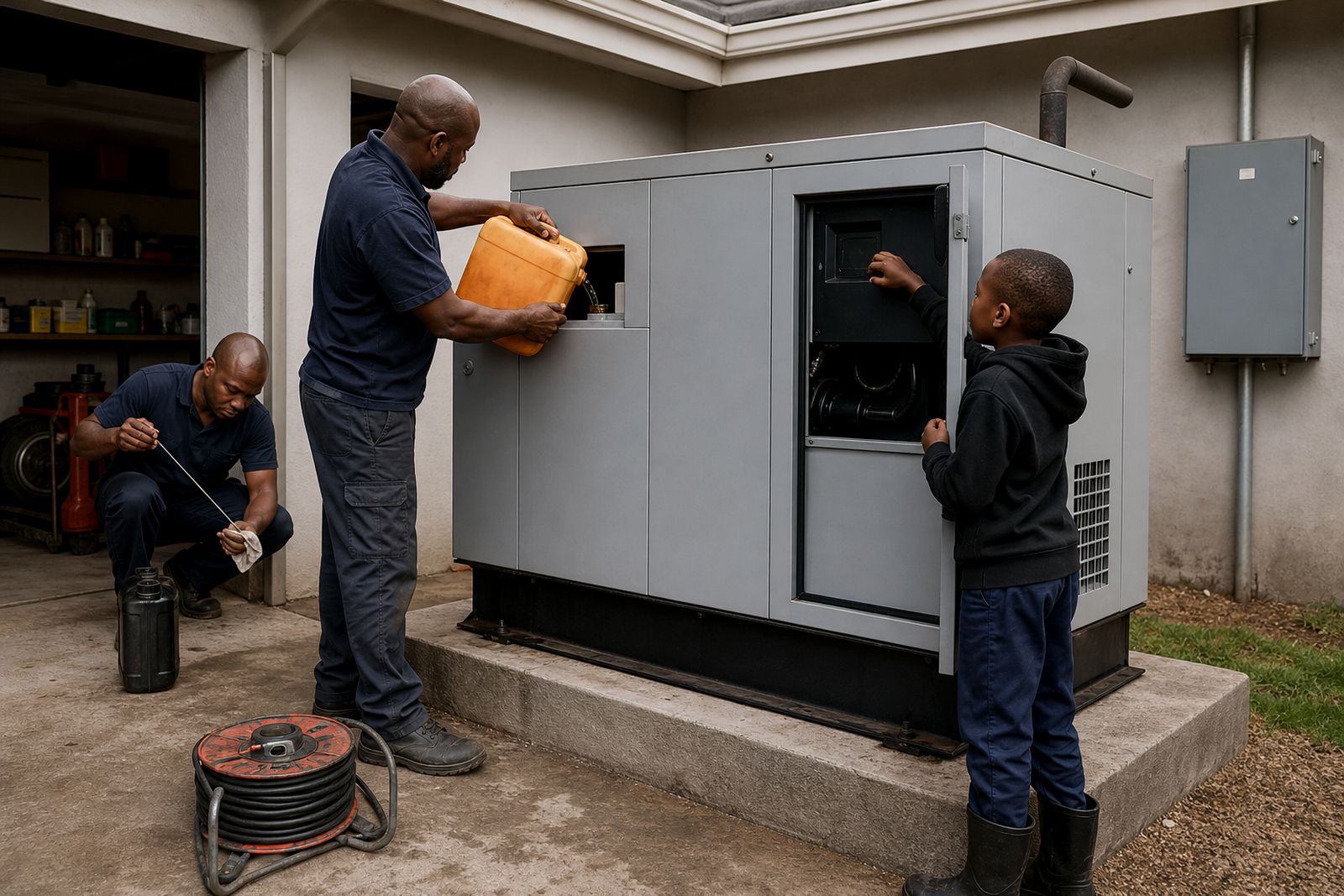
After-hours panel discipline
Rakesh Lutchman writes this runtime note for crews who keep packs honest through South African weeks. Locking the control panel after hours is a habit worth keeping on every site.
After the evening test or outage run, return the controller to the agreed mode and lock the door before the crew leaves. A small key tag marked with the unit number stops keys wandering between packs. When someone changes auto, manual, or exercise settings, write the reason and time on the shift card next to the panel.
This note belongs near the controller because the mistake happens at the controller. The catalogue helps you identify the set, but the lock routine protects the settings that keep changeover predictable during power cuts. On busy South African sites, the right habit is the one visible at hand level.
Most nuisance call-outs start with a panel left open, not a failed alternator. Someone leans in, presses stop to silence a buzzer, then forgets to restore auto before the next grid drop. A locked panel preserves timer schedules, alarm history, and governor settings until the responsible crew returns.
Read this note alongside the correct genset route and site route so the lock procedure matches the unit and site arrangement. If the enclosure, controller brand, or access arrangement is unusual, use our contact form and include the city, controller model, and current hours. That gives the crew a clear starting point before anyone touches the keypad.
Coastal sites need extra attention because salt air can stiffen small lock barrels and cloud acrylic doors. Inland dust around the reef settles behind open panel doors if crews leave them ajar during checks. In winter, battery alarms tempt people to press through menus, so the lock matters even more after a late shutdown.
Night lock routine
- Return controller to auto before locking
- Tag the key with unit number
- Check panel door seal closes cleanly
- Match exercise timer to site roster
- Test alarm silence without changing mode
Crews in Germiston, Clearwater, and Cresta often hand over to security after hours, so the key location must be agreed before the first outage night. Keep one photo of the locked panel showing the mode lamp and controller screen. That image settles disputes faster than a memory from the previous shift.
If your site keeps spare cam locks or keys, store them in the service caddy and label them against the controller door. Worn keys round off quickly when different contractors force them into the barrel. Packs listed under Panels often move between sites, so key control must travel with the unit file.
Stop mode changes overnight
These runtime notes sit outside the manual because site habits change faster than printed instructions. Open Runtime when you need short guidance for handover, access control, or outage behaviour around the genset. A locked panel is a site rule, not just a controller feature.
Write the handover note before the last person leaves the plant room. Record who has the key, what mode the set is in, and whether any alarm was acknowledged during the shift. Towable units need the same discipline, especially when a hire pack lands on a new site with curious staff around the board.
What our Backup Genset customers say
Verified Google reviews
Tell us about your backup power
Send a note through our contact form with the circuits you need to keep running, the kind of site, your fuel preference, how the changeover works today and your area, and we will come back with practical genset options and a quote.
Open the contact form