

Remote start test
Telecom hubs fail quietly if nobody presses the button.
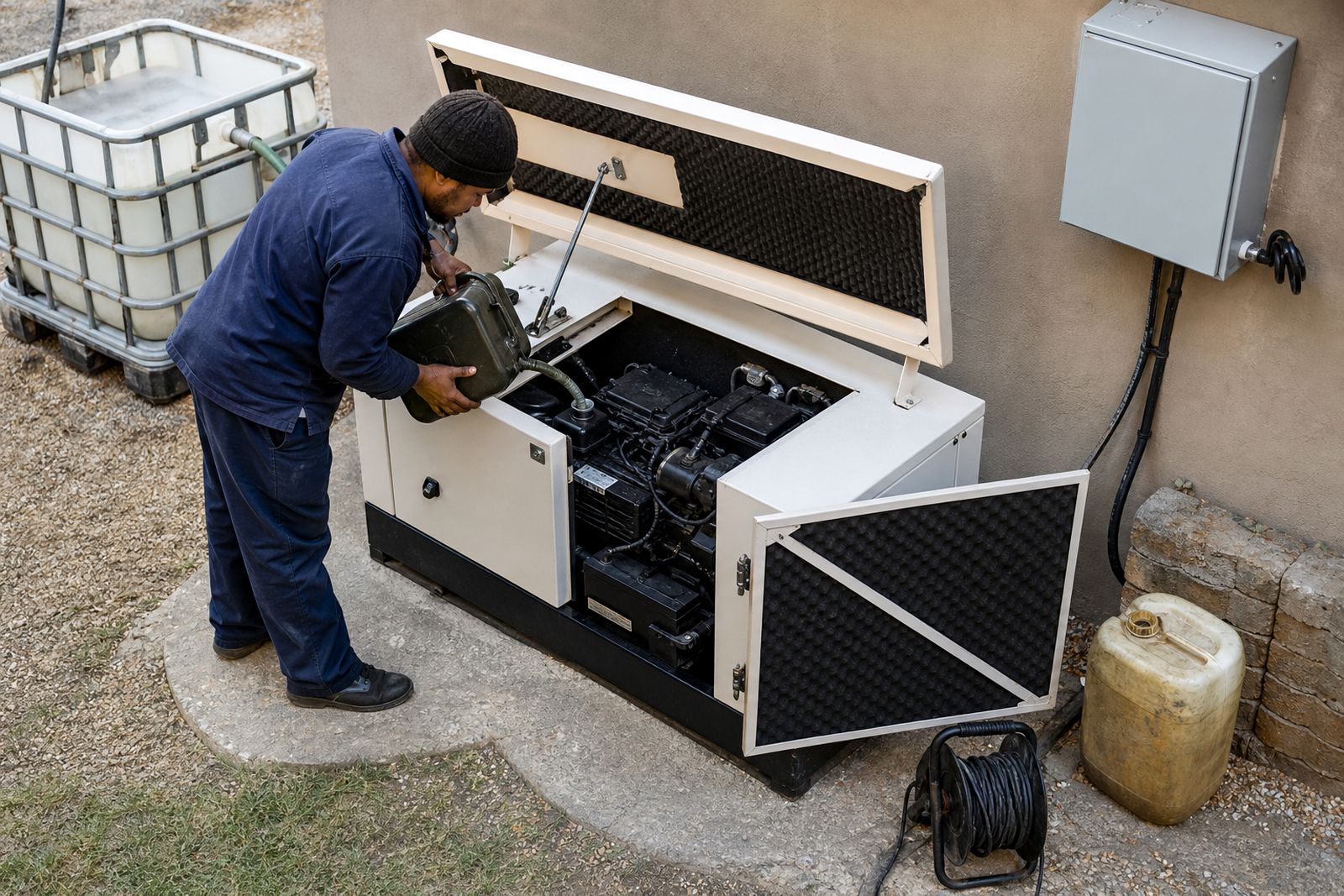
What the weekly test proves
A weekly remote start test is a habit worth pinning above the panel.
Record the remote command time, crank delay, and run minutes after each weekly test. Add a clear photo of the controller screen, battery volts, and the fuel level mark. If the unit hesitated during power cuts season, note the exact alarm code instead of a loose description.
Crews keep runtime notes near the controller, separate from the catalogue. The manual can stay in the cabinet, but the weekly remote start test should stay where it is actually done. That keeps the sequence, alarms, and stop reason in view.
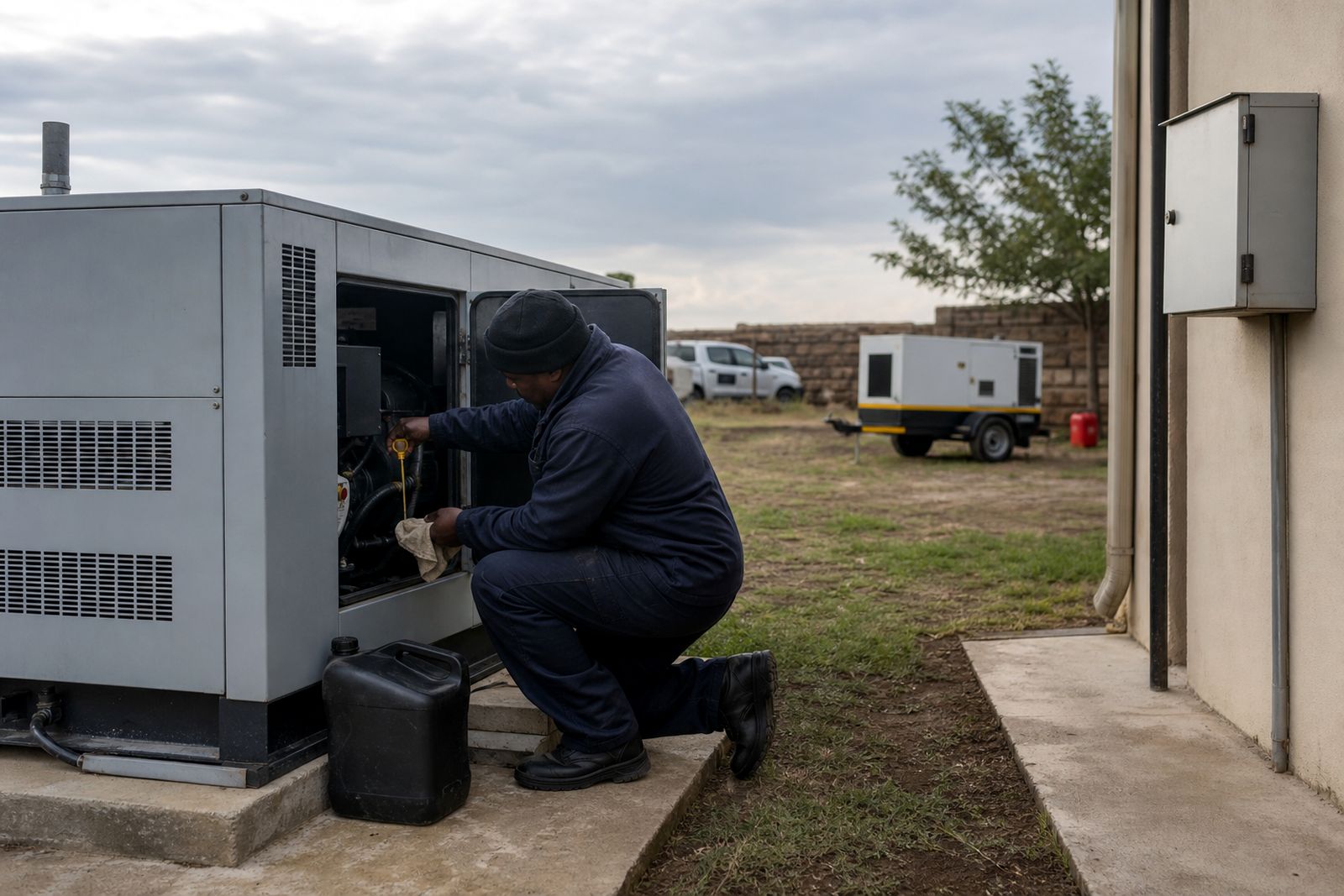
A remote start test shows whether the controller still accepts the signal from the monitoring side to the genset. It also exposes flat starting batteries, sticky stop solenoids, and weak cellular reception at isolated compounds. On ATS sites, the exercise should confirm the unit reaches stable speed before any transfer instruction is trusted.
Before the next Monday check, match this note with a genset guide and a site guide. Use our contact form when the installation sits beyond the usual estate or tower setup. Add the town, fuel type, controller model, and latest hours reading so the test context is clear.
Weather changes the result more than many operators expect. Durban moisture can creep into terminations and antenna housings, while Highveld dust settles around radiator cores and battery tops. In winter, colder mornings put extra strain on cranking amps, so battery charger output deserves a closer look.
Monday remote start routine
- Check controller clock and weekday schedule
- Verify battery charger shows healthy output
- Photograph fuel level before and after
- Confirm remote signal reached the controller
- Watch ATS status during test sequence
Across Germiston, Clearwater, and Cresta sites, teams often file this note with the asset title for quick retrieval. Attach a controller photo when a remote command fails, the breaker stays open, or the set starts but never settles. That gives the next crew a visible fault trail instead of second-hand memory.
Keep spare fuses, controller batteries, and a labelled SIM tool in the same crate as the site logbook. Check expiry dates on any seal packs before the rainy months arrive. Items stored under Panels should travel with the generator if the unit is reassigned.
Avoid false remote start confidence
These runtime notes go out to the field. Open more entries under Runtime when you want examples tied to South African backup conditions. Match this note to a similar installation before you copy another site's settings.
Shift handover must include the last successful remote start time and any failed attempt count. After-hours staff should know whether the unit was left in auto, manual, or locked stop. Trailer units also need a quick look at the plug, breakaway cable, and road lights before moving between sites.
What our Backup Genset customers say
Verified Google reviews
Tell us about your backup power
Send a note through our contact form with the circuits you need to keep running, the kind of site, your fuel preference, how the changeover works today and your area, and we will come back with practical genset options and a quote.
Open the contact form