

Spare filter kit
Oil and air filters travel cheaper than downtime.
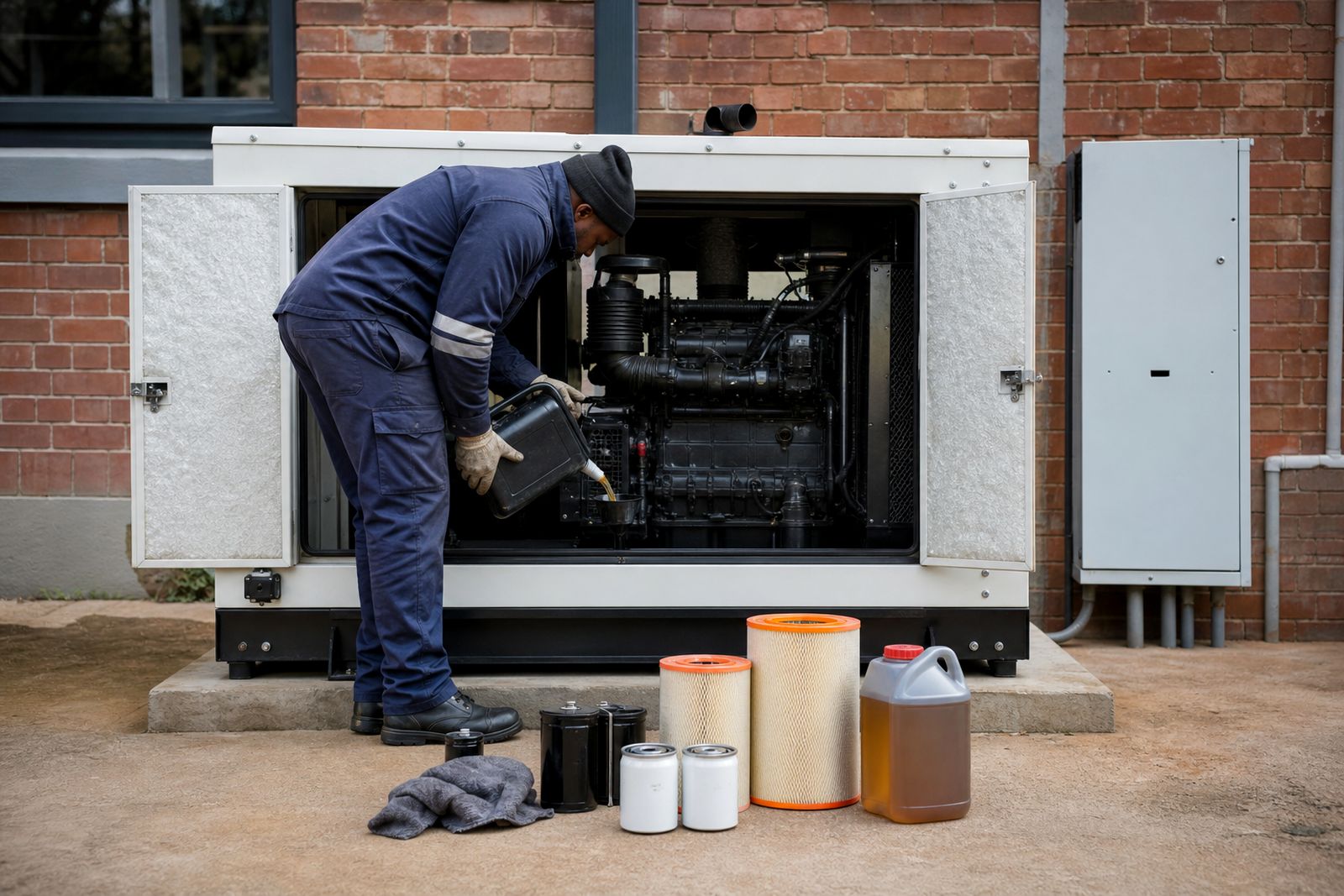
What goes in the box
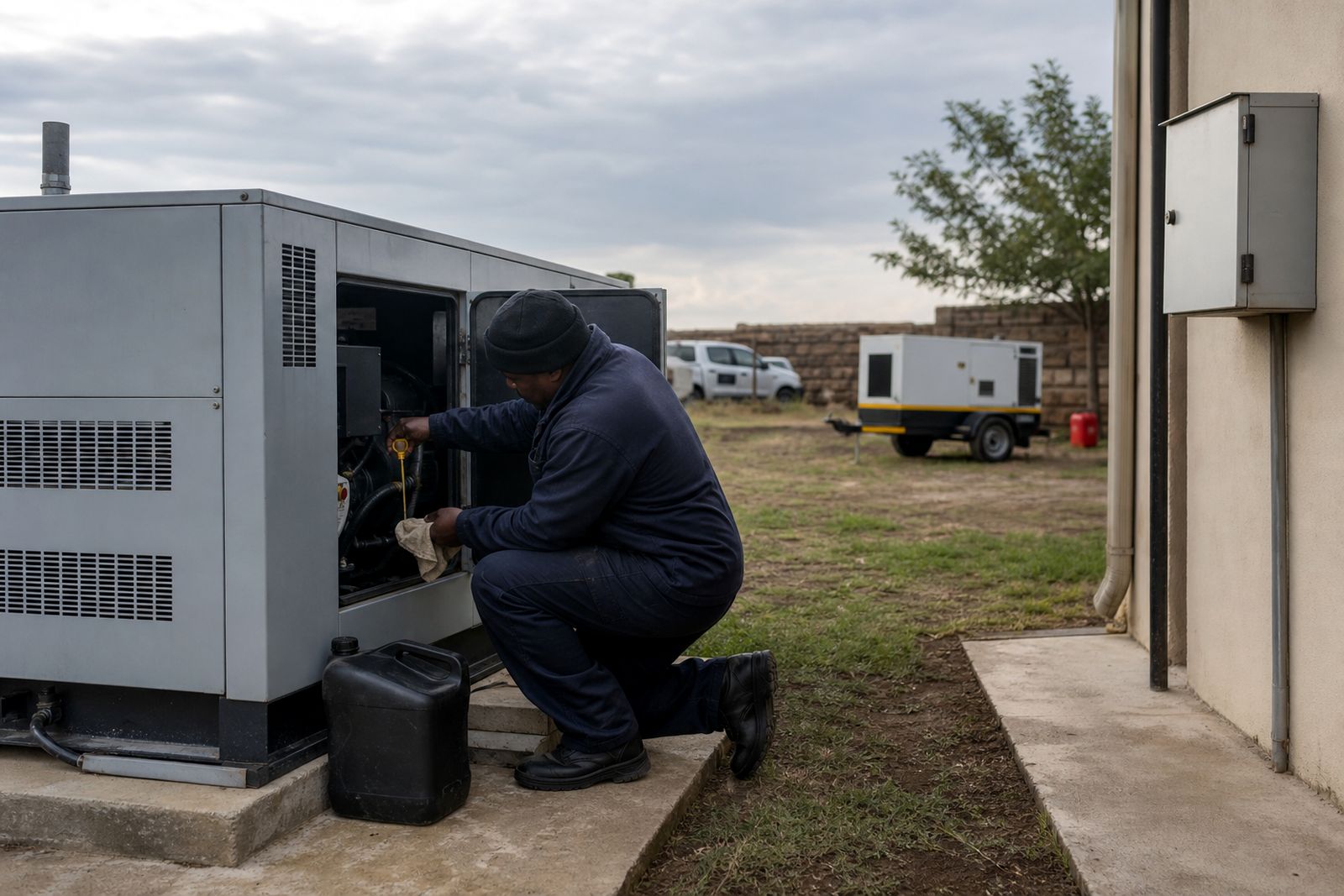
For sites that run through power cuts and long standby hours, a spare filter kit on the premises means the service team can change oil and air items at the scheduled hour mark without hunting stock across town. On South African standby sets, that matters most after dusty inland weeks, diesel contamination, or extended evening runs.
Keep the kit sealed, dated, and matched to the exact engine model on site. The box should hold the correct oil filter, air filter, fuel filters, and fresh sealing rings rather than mixed parts left over from another machine. Mark the genset serial, current hours, and next service interval on the outside with a permanent marker.
A spare filter kit on site gives crews a habit they can use during outages and routine services. A boxed filter kit near the machine matters more than a manual left in stores. Teams in Germiston often keep the pack with the hours card and service log so the next shift can check dates before a shutdown.
A useful spare kit is more than a carton with filters rattling inside. Include the engine oil grade specified for that set, the filter wrench size if access is tight, clean rags, and a note showing the correct part numbers. If the generator sits in a dusty yard or quarry setting, keep a second air element ready because restriction can rise quickly after August winds.
Match this note with the relevant genset route and site route before ordering replacements. Use our contact form if the machine works on an unusual duty cycle, such as telecom backup, estate pumping, or refrigerated loads. Add the city, engine model, and last completed service hours so the kit can be checked against the actual set.
Coastal air, inland dust, and diesel storage conditions all affect how useful a spare kit will be when power cuts stretches a service interval. Durban sites should watch for moisture on packaging and rust marks on metal filter parts. In Gauteng, dry windy periods can load air elements quickly, so the spare on the shelf must match the machine actually standing in the yard.
On-site filter kit checks
- Check part numbers against the engine plate
- Check seals are packed and undamaged
- Check the box date before service
- Check oil grade suits site temperature
- Check one spare air element is clean
Across Germiston, Clearwater, and Cresta, site teams usually keep one sealed kit per running unit and mark the carton with engine model and service date. Add a quick phone photo of the current filters and the generator nameplate to the file on hand. That record helps prevent the wrong spin-on or seal set from being opened during an outage.
If you keep a spare filter kit on site, check the date on the box. Stale kits still help, but fresh seals help more. Service caddies under Panels travel with the pack when sites rotate crews.
After-hours service readiness
A spare filter kit earns its keep during night outages, weekend running, and public-holiday callouts when parts counters are shut. Keep this note under Runtime with the service log so anyone opening the canopy can confirm what is available before a drain plug comes out. If a replacement filter was borrowed for another unit, record it immediately and replenish the box before the next outage cycle.
Shift changes are where filter kits disappear, get half-opened, or end up next to the wrong machine. Add the kit to the handover sheet with the service hour target and the storage spot, especially on trailer units that move between sites. Where generators travel on the N3 or between depots, secure the box so vibration does not crush elements or split plastic wrapping.
What our Backup Genset customers say
Verified Google reviews
Tell us about your backup power
Send a note through our contact form with the circuits you need to keep running, the kind of site, your fuel preference, how the changeover works today and your area, and we will come back with practical genset options and a quote.
Open the contact form