

Tow hitch check
Mobile packs need hitch and chain checks before highway miles.
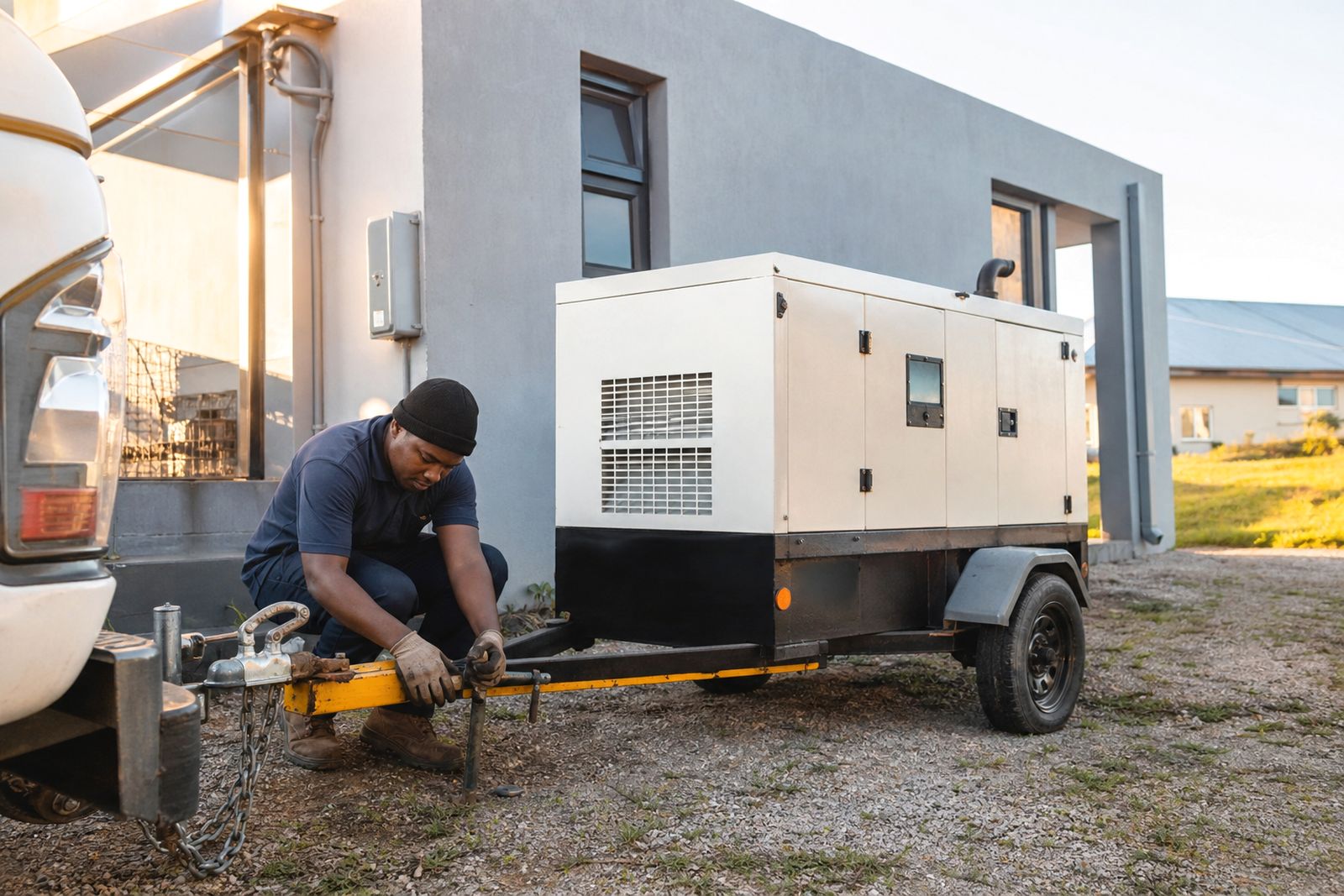
N3 departure hitch routine
Retief Opperman writes this runtime note for crews who keep packs honest through South African weeks. Checking the tow hitch before the N3 is a habit worth keeping on every trip.
Before a towable pack goes near the N3, put eyes on the coupling, breakaway chain, plug and wheel nuts. A clear phone photo of the latch closed and pinned helps the next crew compare the setup after a stop in rain or roadworks. Note any slack, cracked socket covers or uneven tyre wear on the handover sheet, not in memory.
Beside the genset catalogue, this runtime note earns its space by the trailer drawbar, not in a file. Crews can glance at coupling height, breakaway chain routing, and plug condition before rolling out from a depot or site gate. On Johannesburg runs, that matters more than a manual left in the crate.
Highway towing exposes the small misses first. A worn coupling can chatter for hours before it shows itself at the next fuel stop. Safety chains that drag lose links on rough shoulders, and trailer plugs with green corrosion give you no brake lights when mist rolls in near Van Reenen. One walk-around before departure is cheaper than discovering sway in crosswinds.
Before a mobile unit leaves the yard, match this check with a genset guide and a site guide that fit the route and load. Use our contact form when the destination sits beyond the usual estate run or the tow vehicle differs from the planned spec. Add the city, fuel type, and latest hours reading so the hitch, braking, and cable notes line up with the move.
South African conditions change what fails first on a tow hitch. Coastal air around Durban attacks electrical plugs and chain hooks faster than inland yards do. Highveld dust settles into the latch and handbrake linkage, while summer storms on the N3 leave standing water that can hide tyre damage and cracked mudguards. Check for the season you are towing in, not the one on last month's job card.
Before the drawbar leaves
- Latch seated fully, pin clipped in place
- Safety chains crossed and clear of road
- Trailer plug locked, brake lights tested
- Tyres, spare and wheel nuts inspected
- Jockey wheel raised, clamp tight, handbrake checked
Crews heading from Germiston, Clearwater or Cresta can keep one hitch photo set per trip and mark the route on the same sheet. Show the coupling, chains, plug and left rear tyre. If anything looks skew, a picture from knee height tells the story faster than a long explanation.
If the tow pack carries site spares, stop them shifting onto the drawbar tray before the trip starts. Check the restraint points and the condition of any ratchet straps stored under Panels stock or service bins. Loose cans, tools and cable tails change nose weight and make hitch noise harder to diagnose.
Road miles without hitch surprises
These runtime notes stay short so they can be used in the yard, at the gate or on a shoulder stop. They sit in Runtime because towing checks are lived actions, not office theory. Match this note to the unit you are moving and the route it will actually travel.
Make the driver handover specific before the keys change hands. Record the ball size, tyre pressures, plug type and any brake controller setting used for that trailer. Night moves need special attention to marker lamps and number plate lights. Tow packs should never join highway traffic on assumption alone.
What our Backup Genset customers say
Verified Google reviews
Tell us about your backup power
Send a note through our contact form with the circuits you need to keep running, the kind of site, your fuel preference, how the changeover works today and your area, and we will come back with practical genset options and a quote.
Open the contact form